The need for speed
James Wyatt, general manager of specialist aviation consultancy aeroconcept, offers his informed assessment of the rise of online retailing for air cargo operators speed
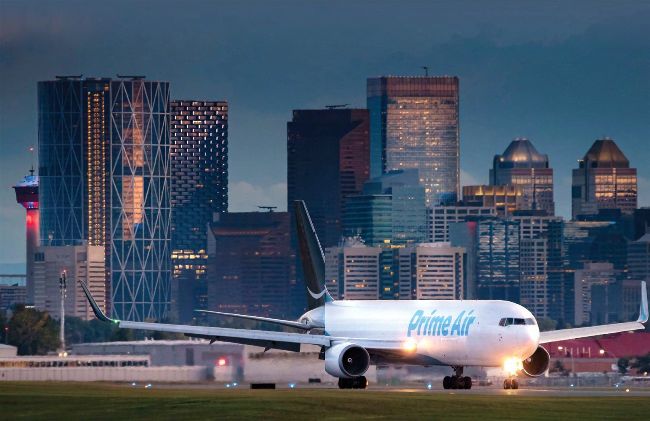
An Amazon Prime Air Boeing 767-300 BDSF, C-GAZI (c/n 25576), at Calgary
The challenges faced by the commercial aviation sector over the past 18-24 months are well-documented, with many of the most systemic issues continuing to pose significant headaches for airlines, airports and other key stakeholders. Yet within this cloud of chaos and confusion, there is one sub-sector of the industry which has been a beaming ray of sunshine: air cargo.
The COVID-19 pandemic highlighted the world’s awareness of – and reliance on – air freight as global supply chains came under increased pressure and consumers embraced online shopping. While e-commerce was a commodity very familiar to the air cargo industry, its exponential rise over the past two years was beyond even the wildest pre-pandemic forecasts.
Indeed, ‘e-commerce’ is a term that many outside the aviation industry may not have heard until early 2020. With many scheduled airline operations grounded worldwide, the global supply chain was gasping for air cargo capacity. Combined with a radical shift in buying behaviour by consumers, this resulted in the focus quickly turning to air cargo for possible real-time solutions.
Put simply, e-commerce is the buying and selling of goods via the internet. Prior to the pandemic, many of us were familiar with buying certain things on the web, perhaps seeking an online-only bargain or tracking down an item we couldn’t find on the local High Street. Fastforward to mid-2020 and there was almost no other option than to buy online and have the goods or services delivered directly to your door. This consequently changed the way in which the logistics world and its airline partners handled this type of cargo.
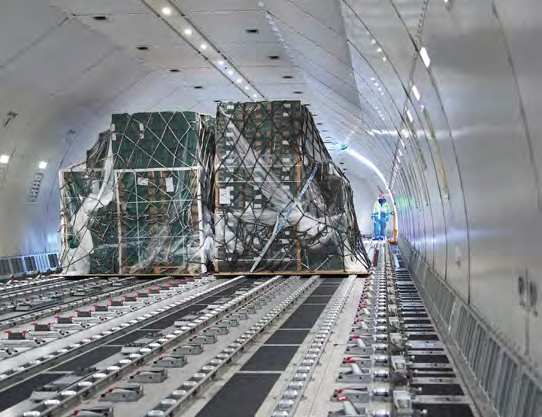
Lufthansa Cargo is offering customers additional capacity by permanently converting Airbus A321 passenger aircraft into freighters LUFTHANSA CARGO
Consumer shifts
Speaking to Airliner World, André Majeres, manager of cargo mail and e-commerce operations at the International Transport Association (IATA), emphasised the stark shift in behaviour which has helped drive the exponential rise of e-commerce: “Since early March 2020, we have seen how COVID-19 changed the world. It forced governments to close borders and take drastic measures to protect people and ensure essential services. The ban on social gatherings, the closing of stores, restaurants, grocery shops, gardening centres, theatres and concerts led consumers to live their lives digitally. An estimated 2.05 billion people now shop online and more than half of consumers bought more on the web during the crisis. It is now certain that those consumers who suddenly discovered the benefits of e-commerce [will] continue to go online for their shopping in the future. Sales of home appliances, personal protection equipment (PPE), and food and health products grew by more than 200%. The pandemic accelerated existing logistics trends, with global e-commerce delivering a phenomenal growth of 27.6% in 2020 to reach $4.28 trillion. This year, global e-commerce hit $876 billion in the first three months of 2021, representing a 38% jump from 2020. This demonstrates the shift in consumer habits as digital platforms are embraced.”