SINGAPORE’S SUPER CONNECTOR
From its beginnings as Malayan Airways in 1937, to becoming one of the world’s most respected premium carriers, Singapore Airlines has built a reputation for innovation, service and global reach. Thomas Haynes charts the flag carrier’s history
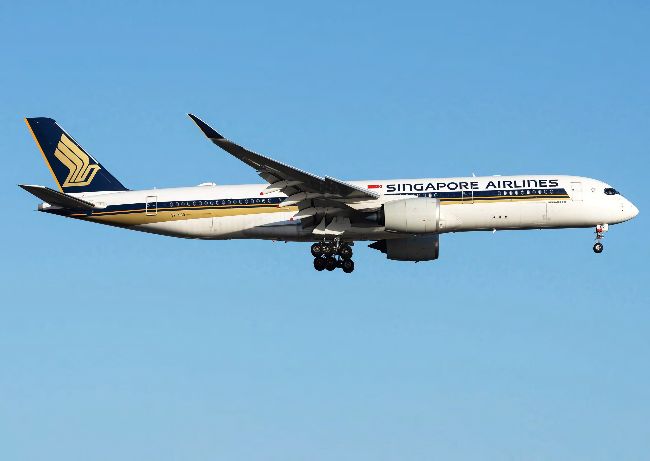
Singapore Airlines began operations in 1947 as Malayan Airways
VINCENZO PACE
Few airlines command the respect and recognition of Singapore Airlines (SIA). For more than half-a-century, it has been synonymous with luxury, safety and service – qualities that have helped it punch above its weight in a fiercely competitive industry. From launching the Airbus A380 to becoming the only carrier outside of Air France and British Airways to have Concorde in its livery, SIA has repeatedly redefined the role of a global flag carrier.
Based at world-class Changi Airport, the airline is well placed for growth, yet faces a post-pandemic crossroads. Premium leisure travel has surged since 2019, playing to SIA’s strengths, but rivals from Europe, the Middle East and the US are investing heavily in upgraded cabins for this lucrative market. Joshua Ng, director at Alton Aviation Consultancy, said SIA has capitalised on the rebound better than most, with both the mainline carrier and its low-cost arm, Scoot, exceeding pre-pandemic capacity. He noted: “Its strong brand, extensive network and diverse fleet give it an edge in the premium segment. But lingering supply chain constraints, rising costs and manpower shortages could put pressure on margins as the market normalises.”
Early history
Singapore Airlines’ origins date back to 1937, when Malayan Airways was established as a joint venture between the Straits Steamship Company, Ocean Steamship Company and Imperial Airways. Operations were delayed until after World War Two, with the inaugural service launching on May 1, 1947, from Singapore to Penang via Kuala Lumpur and Ipoh using an Airspeed Consul. Douglas DC-3s soon replaced the smaller type and the network expanded across Southeast Asia.
In 1958, the airline became a public limited company jointly owned by BOAC, Qantas and the governments of Malaya, Singapore and Borneo. A series of political changes saw the name evolve to Malaysian Airways in 1963, then Malaysia-Singapore Airlines (MSA) in 1966. Conflicting priorities between the two nations – Singapore favouring global expansion, Malaysia focusing on domestic and regional travel – led to a split in MSA in 1972, creating Malaysian Airline System (MAS) and Singapore Airlines (SIA).
Going it alone
With its focus on overseas expansion following the split, SIA took on seven Boeing 707s previously operated by MSA, along with the five 737-100s, while MAS took the Fokker F27s and a pair of 737-200s. In addition to the widebody aircraft, SIA also kept MSA’s international routes out of Singapore as well as the existing corporate headquarters in the city.
The rest of the 1970s were devoted to growth and consolidation of the newly established Singapore Airlines. On July 31, 1973, the airline entered the jumbo jet era with the arrival of aptly registered 747-212B, 9V-SIA (c/n 20712) – the first of an eventual 22 examples to be operated by the carrier until 1996. The quadjets were deployed immediately on the high-yield Singapore-Hong Kong-Taipei-Tokyo route. By 1976, the fleet comprised 21 aircraft including the handful of 737s, 11 707s and five 747s. The route network at the time spanned London to Auckland, taking in a total of 28 cities in 23 countries. The 737s were deployed on regional routes from Singapore to Kuala Lumpur, Medan, Bangkok, Brunei and Jakarta. The 747s were the airline’s key to Europe, flying to primary cities including London, Amsterdam, Paris, Frankfurt, Rome and Athens; only the UK capital saw a daily service. The jumbo was also used on SIA’s seven-leg Kangaroo Route between Melbourne and London which stopped in Sydney, Singapore, Bombay (Mumbai), Bahrain, Athens and Paris en route. The 707s were the carrier’s workhorse in 1976, with ten passenger variants in service and a dedicated freighter. The passenger aircraft alone flew 189 flights per week, close to an average of three sectors per aircraft per day. They were primarily deployed around the Asia-Pacific region, but also made two trips to Europe each week, connecting Perth with Amsterdam via Singapore, Colombo, Dubai and Zurich.