Baltich bounce back
Thomas Haynes speaks to Pauls Cālītis, interim CEO of airBaltic, about the airline’s recent upheaval, operational resilience, and future opportunities amid ongoing financial and fleet pressures
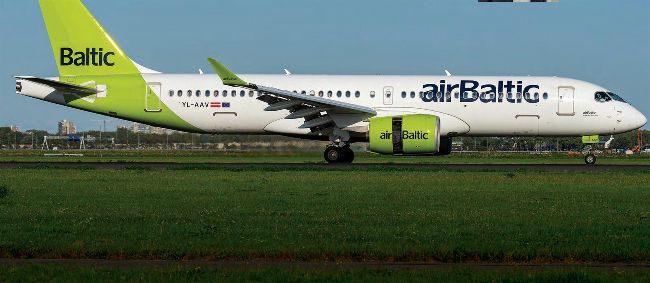
The flag carrier operates a fleet of 50 Airbus A220-300s
VINCENZO PACE
The removal of Martin Gauss from his position as airBaltic CEO in April sent shockwaves through the industry, abruptly ending a near 14-year tenure during which he had transformed the Latvian flag carrier into a notable European player. Gauss, who had led airBaltic since 2011, was ousted following a sudden no-confidence vote from the Latvian government, which holds a 97.97% stake in the airline. His successor – at least for now – is Pauls Cālītis, who, like Gauss, is a commercial pilot.
Cālītis began his career at airBaltic in 1995 and progressively took on leadership roles, ultimately becoming chief operating officer in 2020. His immediate task is to steady the airline through ongoing engine reliability challenges, financial pressures, and a stalled initial public offering (IPO). “It’s quite a unique situation,” said Cālītis of taking up the top job. “It wasn’t something that I was expecting or that was co-ordinated in advance, but then the situation presented itself and I felt both the ability and the responsibility to assume this role.”
The changes at the top come as the airline navigates a number of challenges, most notably the Pratt & Whitney engine problems which have stretched the airline to the limits in recent years. Despite being an interim appointment, Cālītis has a clear set of priorities; the first being to ensure a smooth continuity following the abrupt departure of his predecessor: “My number one priority is to deliver our operational and commercial performance for the coming year,” he said. Last year was difficult for airBaltic as the airline posted a €118m net loss despite recording its highest-ever revenues. “There’s no denial of 2024 being a year where we didn’t perform as well as we wanted to in terms of getting the financial result,” he admitted. “The priority this year is to deliver our performance so that we get to a better result in 2025.”