THE FRENCH CONNECTION
Air Corsica is an island airline with big plans for the future, as Robert Veitch discovered when he met president and CEO,Pierre Muracciole
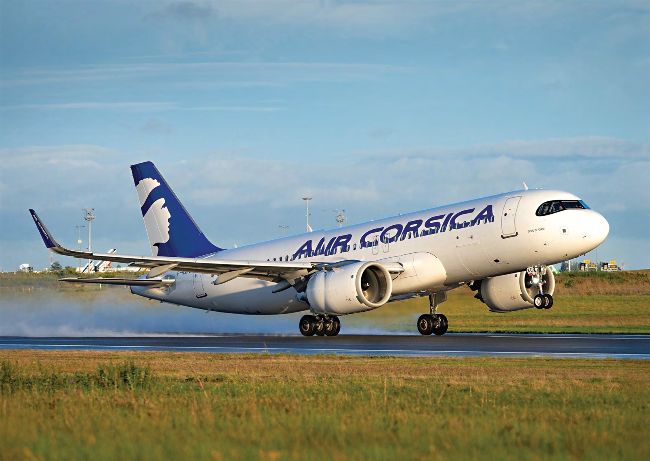
Air Corsica Airbus A320neo, F-HXKC (c/n 11831), is captured landing at Paris/Orly after a flight from Corsica
It’s a rare thing for the CEO to make the coffee, but at Air Corsica it’s all part of the family feeling the airline is keen to foster. As Pierre Muracciole brought the drinks to his boardroom table, which overlooks the runway at Ajaccio Airport, he sought to compare his role at Air Corsica with his former life at Air France: “The difference is the size of the company, and the fact that it’s more or less a family, while in a big airline you don’t know each other very well. Then the fact that turnover and activities are dominated by the PSO (public service obligation) activity, due to the fact that Corsica is an island. Having an airline is a huge asset for the country [and] for the territory, for the very simple reason that we have that link all year round, and the fact that we have a PSO means that even in winter, when nobody is flying to Corsica, we do.”
In the beginning
In 1989, the airline was the brainchild of Pierre-Philippe Ceccaldi, a local government councillor and chairman of the transport office at the island assembly, who wanted to give the island control of its own air transport.
He was duly installed as chief executive and chairman of the newly formed airline named Compagnie Corse Méditerranée. Services began in June 1990, with a pair of ATR 72- 202s, F-GKPD (c/n 177) and F-GKPC (c/n 171), from Ajaccio (Corsica’s capital) and Bastia (the island’s second largest city) to Nice, adding routes to Marseille from Ajaccio, Bastia and Calvi in 1991. In February 1993, the fledgling carrier acquired its first jet, a Fokker 100, F-GIOG (c/n 11364).
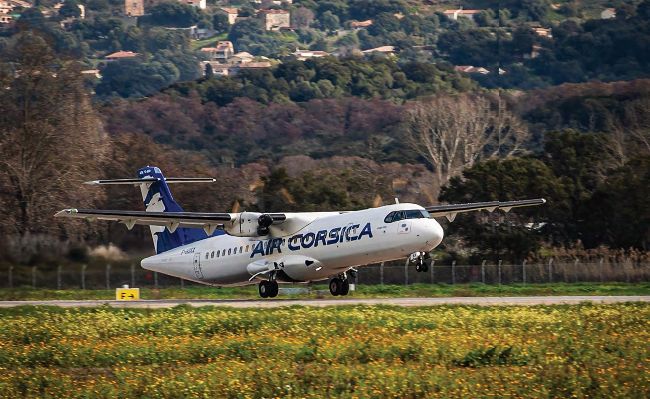
The fleet of ATR 72-600s is kept busy on the PSO routes to Nice and Marseille
AIR CORSICA
“Since that first flight to Nice in 1990, Air Corsica has carried around 45 million passengers”
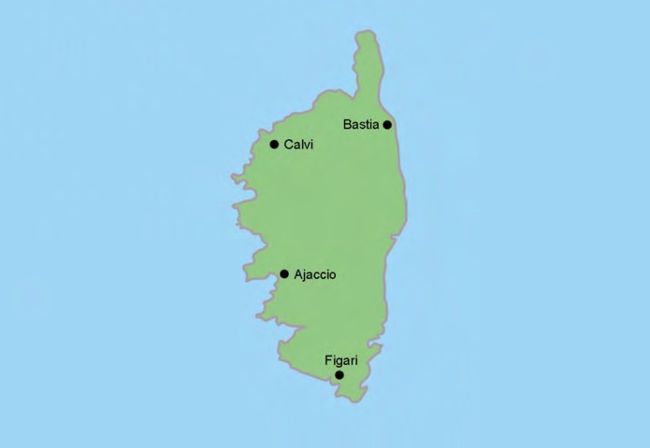
Calvi and Ajaccio are only 120km apart, but it takes three hours to drive, making the airports crucial to connectivity
KEY-ROBERT VEITCH
In 1998, Ceccaldi left his post and was replaced by another government official, François Mosconi, and the following year competitive tendering for the PSO routes was introduced. At the turn of the new millennium, services from Ajaccio, Bastia and Calvi to Lyon began, with the addition of Figari-Lyon making it a quartet in 2002. On August 1, 2002, after rebranding as CCM Airlines, Ceccaldi returned to his old post. In November that year, the arrival of its first Airbus A319-112, F-GYFM (c/n 1068), signalled the beginning of the end of the Fokker fleet and the start of a codeshare agreement on routes to Paris with Air France.