A WEAPON FOR ABOLITION
Stephen Taylor recounts the story of HMS Black Joke and the West Africa Squadron’s fight to stop slavery
Written by Jonathan Gordon
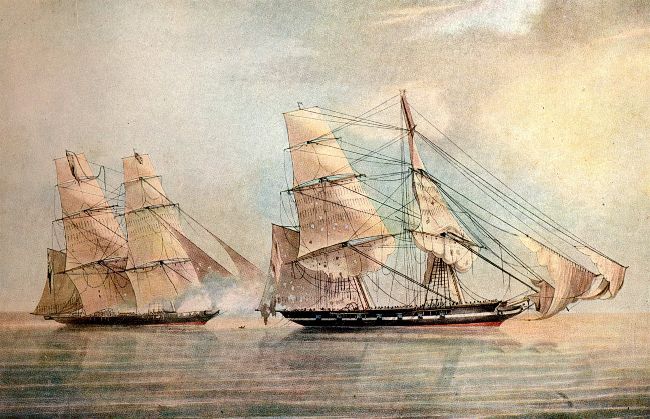
All images: © Getty Images
In 1807, after many years of campaigning by an ever-growing abolitionist movement, the British Parliament passed the Act for the Abolition of the Slave Trade. While this did not free people who were already enslaved, it was the beginning of a process that would bring to an end Britain’s involvement in the transatlantic slave trade. British enslavers didn’t necessarily end their involvement immediately, however, so the Royal Navy was drafted in to hunt down ships still being used to transport this grim human cargo.
Released from their commitments in the Napoleonic Wars, these navy ships gradually began to intercept vessels of all nations who were kidnapping men and women from West Africa and shipping them under horrific conditions to the Americas. These Royal Navy vessels became known as the West Africa Squadron.
“Royal Navy ships started intercepting and capturing transatlantic slavers soon after the 1807 Act of Abolition,” explains Stephen Taylor, author of Predator of the Seas (Yale University Press), a new book that focuses on one of the important ships in that mission. “But their numbers and activity were limited by the Napoleonic Wars and it was only in 1819 that the West Africa Squadron – or the Preventative Squadron as it was officially known – was permanently stationed at Freetown in Sierra Leone.”
EXPERT BIO
STEPHEN TAYLOR
Stephen is a maritime historian, biographer and travel writer. He has worked as a foreign correspondent for The Times, The Observer and The Economist and his books include Storm And Conquest, Commander and Sons of the Waves.
Taylor’s book is most interested in one of the most famous ships in that force: HMS Black Joke. “She was a vessel of a type known as a Baltimore clipper, built in 1824, named the Henriqueta, and set by her owner Jose de Cerqueira Lima to trafficking enslaved Africans to the Brazilian port of Bahia (now Salvador),” Taylor tells us. “Baltimore vessels had proved highly suited to the requirements of transatlantic slave traders, being far swifter and more agile than the British ships sent to suppress the slave trade, and the Henriqueta helped turn Cerqueira Lima into one of Brazil’s richest magnates. In three years, she transported more than 3,000 men, women and children – in harrowing conditions within her dimensions of just 90ft [27m] by 26ft [8m] – to plantations in the former Portuguese colony.”