MICROSOFT
Micro transaction
Making sense of a landscape transformed by Microsoft’s acquisition of Activision Blizzard
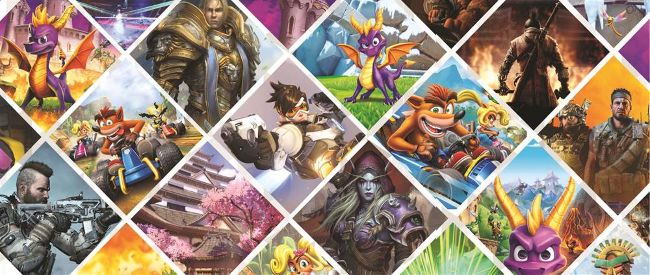
Among
the
properties
Microsoft
is
picking
up
are
Crash Bandicoot and Spyro – series with the kind of nostalgia value that Xbox has been trying to align itself with in recent times.
Well, there go our remaining hopes of things going back to normal in 2022. In dollar terms, game-industry acquisitions in January alone surpassed the estimated total for the whole of 2021. If you were worried about the industry’s direction of travel when Take-Two announced the $12.7bn buyout of mobile titan Zynga, you needn’t have been: within days, Microsoft dragged us into a different dimension altogether. Such was the extent to which the $68.7bn acquisition of Activision Blizzard upended the industry that Sony buying Bungie for $3.6bn a fortnight later felt oddly smalltime: yes, very good, but did you not get the memo? We dream bigger in 2022.
Still, once the initial nausea had passed, it was impossible not to consider the beleaguered development teams at Activision Blizzard. Alongside the newly minted shareholders, they are the principal beneficiaries of all this. Clearly it has not been easy working under the cloud of a misconduct scandal that, for all its reverberations around the industry, had the biggest impact upon those who were closest to it, and still had jobs to do.
Calls for change have loudened in the intervening months, and a buyout in theory represents the quickest and cleanest transformation of Activision Blizzard that anyone could reasonably have hoped for. Current CEO Bobby Kotick will be gone once the ink dries, presumably to be followed by the board members seen as his enablers. While Microsoft says it will let its purchase function largely independently, it recognises and has publicly committed to do the work required to align Activision Blizzard’s culture with its own.
Yet the deal does not fix everything overnight. The workers’ collective A Better ABK welcomed the acquisition, but insisted that its work would continue. Uppermost in its thoughts is a continuing dispute over the QA division at Call Of Duty support studio Raven Software. Planned layoffs sparked a two-month long strike which ended with the announcement that Raven’s QA staff intended to unionise.
The Raven issue is symptomatic of a broader challenge for Microsoft. It is not just buying an industry-leading publisher, a network of talented game development studios, and a deep reserve of beloved IP. It is also buying a company with a number of serious, deep-seated, long-running issues. In doing so, it is implicitly promising to put them right.