CITY LIFE
PANAMA CITY
Most famous for its canal, Panama’s namesake capital has been busily reinventing itself. Explore the storied spaces of its old quarter, pockets of urban greenery and vibrant restaurant scene
WORDS: STEPH DYSON.
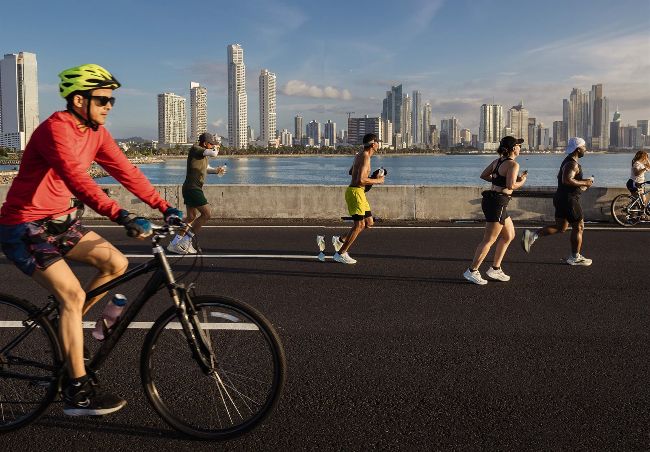
Previous pages: Joggers and cyclists on the Cinta Costera 3 bypass, a highway closed to car traffic each Sunday morning
PHOTOGRAPHS: TARINA RODRIGUEZ
At first glance, Panama City is all flashy skyline, its slew of sparkling high-rises towering above the waters of the bay like a cartoon vision of a futuristic metropolis. But the so-called ‘Miami of Central America’ has a hidden history — one that extends far beyond the canal that first put it on most travellers’ mental map.
Panama is effectively a borderland between Central and South America, and its famous canal — built in the early 1900s — slices the country in two. This 51-mile waterway is a giant shortcut, connecting the Pacific and Atlantic oceans, sparing sea travellers an 8,000-mile voyage around the continent’s southern tip. Each year, billions of dollars’ worth of cargo travel along it, and the comings and goings of ships make for a surprisingly fascinating visitor attraction. But it’s just one aspect of the city’s appeal.
Since its UNESCO World Heritage inscription in 1997, the city’s 17th-century Casco Viejo or Old Town has seen a flood of investment, jumpstarting the restoration of long-neglected mansions. In the intervening years, chic rooftop bars, ocean-front hotels and characterful boutiques have occupied these spaces. The neighbourhood’s architecture is a unique blend of neo-classical French, colonial Spanish and art deco: buildings that bear the imprint of the various imperialist powers which once wrestled over its control.
This power struggle has shaped the city’s food culture, too. There’s growing local pride in its cuisine, significantly influenced by the arrival of the migrant workers who built the country’s railroad and canal. Whether you’re headed for fine dining in Casco Viejo or a family-run affair in the foodie neighbourhood of San Francisco, expect dishes that reflect the city’s diversity and draw on the culinary traditions of its Afro-Panamanian, Creole and Asian inhabitants.