REPORT
SAUDI ARABIA
COULD THE KINGDOM BE TRAVEL’S NEXT BIG THING? WITH ITS FLURRY OF TOURISM ‘GIGA-PROJECTS’, FUNDED BY THE OIL FIELDS, IT HAS THE MEANS TO BE — BUT WILL TRAVELLERS CHOOSE TO GO?
WORDS: DUNCAN CRAIG
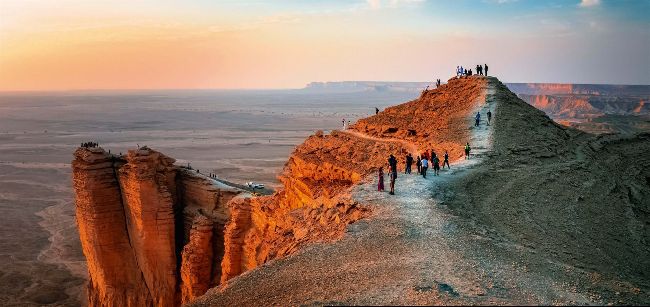
Jebel Fihrayn, also known as Edge of the World — a clifftop viewpoint near Riyadh
IMAGE: ALAMY
In February 2024, Saudi Arabia announced it had surpassed a key milestone in its embryonic tourism strategy: 100 million annual visitors. “A testament to the Kingdom’s visionary investments,” was how the World Travel & Tourism Council saw it. “An exceptional, historic achievement,” proclaimed UN Tourism — adding it “paves the way for a brighter future for the global tourism industry”.
It did seem remarkable for a country that had been closed to tourism for the best part of a century, prior to a U-turn enacted by Crown Prince Mohammed bin Salman (MBS) in 2016. That year, the country’s de facto ruler had declared that tourism would be a key pillar of Saudi Vision 2030 — an ambitious plan of economic diversification, triggered by the overdependence on oil. And here it was hitting its target of 100 million visitors seven years early. In response, Saudi simply raised the figure by 50 million.
Drill into those figures, though, and a nuanced picture emerges. Of the 100 million-plus visitors in 2023, just 6.25 million were inbound tourists. The rest was made up of domestic tourists, foreigners coming for business or to visit friends and family, and — to the tune of nearly 22 million — religious visitors en route to the holy sites for pilgrimages such as Hajj and Umrah. The unpublished figure for 2024 is thought to be around seven million.
Seven million from a standing start is a considerable feat, but is it a surge with the force to reshape the travel industry? Measured against the sums funding the oil-rich kingdom’s new-found tourism drive — over £600bn at last count, a figure so vast it surpasses the GDP of all but the top two dozen countries — it could be regarded a disappointing result.