How to race overseas
Getting yourself to the start line of any race is a tough process; Do but when you’ve signed up for an event overseas, there are added considerations both logistically and physically
Words: Lily Canter
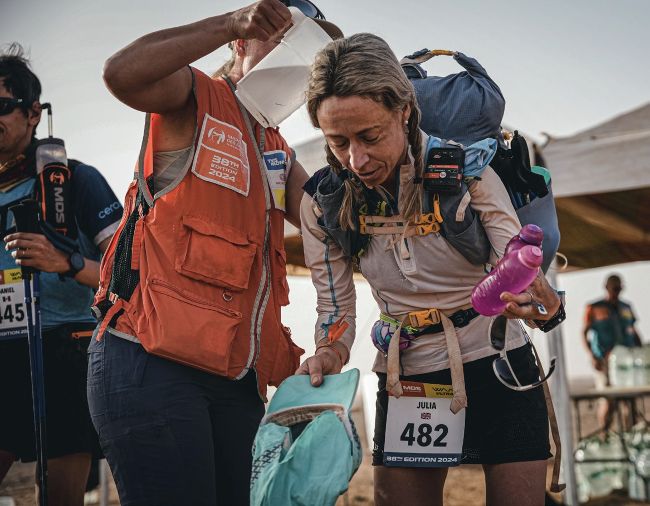
Julia Ebbrell at an aid station on the Marathon des Sables ultra route
Travelling overseas to race is an amazing way to experience a new part of the world. Whether you’re soaking up the atmosphere and spotting the sights during a city marathon or waving to villagers as you run through a remote part of a foreign country, there is nothing as immersive as travelling on foot.
However, preparing for these races can involve extra logistics, from sorting childcare while you are away to buying specialist kit, and working out complex travel and accommodation needs. Racing abroad is not as simple as driving a couple of hours up the road and taking part in a UK event. Planning can take months so it’s important to start early.
Do your research
The first step is to look closely at the race details and download any extra documents. There will be information about how you get to the start line, accommodation options and mandatory kit you need to have with you during the race. Mandatory kit lists tends to be longer and more complex for multi-stage races but even some city races have specific rules; the Tokyo Marathon, for example, does not allow runners to take bottles of any kind with them while running.
In fact, it’s sometimes best to check key facts before you even sign up for a race which takes place across several days. Find out whether you’ll need to carry all your gear with you – or just what you need during the day. If you don’t fancy carrying 10kg on your back, check before sign-up that you won’t need to do so. Bear in mind that plenty of races don’t require this; Ultra X, for example, organises races where you’re allowed to keep a bag full of food and clothes in camp.