The best building systems & techniques FOR ADDING DRAMA
Architect Julian Owen explains how you can use the bones of your home’s structure to make a powerful design statement
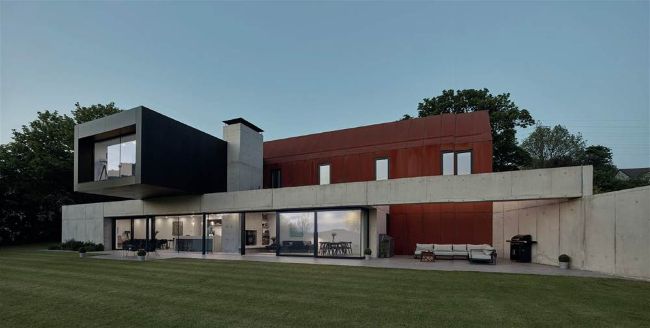
Designed by ID Architecture (
idarchitecture.co.uk), this sleek self build is in a Lincolnshire area of outstanding natural beauty.
The property is formed from a semi subterranean concrete plinth at ground floor level, with a master bedroom pod above. Floor-toceiling glazing takes in views of the surrounding countryside. Exposed concrete finishes have been incorporated to bring a modern feelANDY HASLAM
Thanks to its familiarity and flexibility, a masonry cavity walling system remains the favoured building method for most new homes in the UK. However, there are many routes to house construction beyond conventional brick and block. Each has a degree of flexibility in terms of how it can be used, plus its own strengths and weaknesses depending on the design features you want.
Most self builders aim to create a dwelling with unique details that can’t be found on a typical housing estate, searching for the wow factor that will separate their design from the pack. A little drama can even be added to modest homes, and your choice of building system may make some effects easier to achieve.
Lofty aspirations
One simple way to add allure to a building is to increase its scale, preferably with a large floorplan – if your budget allows. A less costly way to introduce drama is to increase the floor-to-ceiling height beyond the 2.4m standard set by developers, ideally boosting it by at least 300mm. This creates more pleasing proportions and makes the whole house feel slightly grander. It has the added benefit of allowing the windows to be taller and the eaves to be higher, too, instantly making the exterior more impressive. This trick works beautifully in large, open-plan spaces and clear voids above stairwells and landings. Most building systems are up to the task, though very large spans are easier to achieve with masonry and steel beams.