How to specify internal doors
From reflecting your personal tastes to protecting you and your property in the event of a fire, your choice of doors can have a big impact on your home’s feel and performance, says Charley Ward
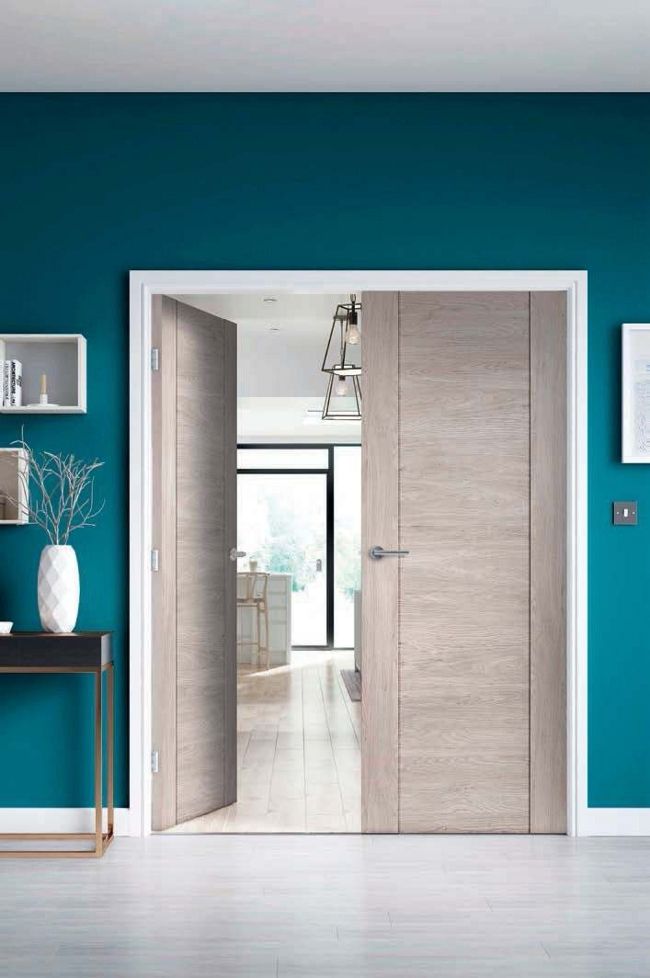
This mushroom grey double doorset by JB Kind has a neutral appeal that will work well in modern interiors thanks to its clean lines and slightly textured finish
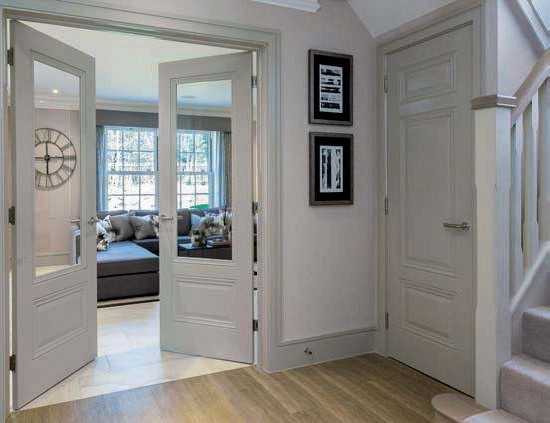
These glazed French doors by Todd Doors allow zones to be closed offwhile still allowing light to travel throughout the house. Opposite: A pocket door system, like this smart white offering from Todd Doors, can work well in areas with limited floor space
A property’s internal doors can fulfil a range of functions. Aside from the obvious privacy benefits, they also have useful soundproofing and insulating qualities, and can make a real aesthetic statement. “Because of the rise in open-plan living, even really big houses have far fewer internal doors than they used to,” says Elizabeth Assaf, designer at Urban Front.
“Instead, people are opting to make the ones they do have into more of a feature, so they’re often bigger and bolder in colour and have a lot more glazing.” So what do you need to know to select the right products for your property?
Opening style
First and foremost, consider how you are going to use the door and the adjoining rooms/circulation areas. Standard hinged models will usually be suitable, but there are certain scenarios that may benefit from a different arrangement.