CLASSIC ALBUM: AUTOBAHN
IN 1974, KRAFTWERK CREATED AN ELECTRONIC EPIC. AUTOBAHN WAS AN ALBUM WHICH SAW MAN AND MACHINE WORKING IN PERFECT HARMONY. IT WAS A PIVOTAL STEP FORWARD FOR CONTEMPORARY MUSIC – A TIMELESS AND PROFOUND PIECE OF WORK THAT STILL REMAINS RELEVANT TODAY…
NEIL CROSSLEY
KRAFTWERK
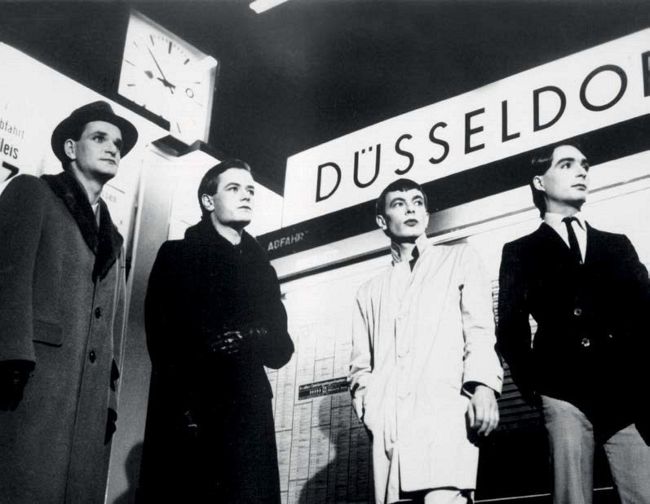
Formed in Düsseldorf by Ralf Hütter and Florian Schneider in 1970, Kraftwerk’s name translates to ‘power plant’ in English
© Getty Images
Anyone surveying great moments of artistic innovation over the centuries will note one prevailing factor – the more innovative the art, the more vociferous the response to it.
As revered octogenarian Berlin theatre director Claus Peymann noted in 2017: “Art is always resistance, contradiction… and the moment in which that no longer occurs, art runs dry.”
Such was the case with Peymann’s fellow countrymen, Kraftwerk, when the electronica pioneers released their career-defining fourth album, Autobahn, in 1974. When the band embarked on a UK tour the following year to promote the album, they played to halffilled halls, while rock critics seemed equally underwhelmed.
“Spineless, emotionless sound with no variety, less taste,” railed Keith Ging in his review in Melody Maker, adding: “For God’s sake, keep the robots out of music.”
Four decades on, Autobahn is hailed as a masterpiece. On this record, Kraftwerk created a sound that was transformative and unique – a hypnotic and insistent electronic pulse populated by shimmering electronic keyboards, rhythm loops and trance-like guitars.
At the heart of Kraftwerk was the relationship between humans and technology.
Synths dominated the sound, which was sparse, linear and rhythmic. But beneath the machine-like ethos breathed elegant and enticing melody.
As Neil McCormick wrote in The Daily Telegraph in 2014, Kraftwerk’s sound implied “an almost mystical reverence for the ordinary objects of an industrial world”.
Creatively, Kraftwerk and Autobahn cast a long shadow.
David Bowie adored the band, and they were a significant influence on his Low and “Heroes” albums. Autobahn spawned a generation of synthesiser minimalists, a veritable who’s who of synthpop artists such as The Human League, Depeche Mode, Pet Shop Boys and Ultravox.
Kraftwerk’s first three albums were groundbreaking in their own right, but Autobahn wasthe first to fully embrace the repetitive electronic sound that would become their trademark.
Visually, too, their influence was significant. In an age of long hair and loons, Kraftwerk’s short hair and sober business suits gave them the look of hip accountants, as the fourpiece stood immobile at their technology stations.
“We offered self-confidence,” explained former Kraftwerk percussionist Wolfgang Flür.
“We wanted to show our German appearance with cropped hair, ironed suits and ties, not to imitate English pop or American rock. We knew our appearance was ironic, flirtatious, provocative.”
The minimalist artistic concepts of their albums would go on to become design classics. Sonically and aesthetically, Kraftwerk’s legacy was profound.