SOMETHING WICKED THIS WAY COMES
Each winter, the people of the Lötschental valley high in the Swiss Alps gather for a carnival that terrifies and mystifies in equal measure; we grit our teeth, gird our loins, and dare to join them
Words AMANDA CANNING @amandacanning Photographs JONATHAN GREGSON @jonathangregsonphotography
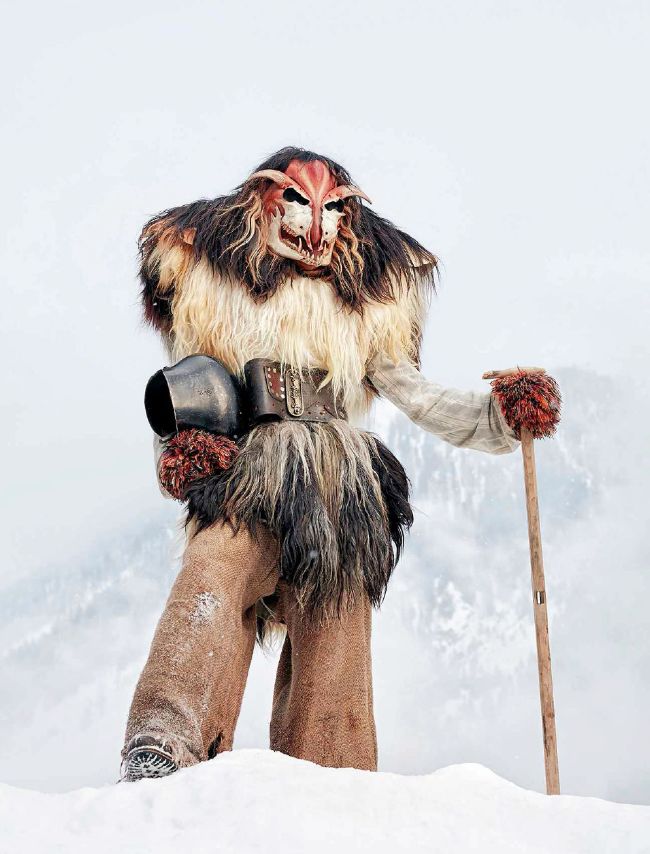
A Lötschental local in a typically creative Tschäggättä costume, with a sheep’s skull incorporated into the mask. Opposite: At 3,934m, the Bietschhorn is the tallest mountain in the valley
It's not safe to walk the Lotschental after dark. When the sun sets behind the mountains that rise over the valley, turning their jagged peaks pink in a last burst of defiance against the night, it's best to scurry inside, lock the front door and hide beneath the bedcovers. The Tschagga are coming. The sound of bells announces them: a steady dong-dong-dong that drifts and builds down narrow streets, agitating the cows and sheep kept safe in village barns over winter.
If you hear the ringing, it's already too late. The Tschagga are upon you - ten feet tall, with hideously disfigured faces, they push you to the ground, shove rough hands into your mouth and rub ice in your face. And then they are gone, and you are alone once more in the dark. You pick yourself up, slap the snow from your clothes and breathe a sigh of relief. But there it is again - the clang of approaching bells, and there's nowhere yet to hide.
In the 19th century, the priest of Kippel church wanted to ban Tschäggättä; his letter of complaint is held February by the village’s 2019 museum
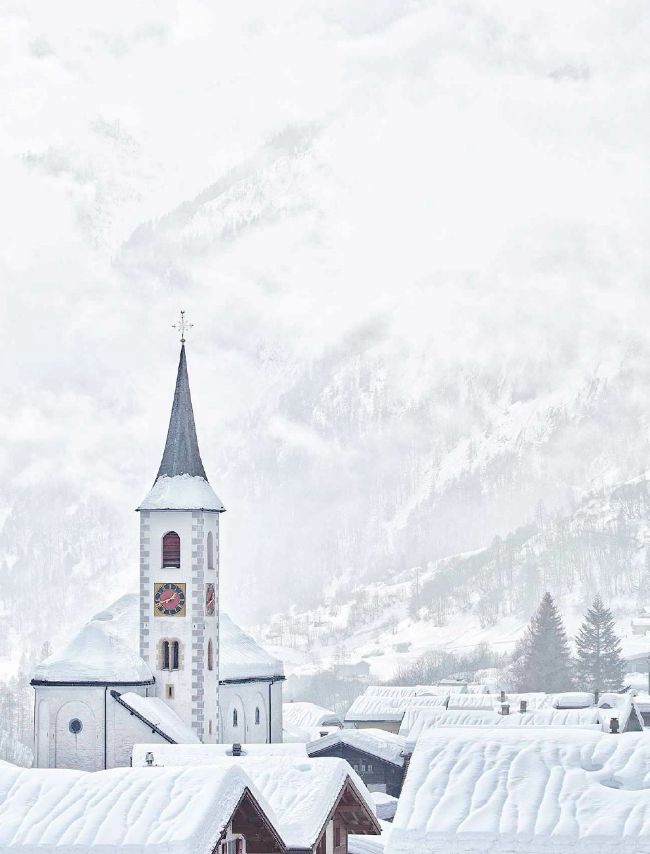
It seems unlikely that a festival with the principal aim of terrifying casual wanderers should sprout in the Lotschental. The four villages strung out along the valley, way up in the Swiss Alps, seem plucked from a particularly sentimental Christmas card. From November to May, their tightly packed wooden houses squat under several metres of snow, icicles the length of swords dripping from their roofs, gingham curtains hanging in the windows. The buildings bear cheery statements ('God is always with you if you take care of your home') carved long ago by house-proud owners into wood tanned the colour of beef gravy by the sun.
Yet here, a few hundred years ago, the tradition of Tschaggatta, and its Tschagga monsters, was born, and continues to be celebrated with a zeal that borders on obsession. Every night between Candlemas and Shrove Tuesday, shadowy figures dressed in wooden masks and animal hides take to the streets, ready to wreak havoc.