REMAIN IN LIGHT
AFRO-FUNK MEETS POST-PUNK ON THE LANDMARK FOURTH ALBUM FROM THE EVER-EVOLVING NEW YORK CITY QUARTET, BUT SONIC BOUNDARIES ARE RARELY PUSHED THIS HARD WITHOUT A PRICE TO PAY…
GARY TIPP
TALKING HEADS
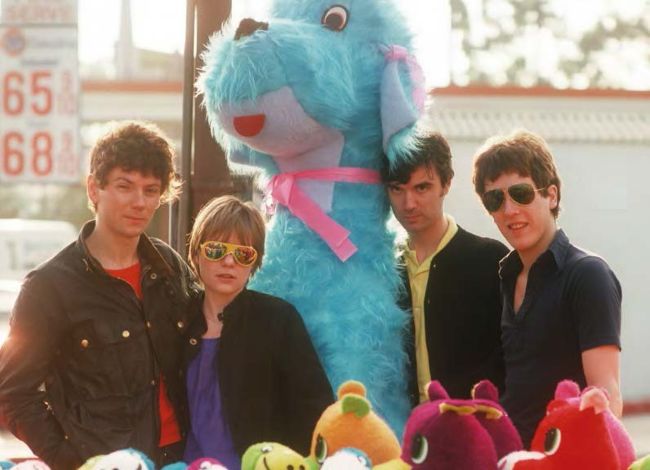
Talking Heads in playful mood on the streets of Los Angeles in 1977
© Getty Images
During the early part of their career Talking Heads were inextricably linked to the Ramones. Admittedly, both bands had broken out of New York’s legendarily grubby Bowery scene at the same time and, in Sire, they shared a relatively hip record label. Nonetheless, it was always an odd coupling. Talking Heads’ first ever gig at CBGB’s was second on the bill to the seminal punks from Queens, and in the late spring of 1977 the two bands even embarked on a European tour together.
Schlepping around Europe on the same tour bus only served to amplify the chalk-and-cheese nature of the relationship. On one occasion, a stop suggested by Heads’ drummer Chris Frantz to check out Stonehenge, en route to a gig at Penzance Winter Gardens, caused ructions within the ranks of the Ramones, specifically Johnny, who refused to get off the bus. “I don’t want to stop here. It’s just a bunch of old rocks,” exclaimed the reactionary rocker.
Musically, as well as culturally, they were polar opposites. The leather-clad Ramones permanently harked back to the golden age of rock‘n’roll, while the smart leisurewear-clad Talking Heads were futureminded and constantly evolving. The one thing the two bands did have in common, though, was a heavy slice of interpersonal dysfunction. The members of both bands really didn’t get on with each other. Johnny and Joey, notoriously, didn’t speak to each other for most of the Ramones’ 22-year history.
Within Talking Heads the husband and wife rhythm axis of drummer Frantz and bass player Tina Weymouth were often at loggerheads with frontman David Byrne. Much of the friction was borne out of the fact that when the band signed their recording contract, Byrne had indelicately requested that Weymouth audition for her place in the band again.
Both Frantz and Weymouth were worn down by the singer’s passive-aggressive machinations and, what they perceived to be, a lack of any acknowledgement for their creative endeavour within the band.
Tensions were heightened through Byrne’s seemingly conspiratorial relationship with producer Brian Eno, who had sat behind the controls and fiddled knobs on 1978’s More Songs About Buildings And Food and Fear Of Music a year later. What’s more, art-rock’s two nutty professors cemented their close bond on the ambitious collaboration My Life In The Bush Of Ghosts. “They’re like two 14-year-old boys making an impression on each other,” swiped the scoffing bass player.
It was into this antagonistic atmosphere, albeit in the pleasantly sunny surrounds of Nassau’s Compass Point Studios in the Bahamas, that the initial sessions for the band’s fourth album, Remain In Light, were cast.