REAL ALE
It’s been a part of British culture for centuries but, far from going out of fashion, real ale is enjoying a renaissance. Debbie Major celebrates this traditional refreshment with recipes that make the most of its malty, hoppy flavours
THE HERITAGE INGREDIENT
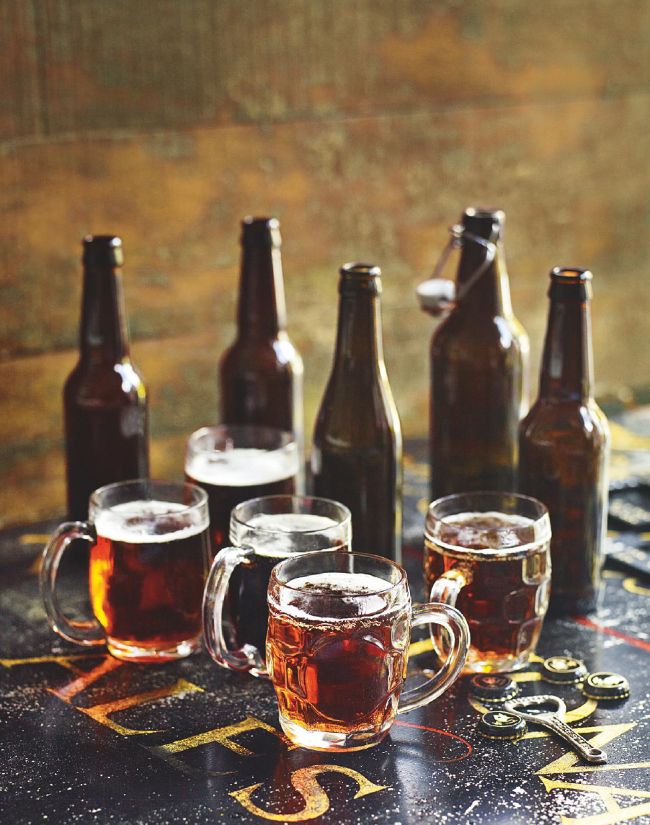
RECIPES AND FOOD STYLING DEBBIE MAJOR PHOTOGRAPHS ANDREW MONTGOMERY STYLING OLIVIA WARDLE
"Beer is the British drink. Its production was well established by the time of the Roman conquest, and by medieval times it was drunk with every meal and by all social classes. Most beer is made from four ingredients: toasted malted grain (normally barley), a bittering agent (usually hops), yeast and water. Other flavourings such as fruit and spices might be added along the way. The malt is mixed with water and boiled to bring out the sugars, which the yeast then turns into alcohol. The hops add thirst-quenching bitterness and preservative qualities.

In the 1970s, Camra (the Campaign for Real Ale) coined the term ‘real ale’ to help drinkers differentiate between traditional British ale, a living product containing live yeast, and the pasteurised, highly carbonated, bland beers the big breweries were churning out at that time. The gentle sparkle of real ale comes only from fermentation. Once delivered to a pub, the cask must be left for a day for the yeast to settle. It’s then carefully hand pumped (though it can be tapped straight from the cask) and only stays fresh for a few days. It’s the care taken during production, storage and serving that sets this heritage product apart – as well as its flavour…
Real ale comes in a range of styles and colours: bitter, mild, pale ale, IPA, golden ale, old ale, ruby ale, brown ale, stout, porter... The flavour and colour depend on the combination of malts, hops and yeasts used. There are now more than 1,400 breweries in Britain, and lots of them are still making traditional real ale.