MOTHER CLAP AND THE MOLLY MARKETS
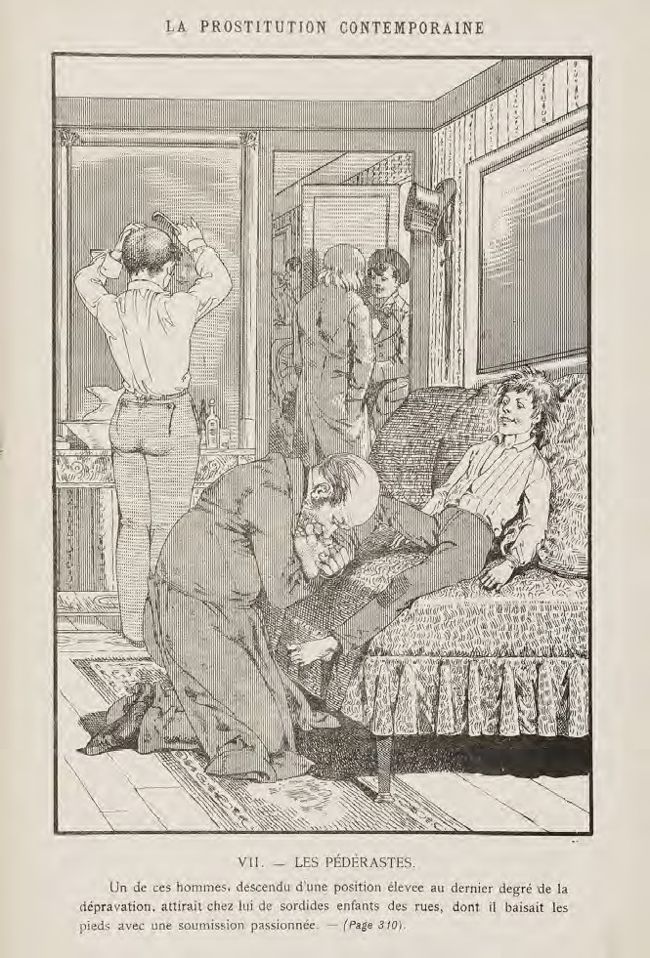
DEPICTION OF A MOLLY HOUSE WITH CLIENT AND WORKING-CLASS MOLLY BOY.
Halfway through the 18th Century in London, a homosexual subculture began to surface, coinciding with the end of Puritanism and the 17-year protectorate of Oliver Cromwell.
After the restrictions of the previous years, the population began to revel in the freedom of music, dancing and theatre – at the same time discovering a sexual freedom, previously frowned upon by the Presbyterians.
Playhouses, taverns and coffee houses opened. They were often places of bawdy and lewd behaviour; cheap gin being the incitement to the debauchery. Decadence knew no boundary. Even at the court of the newly installed king, Charles II, courtesans moved among people of quality. The king’s eye was caught by Moll Davis and Nell Gwynne, who both became his mistresses. “Moll” was the term for a female prostitute.
It was not unusual for homosexuals who “picked up trade” (a term first used in the 18th Century) to call themselves “mollys” (mollis also being a Latin word meaning soft).
Men cruising for sex with other men in the 18th Century was called “caterwauling” (behaving like a cat on heat). Gay men used a secret language to communicate their particular needs: “to make a bargain” or “score a trick” was to “bite a blow” and to have sex was “to indorse”. Both phrases stemmed from boxing-related slang, meaning to be “cudgelled from behind” and clearly alluded to anal sex.