CHAMPION’S ROAD
How Street Fighter II: Champion Edition lit the blue touchpaper for tournament gaming worldwide
By Matt Leone
With nearly 50m copies sold, the Street Fighter series is one of the biggest in game history. Unusually for such a storied franchise, though, the original 1987 game wasn’t the one that caught fire. It took 1991’s follow-up, Street Fighter II, to really capture the imagination of arcadegoers worldwide, ensnared by a combination of super-detailed visuals, a selection of characters with distinctive personalities and abilities, and endlessly rewarding play in both singleplayer and versus matchups. An even bigger success, though, followed in 1992. A basic concept on the surface, Champion Edition was, essentially, a response to player criticisms. Adding mirror matches and playable bosses was the sort of idea that would pop up in arcades, on school playgrounds and in game magazine reader mail sections. Tracking down how it all happened inside Capcom, however, gets a bit more complicated.
As is something of a trend with the Street Fighter legend as a whole, the stories told by Capcom USA staff don’t always match the stories told by Capcom Japan staff. In the case of Champion Edition, there even exist multiple accounts of how it happened on the US side. The first of these comes from James Goddard and Jeff Walker, who worked closely together and generally tell the same version of what happened.
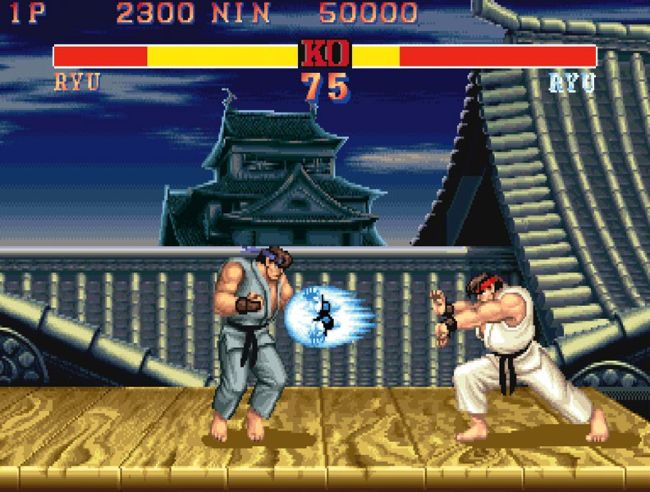
Champion Edition’s biggest draw for general players was surely its provision for allowing you to ‘be’ one of the four previously CPU-only bosses, but for more competitively inclined types it was the introduction of versus play with two of the same character that made it such a smash hit
James Goddard (Street Fighter II: Champion Edition design support, Capcom USA) We were shot down the first time we pitched Champ Edition. [The team in Japan] said, “Why would anyone want to play the same character, and why would anyone want to play the bosses? We don’t think that will be popular here.” And that was because they weren’t playing head-to-head hardcore. Oh, sure, they had tournaments, but it was not their culture. It was not like our culture, where it was like, “Man, I’m so tired of your Guile.”
Whenever I’d travel, instead of going out to strip clubs with the sales guys, I would actually go find a local arcade where Street Fighter was happening, and I would talk to people. Because there was no Internet back then. And I specifically got the same kind of thing from players, which was they wanted to play the bosses.
Jeff Walker (SFII: CE VP of sales and marketing, Capcom USA) I was never a gamer gamer. I was just a marketing and sales guy, so James was basically the guy who was giving me the feedback and information for me to go back to Japan and tell them what was going on.
James Goddard I came in and said, “Look, they’ve shut this down. They think this is a stupid idea. I know it will make money.”
Jeff Walker Well, it came Halloween time, and [I went to Golfland Sunnyvale with James Goddard and] I see this phenomenon going on, and that is all the players are dressed up like the characters. And I’m going, “Holy shit.” And all these really young Asian girls dressed up like Chun-Li, and I’m going, “Wow.” And then I see this other thing that really racked my brain: they were getting mad because one player was Chun-Li on a game, while the other player wanted to be Chun-Li and had to go to another game.
So I called [Capcom founder Kenzo] Tsujimoto up and I said, “I know this is a long shot, but I believe we can run this thing again.” And he goes, “What are you talking about?” I said, ‘Well, there’s a real easy formula. We need to allow two players to be the same character. Let’s come up with a game’.” I came up with the name Championship Edition [sic]. “Let’s add a few new players, and let’s let them play against each other.” And Tsujimoto said, “Are you sure?” And I said to Tsujimoto, “It’s way too soon to get off this game.”