BECOME A BETTER FAMILY HISTORY SLEUTH
TAKE YOUR SEARCH OFF THE BEATEN TRACK
The Family Tree Academy is here to help you grow your genealogy skills. The aim is to help teach more about the search skills and source know-how needed to step up your family history research. In this issue, Family Tree Academy tutor David Annal discusses less-well-known sources and invites you search beyond the BMDs and censuses…
David Annal
ESSENTIAL SEARCH SKILLS TO MASTER
W hen we’re researching our family histories, we spend a lot of our time looking at the key sources. We track down records of our ancestors’ births, marriages and deaths, we try to find them in census returns and we look for their wills.
And as part of that process, we naturally become familiar with the records that we’re using. If we’re doing our jobs properly, we’ll find out as much as we can about them:
• why and how they were compiled
• what they were used for at the time
• and why they were retained.
But there’s a danger that we get too fixated on these key sources and don’t pay enough attention to the wealth of other material that’s out there. Thanks to some extensive digitisation projects over the last few decades, access to many of these less-well-known sources is now much easier than it’s ever been before. Thousands of records relating to taxation, apprenticeships, criminal trials, immigration/emigration and much more are now easily accessible on the major commercial genealogical websites and we can quickly find references to our ancestors in them.
This month’s case study illustrates the importance of some of these lessfamiliar sources and demonstrates how they can be used to crack some of our toughest research problems
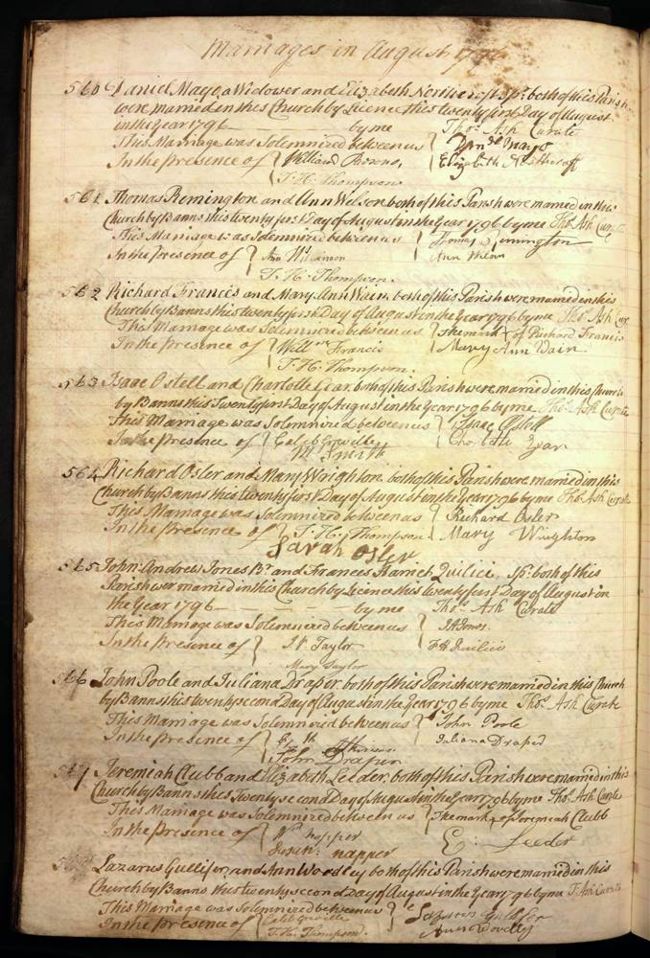
John Poole & Juliana Draper marriage St George Hanover Square, Westminster. 1796
Finding the references is relatively straightforward but we still have to approach the records themselves in the same way as we would approach the ones that we’re more familiar with. We need to understand what the documents are telling us and we need to consider the same questions about their administrative and archival history.
This month’s case study illustrates the importance of some of these less-familiar sources and demonstrates how they can be used to crack some of our toughest research problems.