comparative review
BACKPACKING RUCKSACKS
Lucy Wallace and Alex Roddie head to the hills with a range of the latest rucksacks designed for multi-day backpacking, with both lightweight and more traditional loads
WOMEN’S BACKPACKING RUCKSACKS by Lucy Wallace
A BACKPACKING RUCKSACK is a bit of a chicken-and-egg item. When packing, do you choose your other kit first, or your rucksack? Gear choice influences the rucksack you’ll need, and rucksack choice influences the gear you can comfortably carry. Put another way, choosing the right rucksack is an important decision!
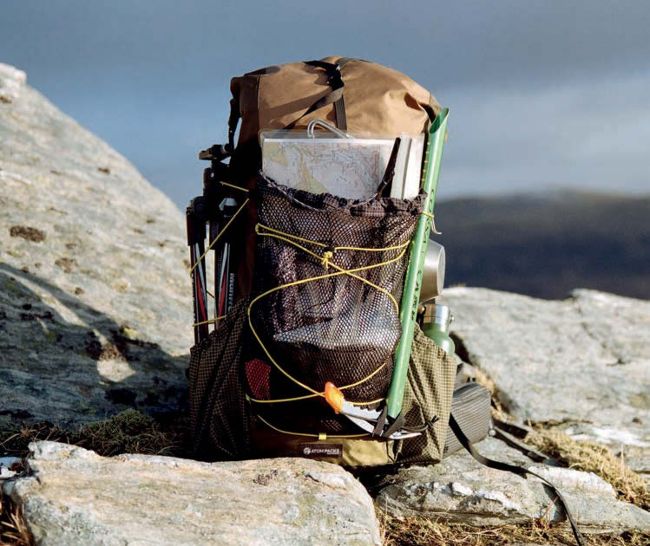
Atom Packs’ The Notch on shoulder-season service above Loch Treig
Photo credit: Alex Roddie
Most of us will end up with several packs and that’s because it’s hard to find one that will do everything well. Many TGO readers who are into backpacking are interested in multi-day routes with a rugged flavour... even if our lives don’t always allow for that! Some of us opt for a lightweight approach in the hills, but there’s always a place for bigger packs, especially in Winter, or when planning for bucket list expeditions abroad.
Whatever your style, a backpacking pack must be big enough for hillwalking kit as well as food and camping equipment. It must be durable, comfortable to carry, and have convenient storage options such as side and front pockets, as well as attachment points for items like ice axes and trekking poles. For winter use, you’ll likely want more durable materials, bigger capacity, and more strap attachment points for skis or snowshoes.
Beyond this, personal preference plays a hefty role, and that’s why we’ve selected rucksacks in a range of designs from minimalist, lightweight models to fully featured packs designed for massive loads. We have decided not to test 40 litre models (more suitable for overnight trips in good weather, or genuinely ultralight loads on longer trips) or anything bigger than 65 litre (likely too big for most people).
Our backpack testers live in Scotland and spend much of their time up big hills in all weathers. If a rucksack performs well for five days in the Cairngorms then it’ll likely do OK everywhere!
Features
Back system
Transfers weight from shoulders to hips. An adjustable system helps achieve a customised fit. Many allow airflow to help keep the back cool.
Shoulder straps
Padded, contoured straps are ideal for heavier loads. Adjustable ones help pull the pack closer to the body. A chest strap adds stability and should be height-adjustable.
Hip belt
This carries most of the load and should be padded and easy to adjust. Pockets here hold small essentials.
Top pocket/lid
Covers the opening to the main compartment and typically contains one or more zipped pockets. A lid may be fixed, extendable or removable.
External pockets
Handy for items needed quickly, such as water bottles or spare layers.
Compression straps
Useful for securing external items like trekking poles or roll mats. Side straps can compress a bag if part-full.
Rain cover
Attached to the outside of the bag to protect from the elements. Not fully waterproof, and may come loose.
Volume
A 50-litre pack suits shorter trips with lightweight gear, but a larger volume may be better for extended trips or bulkier equipment.
Materials
Polyester and nylon are lightweight and strong. Ripstop and high-denier fabrics add durability. Recycled polyester is fine if the rucksack lasts, but it’s not easily recycled again.
Fit
Fit is critical, so check size guides and measure yourself. Try a loaded pack on and adjust straps so it feels stable, with the centre of gravity near the hips and no gaps at the shoulders.