VIENNA ULTRAVOX
MARK LINDORES
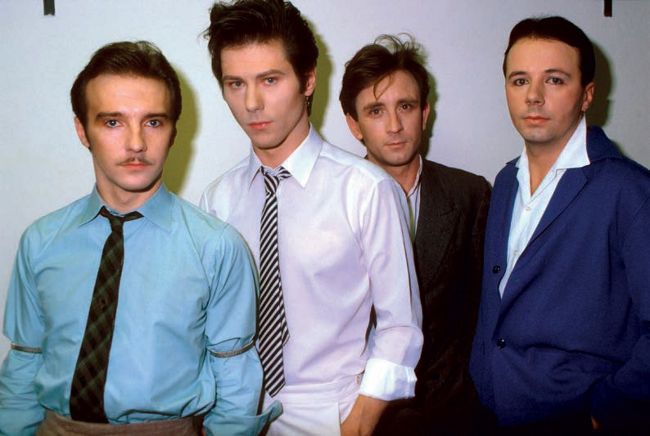
Ultravox, 1980-style. Midge Ure (Ieft) had joined the band the year before.
© Getty Images
Were it not for Vienna sleeve designer Glenn Travis’ bold typography reassuring fans that the stark monochromatic cover photo by Brian Griffin was indeed Ultravox, the band’s fourth album could well have escaped the attention of their fanbase, such was the radical change of direction of the group with new lead singer Midge Ure.
The stylish image overhaul reflected the musical shift on the encased record, with the glam-influenced art-rock of the band’s previous three albums replaced by sparse synth-pop and killer melodies resulting in a less pretentious entity that was capable of breaking them to a mainstream audience.
As the 70s drew to a close, the disarray within Ultravox at the time made the break-up of the band a very real prospect. The lack of commercial success for the John Foxx-fronted five-piece had led to them being dropped by Island Records and a last-ditch attempt to save the group with a US tour instead led to its implosion.
Foxx and guitarist Robin Simon departed the group, leaving remaining members Warren Cann, Chris Cross and Billy Currie with little more than debts, doubts and dilemmas.
Facing an uncertain future and financial ruin, the remaining trio were forced to seek session work with other artists in order to generate some money. Chris played with James Honeyman-Scott, Warren with Zaine Griff and The Buggles and Billy performed on Gary Numan’s The Pleasure Principle album and tour before working on Visage’s debut record. It was during the latter that he was introduced to Ure by Rusty Egan. Egan knew that Midge had been a fan of Ultravox and that they were looking for a singer and a guitarist – Ure was both, therefore Rusty was convinced they’d be the perfect match.
With his eclectic musical background, Ure was feeling limited by Visage. Though he enjoyed and was proud of the work he was doing with them, the group was a studio-based project with the sole purpose of creating dance music for London’s club kids to pose and preen to at the nightclubs Egan was running with Steve Strange.
Prior to joining the synth-pop outfit, Ure had a No.1 hit with Slik, turned down an offer from Malcolm McLaren to front the Sex Pistols, co-written a track with Phil Lynott for Thin Lizzy and enjoyed moderate success with the Rich Kids. While writing the latter’s second album, Midge and Rusty had expressed their desire to incorporate electronic elements into the group’s sound having bought synthesisers and been influenced by Kraftwerk and Can, but were vetoed by the other members, thus literally splitting up the Rich Kids.
As a tsunami of synthesised soundscapes eradicated the guitar-driven dominance of the pop scene, Ure carried forward his idea of a fully-functioning group that would record and play live and incorporate elements of rock and electronica, thus tying together all aspects of his musical history to date.
The outcome of an initial meeting between Midge and Ultravox to discuss whether their musical aspirations were compatible was overwhelmingly positive. Ultravox loved Ure’s vision for the group and their only condition was that they craved more creative input following Foxx’s dominance and wanted to work as a unit. Ure agreed and a decision was reached to split everything – accreditation and money – equally between the four members, eschewing any arguments over cash or superiority. The union was sealed with a jam session which was, Midge later told UK Music Reviews, “the most glorious noise that you have ever heard”.
Lisez l'article complet et bien d'autres dans ce numéro de
Classic Pop
Options d'achat ci-dessous
Si le problème vous appartient,
Connexion
pour lire l'article complet maintenant.
Numéro unique numérique
FREE Sample Issue
Ce numéro spécial n'est pas inclus dans une nouvelle
Classic Pop
abonnement. Les abonnements comprennent le dernier numéro régulier et les nouveaux numéros publiés pendant votre abonnement.
Abonnement numérique annuel
€51,99
facturé annuellement