DESOLATION OR NEW DEAL? THE HIGHLANDS IN THE INTER-WAR PERIOD
Professor Ewen Cameron explores the experience of the Scottish highlands between 1918 and the late 1930s, a period of sustained discussion about the economic and cultural future of a region reeling from the aftershocks of the First World War
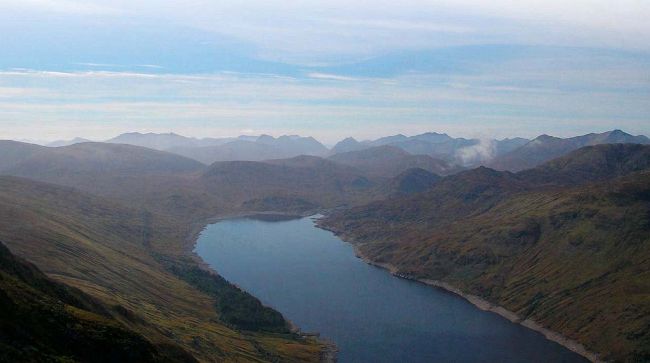
Loch Treig, Lochaber, one of the first Highland lochs to be dammed as part of a hydro-electric scheme
Historians writing about the Great War emphasise that the date of the armistice, 11 November 1918, can be misleading. In many areas of Europe this date is not especially important and ‘aftershocks’ of the war continued until the mid-1920s. While events in the Scottish highlands were not of the same order as those in eastern Europe, this idea of seeing continuity between war and peace is helpful in trying to understand the ‘inter-war’ period. Thinking more specifically about the highlands, it is important not to indulge in exceptionalism. To see the experience of the region as distinctive, or unique, even in a Scottish context, is to neglect the ways in which its history interconnects with wider themes in Scottish and British history, not least the effects of the global economic depression of the late 1920s and early 1930s.
Aftershock
The effect of deaths in battle were exacerbated by terrible events after the cessation of hostilities. Principal among these in a highland-Scottish context was the sinking of the Iolaire on the morning of 1 January 1919. The ship had left Portree on the evening of 31 December 1918 with around 280 naval reservists returning home to Lewis and Harris after war service. In the early hours of 1 January 1919 it struck rocks just outside Stornoway harbour and sank within sight of the town, resulting in the deaths of 201 men. In a poem about the disaster, Reverend John MacLeod of Arnol, who later emigrated to Canada, described how his father was found ‘fuar bàthte air an tràigh’ (‘cold drowned on the beach’) and of the devastating effect on his family. This was one of the worst maritime disasters in British history and an event of truly tragic proportions in Lewis, the home of most of the dead. Comment on the disaster in the newlyfounded Stornoway Gazette made the link to the fact that Lewis lost around 1,000 men in the war but that the loss of the Iolaire was a tragedy of a different order:
All the island’s war losses of the past four cruel years – although these number fully four times the death roll of New Year’s Day morning – are not comparable to this unspeakable calamity. The black tragedy has not a redeeming feature.
When the Stornoway war memorial, funded by Lord Leverhulme, was unveiled in September 1924 it included the names of those who had perished on the Iolaire and covered the period from 1914 to 1919. There were also memorials to the dead from the highlands in poems and songs. In his ‘Sgeulachdan nan Taighean- Céilidh’, the South Uist poet Dòmhnall Aonghais Bhàin (Donald MacDonald) recounted the way in which the ‘Cogadh Mór a’ Cheusair’ (the Great War of the Kaiser) would be remembered in terms of what he saw as the pointless losses and their long-term effects on the communities from which the dead men came.
Lisez l'article complet et bien d'autres dans ce numéro de
History Scotland
Options d'achat ci-dessous
Si le problème vous appartient,
Connexion
pour lire l'article complet maintenant.
Numéro unique numérique
May - Jun 2019
Ce numéro et d'autres anciens numéros ne sont pas inclus dans une nouvelle version de l'article
abonnement. Les abonnements comprennent le dernier numéro régulier et les nouveaux numéros publiés pendant votre abonnement.
History Scotland