Nobody’s done it better
The writing was on the wall during 1992 when Williams forged ahead with active technology. But its 1993 FW15C took things to a whole new level, arguably one the sport has never again reached. Adam Cooper talks to those who helped create it

PHOTOGRAPHY: JONATHAN BUSHELL
GILLES LEVENT/DPPI
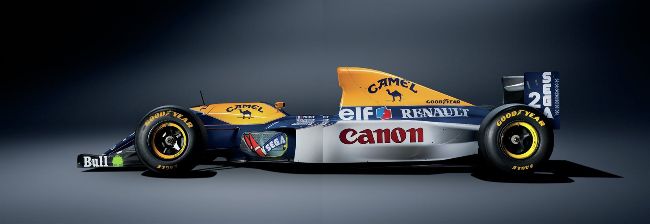
Thirty years after Alain Prost won the 1993 Formula 1 world championship the Williams FW15C remains the most advanced F1 car ever to race, perhaps challenged only by the McLaren MP4/8 that was its main rival that season.
The title was Prost’s fourth, lifting him clear of archrival Ayrton Senna’s three and one behind Juan Manuel Fangio’s five. Such was his dominance, Prost secured the title early, in September, and in the wake of the sabbatical he’d been forced to take after leaving Ferrari under a cloud. Perhaps he had a point to prove in 1993.
As for Williams, the team was in the middle of its greatest, most dominant era. But the FW15C stands apart, even from Nigel Mansell’s FW14B, because it was the high point of the technological development that was carrying F1 into unchartered territory – exciting or detrimental to the sport, depending on your perspective. Viewed from today, Prost’s Williams – from his only year with the team – can be considered a key touchpoint for the soaring evolution that has led F1 to the high sophistication of today. Yes, its technology was largely banned at the end of its title-winning season, but its influence would prove lasting.
Consider that by the latter part of the 1993 season the Williams had active ride, power steering, traction control, launch control, ABS and power-assisted brakes, and an early form of push-to-pass that was something akin to modern DRS. And in the background the team was developing a constantly variable transmission.
Given that most of that technology had to be binned when the FIA banned driver aids for the following season no subsequent F1 car has matched what the 1993 models were able to do in terms of optimising performance. And it was all achieved with a small engineering team and the relatively simple computing technology that was available at the time.
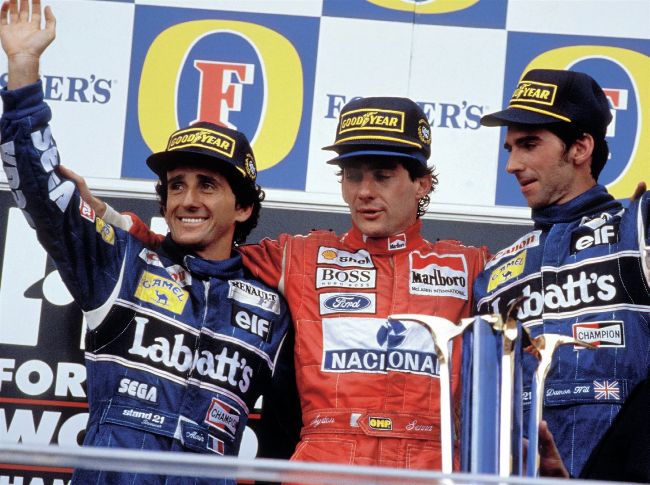
In 1994, Alain Prost would secure seven wins and the title, with Damon Hill taking three. Williams would canter to the constructors’ crown
“The car was very sophisticated in its concept and the systems that it used to make it work,” says Prost’s team-mate Damon Hill of FW15C. “But it was quite limited in terms of processing power and memory. By comparison, today’s cars are massively complicated and more sophisticated, but they’re restricted in so many different things that they can do. We definitely had a good selection of toys to play with.”
“If you ignore the power unit side of things, then you can easily argue that it was the most technologically advanced F1 car there’s been,” says then Williams chief designer Adrian Newey. “It was effectively the last of an era, and that always makes a car special. To win with that car was fantastic. I look back on that year with fond memories. And working with Alain for that one season, and then seeing Damon’s progress through the year, was a highlight.”
The 1993 season was one of change for Williams. Prost’s arrival had triggered Nigel Mansell’s messy departure for the US, and with veteran Riccardo Patrese committed to a move to Benetton Frank Williams had to look elsewhere. He eventually opted to promote erstwhile test driver Hill, who had run a part-season for Brabham in 1992.
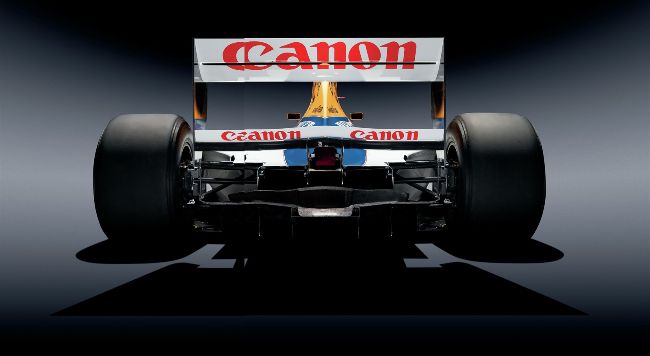
The FW15C pioneered so much new tech, including ways to stall the floor and create a push-topass system.
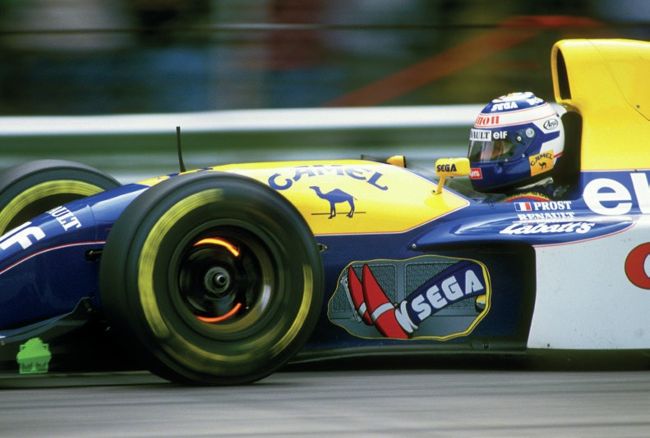
Prost at Monza;
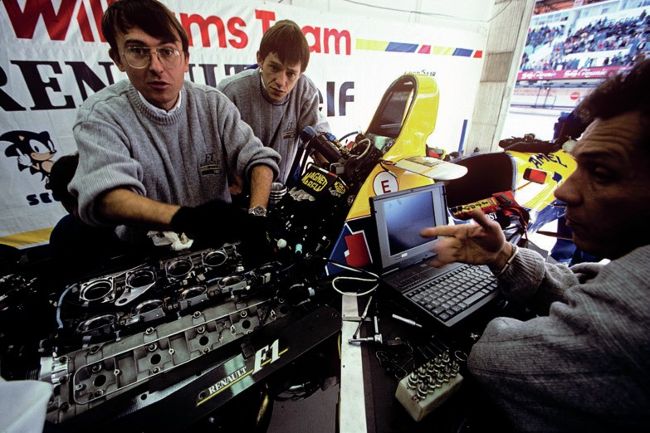
The technical team servicing the Renault engine;