Sir Walter Scott at 250
by David McVey
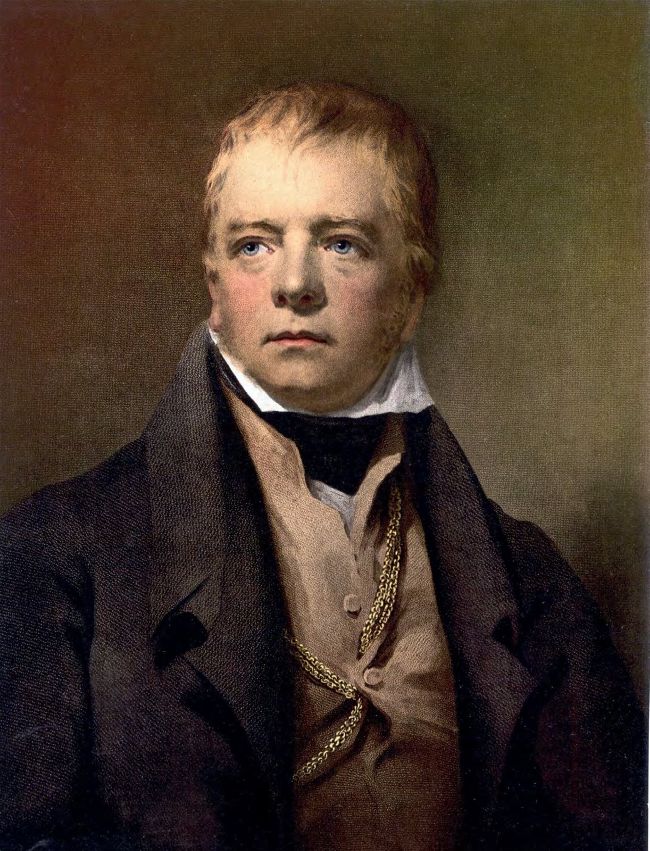
Sir Walter Scott (1771-1832)
SIR WALTER SCOTT’S work isn’t widely read any more. I also suspect many iScot readers deny him houseroom. After all, wasn’t he a stout Unionist? Didn’t he oppose Scottish independence? And wasn’t he a dyed-in-the-wool Tory who opposed all kinds of rights and freedoms for ordinary people?
The third of those charges would, I think, stand up in court, though I don’t think it makes Scott any kind of monster. There’s some truth in the first two, but they must be massively qualified in terms of the times Scott lived in and in respect of Scott’s own attitudes, actions and beliefs. He may not be an obvious pin-up for any modernday supporter of Scottish independence, but I hope I can convince you that he’s no villain.
Actually, I don’t think you can escape Sir Walter Scott. Not in Scotland, anyway. If few pick up his epic poems (like The Lady of the Lake or Marmion) or his Waverley Novels (like Rob Roy, The Antiquary or, er, Waverley) today he still dominates the landscape in Glasgow’s George Square and Edinburgh’s Princes Street. Place names he invented around Loch Katrine for The Lady of the Lake still appear on the map. I grew up in Abbotsford Drive, Kirkintilloch, one of many thousands who hail from our Scott-themed council schemes. Not only is 2021 the 200th anniversary of Scott’s novel Kenilworth (I’ve visited Kenilworth Castle -you can’t escape Scott even in Shakespeare Country) but also the 250th anniversary of Scott’s birth.