The method and madness, how RAYNAIR LEARNT TO FLY
Irish budget airline Ryanair was formed in November 1984, evolving from a single turboprop to become one of the largest airlines on the planet. Robert Veitch looks through the vaults to the fall and rise of the airline
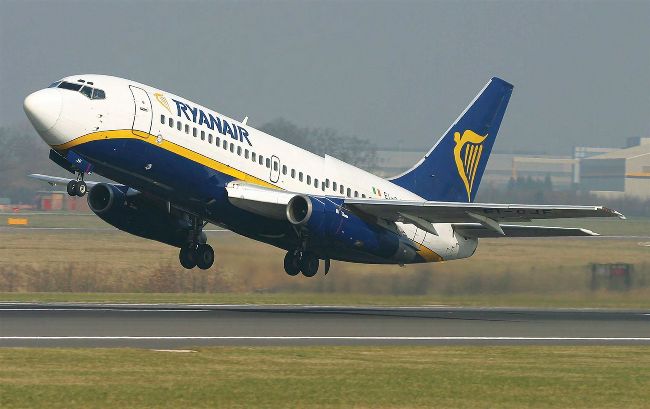
Boeing 737204, EI-CJF (c/n 22967) departing Manchester in 2003 was the fourth 737 to join Ryanair – it came from Boeing via Britannia Airways and remained in service until March 1994, after which the cockpit was preserved as a virtual flight simulator in Horsham
Ryanair, as we know it today, began life as Danren Enterprises on November 28, 1984, founded by Christopher Ryan, Liam Lonergan and Tony Ryan. The latter, its driving force, had worked for Aer Lingus at Shannon, leasing out aircraft during the winter on behalf of the flag carrier. In 1975 he invested £5,000 in return for 10% of Guinness Peat Aviation (GPA), which he would run from the outset (GPA became the largest global aircraft lessor during the 1980s).
Ryanair was created during that decade’s boom which GPA enjoyed, but a 1990 stock exchange flotation didn’t go well and as it fell apart, in the ruins was Ryanair – a tiny airline running up debts. Ryan harnessed the talents of his assistant, Michael O’Leary, and in time he would remake his fortune, while the charismatic O’Leary would make his, then transform and transcend the European airline industry.
Infancy
Shortly after inception, Danren was rebadged as Ryanair and on July 8, 1985, it began flying with a solitary 15-seat Embraer EMB 110 Bandeirante turboprop, EI-BPI (c/n 110308), between Waterford and London/ Gatwick. Cabin crew recruitment was unorthodox and required a niche element – flight attendants could be no more than 5ft 2in (157cm) tall. The airline explained it was “...in order to be able to operate in the tiny cabin of the aircraft.”
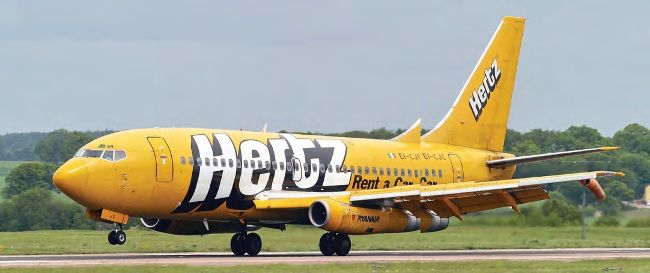
The first 737-200 to join the fleet on January 21, 1994, was EI-CJC (c/n 22640), which operated as a flying billboard
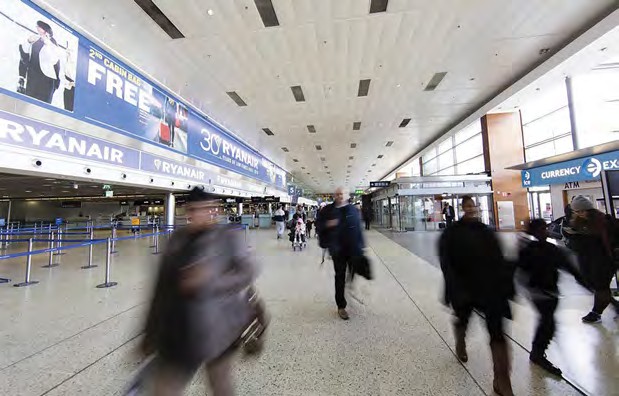
Terminal 1 at Dublin has been Ryanair’s ‘home’ since 1986
DUBLIN AIRPORT
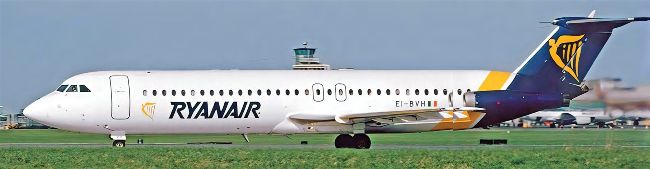
ROMBAC One-Eleven, EI-BVH (c/n 407) The Spirit of Tara at Dublin in 1993, was leased from TAROM and thought to be the first aircraft to carry the angel harp livery
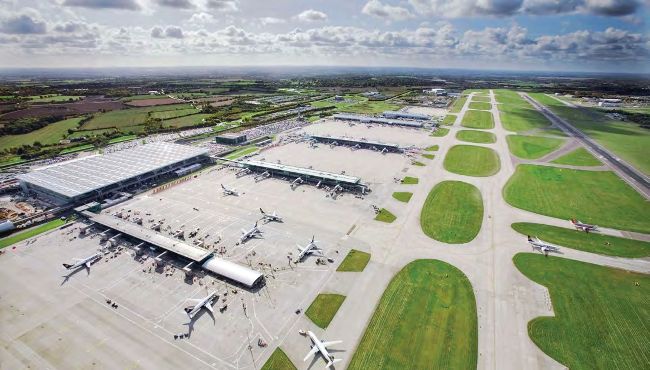
When Ryanair was granted slots at London/Stansted at the expense of Aer Lingus, it proved pivotal to what followed
STANSTED AIRPORT
After gaining permission from the regulatory authorities for the Dublin to London/Luton route, the airline engaged in its first battle with a legacy carrier. The launch price of £99 return was less than half the fare of the lowest priced legacy carrier ticket, then costing around £200 return. Aer Lingus responded, slashing its fares to £95, though Ryanair reacted with the line ‘the penny has dropped’ as it cut its price to £94.99. Services began on May 23, 1986, using a pair of former Dan-Air Hawker Siddeley HS 748s, EI-BSE (c/n 1549) The Spirit of Waterford and EI-BSF (c/n 1544), while the route has remained in continuous operation ever since. The two links generated 82,000 passengers during the first year of operation.
In those early days employee numbers totalled fewer than 450, and staff were given 500 £1 shares in the business. Cork to Luton began in June 1986 and in December that year, the airline began services from the newly opened ‘foggy boggy’ Knock to Luton. Other routes came and went, with several short-lived as the fledging sought traction in the market.
Leggete l'articolo completo e molti altri in questo numero di
Airliner World
Opzioni di acquisto di seguito
Se il problema è vostro,
Accesso
per leggere subito l'articolo completo.
Singolo numero digitale
November 2024
Questo numero e altri numeri arretrati non sono inclusi in un nuovo
abbonamento. Gli abbonamenti comprendono l'ultimo numero regolare e i nuovi numeri pubblicati durante l'abbonamento.
Airliner World
Abbonamento digitale annuale
OFFERTA SPECIALE: Era
€57,99
Adesso
€36,99
fatturati annualmente
Abbonamento digitale di 6 mesi
€30,99
fatturati due volte l'anno
Abbonamento digitale mensile
€5,99
fatturati mensilmente