Guide to kitchen-diner extensions
It’s one of the most popular additions to a modern home, but you need to know the basics before you start planning this new open-plan zone, says Julian Owen
Julian Owen
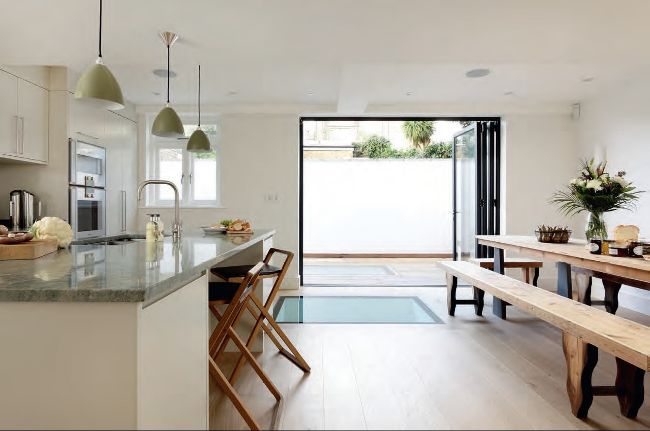
This cool and contemporary space, although not overly large, has been cleverly arranged to make the most of the room available, with bifold doors linking the zone to a courtyard. The Aubrey kitchen is by Cue & Co and features oak veneer carcasses and spray-painted solid wood doors. Prices start from £35,000
Today’s lifestyles have changed a great deal in comparison to how we lived in the past, especially when it comes to how we use our homes – which is one of the reasons why remodelling older properties to bring them up to modern standards is so popular at the moment. Most homes built during the 20th century, particularly from the First World War up until the 1970s, adopted a standard layout. The kitchen and outhouse were placed at the rear, adjacent to a separate dining room if the plan was large enough, with a front room for relaxation and entertaining guests.
By modern standards, these kitchens seem impossibly small, and the wall with the dining room now forms an unwanted barrier for today’s families, who want a flexible, multi-purpose space on the ground floor for cooking and socialising, as well as keeping an eye on the kids while they’re busy playing, watching TV or doing homework.
Initial considerations
If you are thinking of undertaking this type of development, there is much to consider. The changes often comprise knocking through between the kitchen and dining room and adding an extension to both areas, which will dramatically change the character of the whole property.
Most people intend to stay in their house for many years after the building work has been completed, so it is worth anticipating how the use is likely to change over time, particularly as children grow older. There may be times when the adults need a quiet space, or a few occasions when more formal entertaining demands that the kitchen is screened off out of view. We all know that young children can be messy and boisterous – and they need to be kept away from the sharp edges and high temperatures. An easy remedy, that won’t spoil the flow of light, is to fit internal bifold doors to allow a temporary division.