Attualmente si sta visualizzando la versione Italy del sito.
Volete passare al vostro sito locale?
17 TEMPO DI LETTURA MIN

The lasting effect of the First World War on CRIME IN SCOTLAND

Re-assessing the link between war-service and crime in the post-1918 period, Cameron McKay demonstrates that many Scottish veterans had difficulty readjusting to civilian life, leading to a rise in both petty and serious criminality

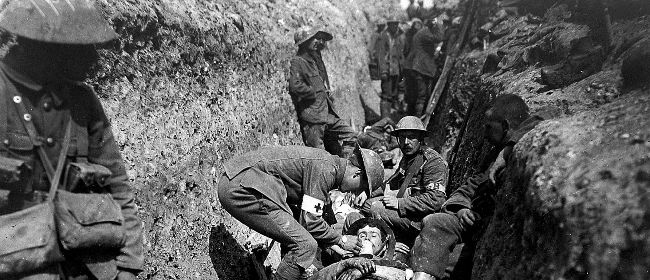
The impact of military service made it difficult for many veterans to return to everyday life and the demands of family and employers

For many the relationship between war and crime is a simple one. Crime drops during wartime due to the removal of young men, the group most likely to commit crime, and then rises again following demobilisation when hostilities end. It also assumed that post-war societies experience a lasting rise in crime due to the economically and socially disruptive effects of war. In 1926 Thorsten Sellin, arguably the leading pioneer of scientific criminology, published a statistical analysis that suggested that violent crime had risen significantly in Europe since the end of the First World War. Sellin’s analysis then seemed to vindicate the conventional wisdom on crime and war. Yet while the murder rates of France, Germany and Italy saw significant rises, England and Wales broke the trend of established criminological thought and experienced only a brief rise in crime. Although in 1919 there were 123 murders known to the police, in 1921, by which point most men had been demobilised, there were only 90. Apart from the war years, this was the lowest number of murders since 1910.

This statistical trend seemed to confirm the belief that the British were an exceptionally ordered and peaceful people, especially when compared to their former allies and enemies on the European continent.

There is much debate on the causes of post-war violence, and it would be an exaggeration to conclude that increasing violent crime in Scotland was solely due to the First World War

This phenomenon has been well documented by Jon Lawrence who notes that despite the violent excesses committed by British forces in Ireland and India, placidity and a respect for the rule of law were believed to be uniquely British traits. However this particular form of British exceptionalism ignores Scotland’s own experience of post-war crime.

Scotland and crime

A cursory glance at interwar crime statistics might suggest that crime had actually fallen in Scotland after the First World War. In 1913 there were on average 2,194 male prisoners held daily, yet by 1921, when most servicemen had been demobilised, the figure was as low as 1,857, and it continued to fall throughout the 1920s. However, the declining prison population was most likely due to the practice of allowing defendants the time to pay a court imposed fine, rather than imposing a prison sentence on those who could not pay. If the statistics are examined more closely it is clear that in many categories of offence numbers rose, and in some cases this can be directly attributed to the war. Bigamy for example rose sharply during the war and continued to rise even after hostilities ended. In 1913 there were 20 males imprisoned for bigamy in Scotland, yet by 1918 this had risen to 74 and by 1919 to 103. Even by 1926 imprisonments remained above pre-war levels, and were as high as 47. There are several reasons why the First World War contributed to a rise in bigamy in Scotland. The separation allowance, a payment granted to the wives of serving men, created a financial incentive for bigamy. Men who had long been estranged from their wives married their common law wives in an attempt to gain the allowance. Why imprisonments continued to rise after the war may have been due to the detrimental impact the war had on family life. Hughes and Meek’s sampling of poor law applications in Govan found that between 1911 and 1929 applications from deserted wives rose from 30.4 per cent of all applications to 37 per cent. Veterans who were accused of bigamy even attempted to cite their war service as a mitigating factor. When Thomas Noble was tried for bigamy at Glasgow in 1918 his agent claimed that ‘the accused suffered severely from shell shock. He was at times very excitable, and it was during one of these attacks that he met the second woman and offered to marry her’. The sheriff however remained unconvinced and sentenced Noble to twelve months hard labour.

Leggete l'articolo completo e molti altri in questo numero di History Scotland
Opzioni di acquisto di seguito
Se il problema è vostro, Accesso per leggere subito l'articolo completo.
Singolo numero digitale May - Jun 2019
 
€5,99 / issue
Questo numero e altri numeri arretrati non sono inclusi in un nuovo abbonamento. Gli abbonamenti comprendono l'ultimo numero regolare e i nuovi numeri pubblicati durante l'abbonamento. History Scotland

Questo articolo è...


View Issues
History Scotland
May - Jun 2019
VISUALIZZA IN NEGOZIO

Altri articoli in questo numero


History Scotland
FROM THE EDITOR
Those of us who lived through the Second World War
NEWS
VICTORIAN ERA GLASS PHOTOGRAPH SLIDES RESCUED FROM SKIP
Remarkable images of pioneers boring through rocky mountainsides during the construction of the Katrine aqueduct have been rescued from a skip as work takes place on refurbishment of the aqueduct
Newly-discovered Mary Queen of Scots letters shed light on life in 16th-century Edinburgh
Newly-discovered Mary Queen of Scots letters shed light
Radiocarbon dates from Coldingham confirm location of 7th-century monastery
A team of archaeologists who have been working on a project to locate the remains of Coldingham monastery in Berwickshire have revealed the results of their first set of radiocarbon dates
New focus on the battle of Stirling Bridge
The National Wallace Monument has released new visuals
WAR POETS TRAIL
This month Neil McLennan takes a new approach to his hidden histories explorations, introducing a thematic trail that takes in newly-installed memorials to the country’s war poets
IN-DEPTH FEATURES
SCOTLAND’S GREAT WAR MEMORIALS
Dr J.J. Smyth and Dr Michael Penman discuss Scottish Great War memorials, asking what the huge volume and diversity of memorialisation projects can tell us about the way Scots sought to remember and commemorate their dead in the immediate aftermath of war
Making it new interwar literature
Dr Margery Palmer McCulloch explores the ‘Scottish renaissance’, an outpouring of literature in the years between the two World Wars, producing a rich body of work from numerous authors that is still appreciated almost a century later
THE UN-PEACEFUL PEACE: SCOTLAND AND THE US IN THE POST-WAR PERIOD
Dr Stephen Bowman examines the relationship between Scotland and the United States in the interwar period, discovering a shared experience of anxiety and social dislocation that was shaped by the historical connection between the two countries
DESOLATION OR NEW DEAL? THE HIGHLANDS IN THE INTER-WAR PERIOD
Professor Ewen Cameron explores the experience of the Scottish highlands between 1918 and the late 1930s, a period of sustained discussion about the economic and cultural future of a region reeling from the aftershocks of the First World War
Going back to yesterday: the legacy of war
Reflecting on the various ways in which the centenary of the First World War was commemorated in text, Dr Catriona M.M. Macdonald argues that we are developing a new, more democratic narrative of the conflict, putting the people of Scotland, and their stories, centre-stage.
ARCHAEOLOGY NEWS
The salvage sites of the German High Seas Fleet in Scapa Flow
As the centenary of the scuttling of the German High Seas Fleet approaches, Kevin Heath, Malcolm Thomson, Sandra Henry, Mark Littlewood and Paul Sharman take a look at how the underwater wrecks have been explored and salvaged over the decades
FEATURES
LOUISE & LORNE: A ground-breaking royal marriage
This May marks the 200th anniversary of the birth of Queen Victoria. Margaret Brecknell explores the marriage of Victoria’s daughter Louise – a match that went against the strict conventions of the time
THE MITCHELL LIBRARY’S BLACK BENEFACTOR: The brief life of Louis Edward Campbell
Morag Cross tells the story of how the son of a Glaswegian merchant, born to an African mother on a Caribbean island just after the abolition of slavery, went on to become one of the benefactors of Glasgow’s Mitchell library
REGULARS… IN EVERY ISSUE
Women registrars in Scotland
Dr Tristram Clarke examines what an historic photograph can reveal about the rise of women registrars in Scotland
history SCOTLAND PLUS…
Captain Robert Pincarton and Darien
A foot soldier of Empire
Ben Fanstone delves into the life of James Taylor and his inluence on the development of Ceylon’s exports
Battle of Prestonpans
Martin Margulies enjoys a reappraisal of the 1745 Battle of Prestonpans
New analysis
HelenYoung explores a fresh account of early modern Edinburgh and the influences of the Scottish Enlightenment
Living history
Experience history first-hand with our pick of outdoor
THE BATTLE OF GLENSHIEL
Peter Tillemans’The Battle of Glenshiel is based on eye-witness accounts of the battle and features figures including Rob Roy MacGregor and General Joseph Wightman
Spotlight on… Tullibody History Group
Tullibody is one of Scotland’s oldest villages, with
Burial records
Ken Nisbet of the Scottish Genealogy Society shares his expert tips for finding an ancestor’s burial records online
TREASURES OF THE SCOTTISH HISTORY SOCIETY
Dr Annie Tindley spotlights a collection of strike bulletins that highlight the high level of engagement from the population of Scotland in the general strike of 1926
Tales of the past
We talk to Jackie Lee, director of Artemis Scotland, about her work in providing heritage interpretation via costumed characters using storytelling techniques to engage visitors at historic attractions
Chat
X
Supporto Pocketmags