The salvage sites of the German High Seas Fleet in Scapa Flow
As the centenary of the scuttling of the German High Seas Fleet approaches, Kevin Heath, Malcolm Thomson, Sandra Henry, Mark Littlewood and Paul Sharman take a look at how the underwater wrecks have been explored and salvaged over the decades
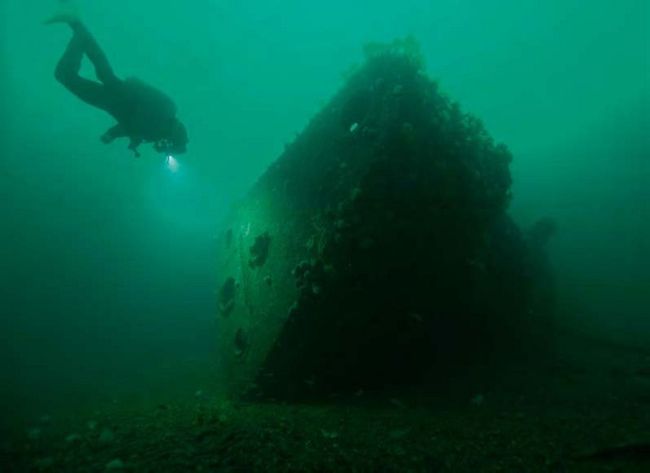
SMS Kaiser primary salvage site splinter proof spotting top from forward mast
Scapa Flow in Orkney is the largest natural harbour and anchorage in Europe at 325 square kilometres in size, with sheltered waters that are mostly 20-60m deep. The Admiralty adopted it as the main base for the British Grand Fleet at the start of the First World War, to control the northern access to the North Sea and the Atlantic.
The Scuttling of the German High Seas fleet
In late November 1918, much of the German High Seas fleet was interned at Scapa Flow under the terms of the armistice of 11 November. The 74 German vessels were at anchor around the island of Cava and in Gutter Sound when, on 21 June 1919, believing the armistice was about to end with either a resumption of hostilities or Germany accepting the harsh terms of the peace treaty, Rear Admiral Ludwig von Reuter gave the order to scuttle the fleet. This was in order to prevent the British from seizing the ships for their own use, and was a manoeuvre that had been planned in advance, for example by crews secretly welding doors open, laying charges and dropping tools overboard so that hatches and valves could not be shut.
In the largest recorded single loss of ships in history, 52 vessels were successfully scuttled in three hours. The other 22 interned vessels, consisting of one battleship, three light cruisers and eighteen destroyers, were beached by a small contingent of the British Royal Navy, much of which was out at sea conducting fleet exercises during this extraordinary incident. Nine German sailors died during the event, shot by British forces, and were reputedly the last casualties of the First World War (excluding all those who lost their lives through wartime injury and illness in the ensuing months and years).
Salvage of the fleet
The Royal Navy’s salvage advisors stated that salvaging the scuttled vessels was not viable for a variety of reasons, including the fact that the destroyers sank two or three to a buoy and lay in entangled heaps on the seafloor; no pontoons existed capable of lifting the capital ships from the seafloor; and the cost of lifting would be equal to or greater than the value of the salvaged material, a statement that rang true for subsequent salvors. The Admiralty concluded that the ships should be left on the seabed, deciding they did not pose a navigational hazard, a presumption quickly shown to be untrue.
Leggete l'articolo completo e molti altri in questo numero di
History Scotland
Opzioni di acquisto di seguito
Se il problema è vostro,
Accesso
per leggere subito l'articolo completo.
Singolo numero digitale
May - Jun 2019
Questo numero e altri numeri arretrati non sono inclusi in un nuovo
abbonamento. Gli abbonamenti comprendono l'ultimo numero regolare e i nuovi numeri pubblicati durante l'abbonamento.
History Scotland