Oils
Step into the landscape
Part 2 How to make the most of contrasting tonal values to paint successful landscapes, by DJ
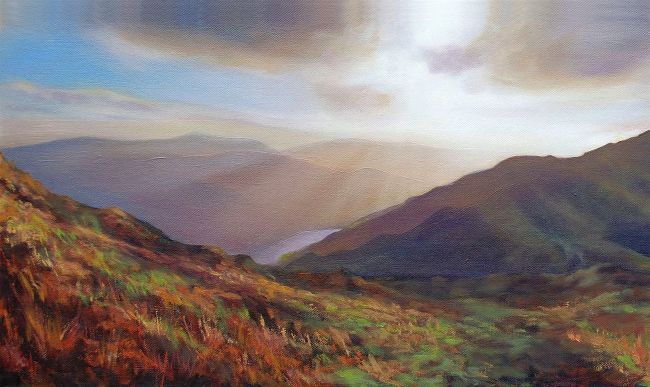
Cadair Idris,
oil on canvas, 11¾x31½in. (30x80cm). The illusion of distance in this painting was achieved by the layering of tonal values from dark to light
Learning objectives
■ How to create depth in your landscapes
■ Inject drama with the use of tonal contrast
■ How to place the focal point
You will hear the term ‘tonal values’ used a lot in conversations around art, but what exactly is tone? To put it simply, tone refers to the darkness or lightness of a colour. Without tone your paintings can appear flat and two dimensional, but a range of tonal values can help you to achieve a sense of depth and distance in your landscape. They can make a scene come to life and can bring drama and emotion to the simplest of landscapes. Tone can make your paintings pop! When I’m working late in my studio, I sometimes sit with my painting and make notes on what I need to do next, and suggestions on how to improve my work. On these notes you will frequently see these six words: Make darks darker, and lights lighter. This can make a huge difference to your paintings, and really bring them to life. A quick and easy way to check the tonal values in your work is to take a photo of your painting with your smartphone. Open the photo on your phone and press edit. Find the colour saturation filter and remove all the colour from your photo. You will now be left with a tonal image of your artwork.