YOU GOT ME HUMMIN'
Who knew that in the mountain of snogs Stax Records didn't put out were many as great as those they did? Ouly their writers - until now. This month, a brand new seven-disc box set of unreleased demos and overlooked songs sheds extraordinary new light on memphis's soul explosion, and its prime movers. "Everybody at Stax was there for one reason," they tell Bill DeMain:"to get ahit record!"
DECEMBER 1965, Memphis, Tennessee. There’s a wrestling match going on inside 926 East McLemore Avenue. The cause of the scuffle, between Stax’s Eddie Floyd and visiting Atlantic artist Wilson Pickett, is the demo for 634-5789 (Soulsville, USA). A groovy stomper tailored specifically for Pickett by Floyd and Steve Cropper, it did not elicit the hoped-for response. Pickett wadded up the lyric sheet and chucked it across the room. Floyd leapt at him and they fell to the studio floor.
“Wilson was an ignitable guy,” Steve Cropper says. “But it turned out he and Eddie were just fooling around. It was part of their antics as old friends.”
From the dining room of Cropper’s Nashville home, its Victorian mahogany décor offset by a Fender Telecaster lying on the table in front of us, the Stax guitarist tells MOJO in his burly drawl that he and Floyd had written the song just days before, in the bridal suite of the Lorraine Motel.
“Old man Bailey who owned the Lorraine would stick us in there if there weren’t newlyweds in it,” Cropper says. “I wrote a lot of songs in there.” Inspired by Memphis’s move from lettered to numbered phone exchanges – for instance, “CHestnut5” became “385” – he and Floyd tried several numerical combinations before unlocking their seven-digit invitation for “a little lovin’”. Cropper acknowledges the nod to The Marvelettes’ 1962 hit Beechwood 4-5789, and says, “Eddie and I thought it might be different to have a song with just numbers.”
Riding the rush of a freshly-minted tune, their sparse demo was taken at a brisk clip, Cropper’s guitar suggesting bass and horn parts. But it was Floyd’s winking Romeo vocal that sold it. And likely caused the scrap. Compared to Pickett’s Number 1 R&B version, Floyd sounds like he’d be getting more action on his phone line.
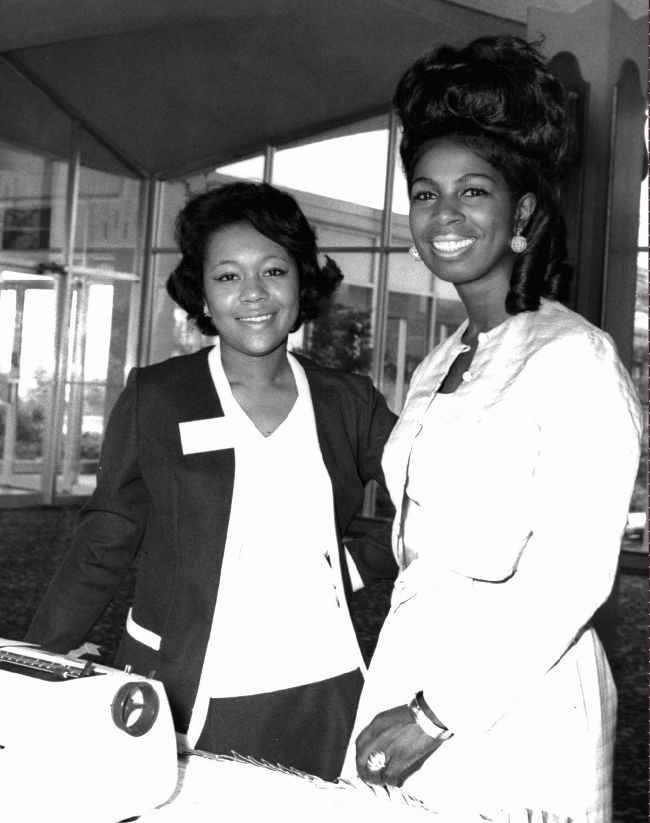
Stax artist/songwriter/publicist Deanie Parker and key songwriter Bettye Crutcher;
Gilles Petard/Redferns, Getty (2), Courtesy of the Deanie Parker Photo Collection
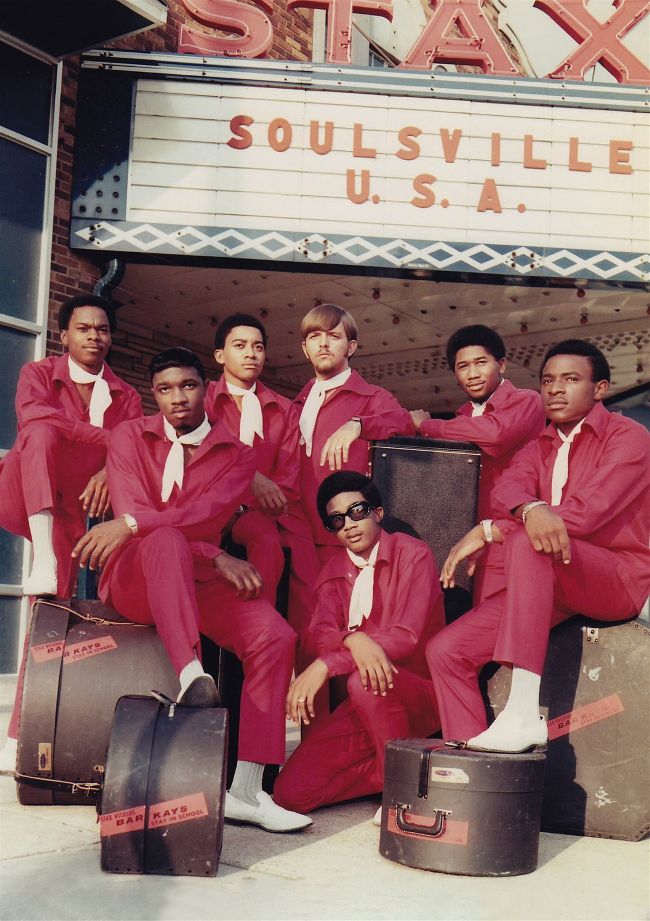
Family affair: Stax act The Bar-Kays outside the Soulsville USA headquarters, Memphis, 1967;
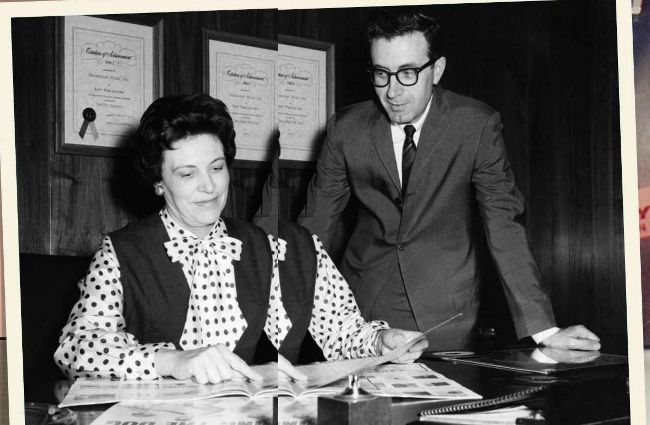
label founders Estelle Axton and Jim Stewart.
SOUL TRADERS
Stax's stewards, stars and songwriters, in a nutshell.
Jim Stewar
A banker and parttime fiddler, Stewart (above) started the label in his garage. Abandoned his idea to record hillbilly music after hearing Ray Charles’s R&B barnstormer What’d I Say.
Estelle IlKton
Stewart’s sister mortgaged her home to help build Stax studio in an abandoned movie theatre. Ran Satellite Records, acting as a den mother for incoming songwriters.
Steve Cropper
Tasty minimalist guitarist, producer, M.G. and Stax’s most versatile co-writer. Penned hits with everyone from Otis Redding to Carla Thomas to Wilson Pickett.
Henderson Thigpen
One of Stax’s last staff songwriters, Thigpen was just finding his hit groove with Woman To Woman in 1974 when the label filed for bankruptcy.
Bettye Crutcher
The most prominent of Stax’s three female songwriters, Crutcher (left) used her cooking skills and prolific musical flair to break the glass ceiling.
William Bell
The honey-voiced Memphis native grew up singing in church and went professional at 14. His self-penned 1961 debut hit You Don’t Miss Your Water embodied Stax’s down-home style.
Homer Banls
The hermit of Stax, Banks was passed over as an artist by Jim Stewart, so poured his energy into songwriting (see demo tape below). His speciality was simple, devastating ballads.
David Porter
Porter and Isaac Hayes were one of Stax’s most successful songwriting partnerships, supplying hits for Sam & Dave, Mable John and Rufus Thomas.
Isaac Hayes
Before becoming a sensual ’70s soul icon, Hayes was an arranger-pianist for the Stax house band, and David Porter’s main co-writer.
Dennie Parker
Artist, songwriter, publicist – Parker (right) played many roles at the label. Since 2003, she’s been CEO of the Stax Museum. Co-wrote box set linernotes with Robert Gordon.
Booker T. Janes
Multiinstrumentalist, organ-playing leader of the M.G.’s, producer and songwriter, he had his most successful song collaborations with Steve Cropper and William Bell.
Al Jackson and Donald 'Duck' Dunn
The drums and bass rhythm section and heart of the mighty Stax groove.
Otis Redding
Arrived at Stax in 1962 as a roadie for Johnny Jenkins, walked out with a recording contract. Went on to become the label’s most successful artist, until his tragic death in 1967.
Sam moore
With Dave Prater, Moore was half of Stax’s top vocal duo, singing Hayes-Porter-penned hits including Soul Man and Hold On! I’m Coming.
Al Bell
Former DJ, songwriter and the ‘Soul Explosion’ catalyst who took the reins from Jim Stewart in Stax’s last years.