UNITED COLORS WHEN F1 WAS IN FASHION
In the 1980s Benetton emerged on the grid to reach a global audience for its clothing. Damien Smith tells how a rebel brand went on to rattle the F1 establishment
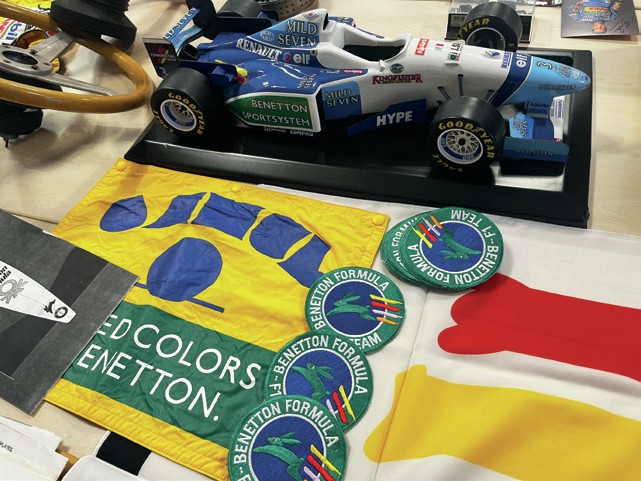
Benetton’s first foray into Formula 1 was as the main sponsor of Tyrrell in 1983. Right from top: Alessandro Benetton, son of company founder Luciano; a rich assortment of automobilia in the F1 team collection
Take a step back for a moment. An Austrian company that sells a sickly sweet, fizzy energy drink is the dominant force in the world’s most technically sophisticated and complex sport, thanks to its committed patronage of a British-based Formula 1 team. It’s become normal now so we take it for granted, yet it’s still amazing. But doesn’t that premise sound familiar? Twenty years before sorry Jaguar morphed into brash and disruptive Red Bull Racing, Benetton got there first. The parallels are uncanny.
That much emerged time and again during the four years it took to research and write a newly released book on Benetton, coined as the Rebels of Formula 1. Red Bull has big characters at the top in Christian Horner and Helmut Marko, a genius designer in Adrian Newey, totemic drivers in first Sebastian Vettel and now Max Verstappen, and an enigmatic figurehead in the late Dietrich Mateschitz. Likewise, a cast of giant characters pepper the Benetton story: most obviously the flamboyant Flavio Briatore, his more grounded predecessor Peter Collins, the great Ross Brawn, Tom Walkinshaw, Pat Symonds, another of F1’s most inspirational designers in the shape of Rory Byrne, a divisive genius in the cockpit during the team’s mid1990s heyday, Michael Schumacher – and at the top an arms-length figure around which there’s a degree of mystery, Luciano Benetton.
Colourful stories abound when it comes to this spiky, controversial team, again just like Red Bull. But what I kept coming back to as the book took shape was the question why. Why did a garish, impertinent Italian fashion house known for its provocative ad campaigns and colourful woolly jumpers and T-shirts end up owning an F1 team in the first place? What was it all about?
“Its billboards embraced taboo subjects – Aids, sexuality and race”
BENETTON GROUP
“Yes, it is quite interesting,” muses Pat Symonds, who was there through it all, from the team’s roots as Toleman to the Benetton buy-out in 1985 and beyond the company’s F1 exit in 2001, after it had sold the team to Renault. “I’ve spent 40 years in F1 and have listened to a lot of marketing people talk up their great sponsorship leads, but nine times out of 10 whether they go for it or not comes down to the person who can make the decision, whether it’s the owner, CEO or commercial director.
“If he likes golf, he’ll sponsor golf. If he likes cricket, he’ll sponsor cricket – and if he likes motor racing… it really is as simple as that. The strange thing was with Luciano Benetton and the whole family, I never really saw that passion for motor sport. Luciano is a fantastic guy, a remarkable character in every respect, as a businessman and as a person. I really liked him – even though we didn’t have a great deal to do with him.”
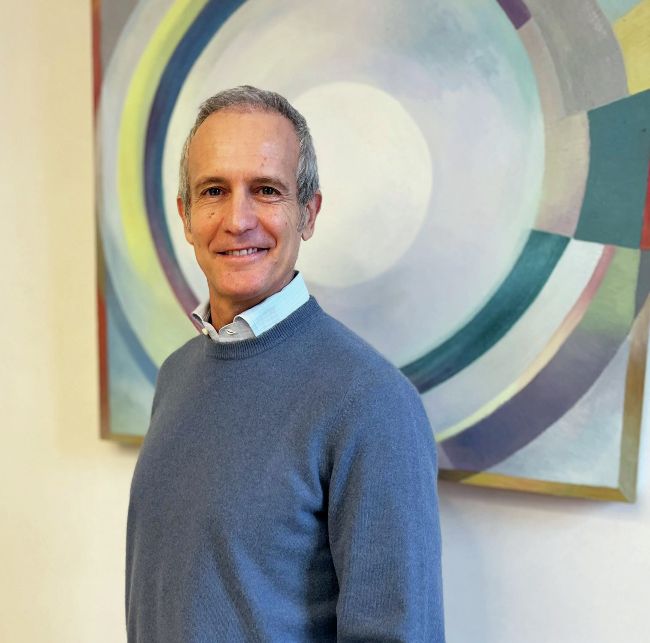
I wasn’t sure I’d ever get to the bottom of this fundamental question. Then right at the end, just before I was about to press send on the manuscript, a breakthrough. Through former Benetton marketing executive Patrizia Spinelli, I finally made contact with the Benetton family. At 88, Luciano Benetton wasn’t available. But would I like to meet Alessandro Benetton, his oldest son and a figure who played a direct role in representing the family’s interests during the F1 era? I caught a flight and met Alessandro in the offices of Edizione, the Benetton family’s holding company, of which he is chairman and which is based in Treviso not far from Venice, a short drive from the original clothing factories.