TALES OF THE CITY
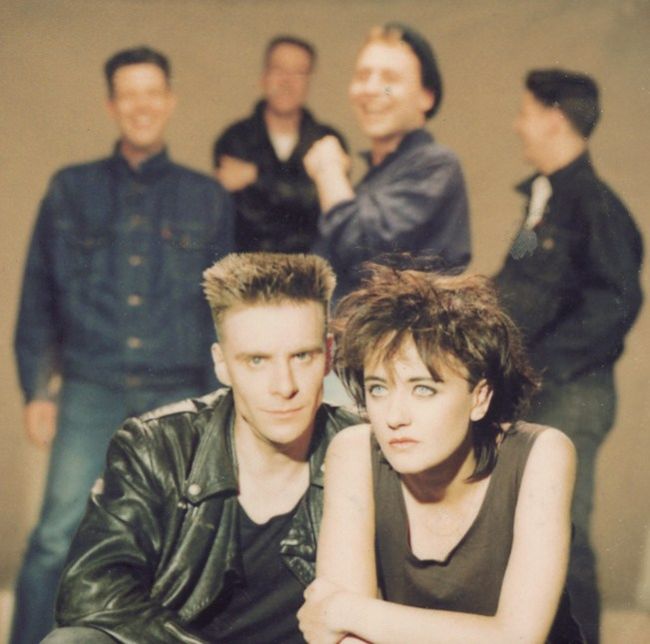
Deacon Blue in 1987, the year their debut album, Raintown, was released. The LP peaked at No.14 in the UK and remained in the charts for more than 18 months.
If there was ever a band destined to make a record called City Of Love, it’s Deacon Blue. After all, these themes – of hearts full of hope, and cities full of dreamers – have been the twin engines of their passionate, anthemic Celtic soul music for more than 30 years. It’s a philosophy that arrived fully-formed on their million-selling debut album, 1987’s Raintown – a romantic but clear-eyed portrait of inner city Glasgow at the fag-end of the Thatcher years – and one that’s run like a watermark through their songbook ever since.
“I guess songwriters tend to be city people,” muses Ricky Ross, the Dundee-born former English teacher who assembled Deacon Blue in Glasgow 35 years ago. “When you think of the Brill Building, Lennon and McCartney coming out of Liverpool, Nashville, London…
“Cities are places where stories happen. And they’re places of shelter, where people come – they kind of mop people up. In some ways, it’s a miracle they work at all, but they do. So for me, the city has just always been a very central place to everything I’ve done, musically. A lot of songwriters flee the city eventually,” he notes. But he and his wife (and bandmate) Lorraine McIntosh have stayed in Glasgow, making their home and raising their three children in the city’s south side.
As for the other half of the album’s title: “In a sense you’re always writing a love song,” says Ricky. “From Tin Pan Alley to hip-hop, it’s the one form of songwriting that doesn’t go away.”
SEEING THE LIGHT
As with so much of the band’s back catalogue, the love of City Of Love isn’t just of the swooning, red-blooded variety (though there’s certainly no shortage of that). It’s also a byword for compassion and hope, and a sense that light still prevails, even in the darkest of days.
It’s a sentiment that shines through songs like Intervals (“It’s the spaces that I seek… intervals of light”), the self-explanatory Keeping My Faith Alive, and the title track, in which Ricky entreats his subject – a spiritual successor, perhaps, to the council street-sweeper who, in their debut hit, dreamed of sailing away on a ship called Dignity – to keep on going “until you reach the end, and lay down your burden”.
“We live in hugely troubled, conflicted times,” observes Ricky. “And I think maybe, with City Of Love, I was just looking for something that could heal, and be a balm.”
His songwriting has always been political, chronicling the Strathclyde rustbelt like a Scottish Springsteen. But by his own admission, he’s less of a rabble-rouser than the man who, playing in front of a crowd of 250,000 at Glasgow’s Big Day in 1990, launched into an impassioned diatribe about the workers of Motherwell and Ravenscraig being “lied to and sold down the river” by a remote Westminster elite.