IN MEMORIAM
JONATHAN RIGBY pays tribute to the Doctor Who luminaries who passed away between December 2019 and November 2020.
News of the following deaths reached us too late for inclusion in the last Yearbook:
17 October 2019
WENDY WILLIAMS
Wendy Williams, born in Cheam in November 1934, started out at the Oxford Playhouse prior to making her West End debut opposite Frankie Howerd in Charley’s Aunt (1955-56). A long run at the Bristol Old Vic yielded, among other plays, Look Back in Anger, alongside Peter O’Toole and Barry Wilsher [qv]; a similar run at London’s Old Vic preceded a major TV showcase in Granada’s Knight Errant Limited (1960-61). Further television credits included North and South, The Regiment, Dominic, Poldark, Tenko, Beau Geste, Cause Célèbre and, in the 1990s, The Black Velvet Gown, while later stage appearances included Dear Brutus (Windsor, 1978) and The Lion in Winter (Canterbury, 1980). In 1960 she married her Knight Errant Limited co-star Hugh David, who subsequently directed the Second Doctor serials The Highlanders (1966-67) and Fury from the Deep (1968); she herself played Nerva medtech Vira in the Fourth Doctor story The Ark in Space (1975).
9 November 2019
TONY SNOADEN
Tony Snoaden - 93 at the time of his death - was a BBC production designer whose early credits ranged from the marathon investigative documentary The Death of Kennedy (1967) through sitcom (Not in Front of the Children, Me Mammy, Whoops Baghdad!) and copshow staples (Dixon of Dock Green, Softly Softly, Z Cars) to such children’s programming as Crackerjack!, Record Breakers and Play Away. A similarly eclectic mix carried him through to the mid-1980s with titles like Wings, Grange Hill, Citizen Smith, Solo, the inaugural season of Only Fools and Horses and the Screen Two presentation The Silent Twins. For Doctor Who he was assigned Third, Fourth and Sixth Doctor adventures in the shape of The Sea Devils (1972), The Sun Makers (1977) and Vengeance on Varos (1985).
2 December 2019
RICHARD EASTON
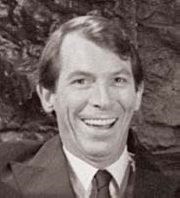
Born in Montréal in March 1933, Richard Easton’s astonishing stage career was truly transatlantic. In the 1950s he could be found playing Shakespeare at Stratford-upon- Avon, Stratford Ontario and Stratford Connecticut, as well as making his West End debut in Both Ends Meet (1954) and his Broadway bow in Measure for Measure (1957). Among 1960s engagements, he moved easily from playing Fagin in a major UK tour of Oliver! (1965-66) to directing himself as Shakespeare’s Brutus in San Diego (1969). He attained household-name status via the BBC series The Brothers (1972-76), joined the Royal Shakespeare Company in the 1980s, in 2001 picked up a Tony award for The Invention of Love, and seven years later was inducted into the American Theater Hall of Fame. In addition to Captain Stapley in the 1982 Doctor Who story Time-Flight, his later screen credits included LA Law, Frasier, Finding Forrester, Revolutionary Road and Boardwalk Empire. His fi nal stage appearance, playing Duncan to Ethan Hawke’s Macbeth, was in 2014.
3 December 2019
DONALD TOSH
Born in Hastings in March 1935, Donald Tosh joined Granada Television’s story department at 22 and, among other things, helped develop Coronation Street. Moving to the BBC, he was story editor on Compact and then Doctor Who, working on the latter from The Time Meddler (1965) up to The Massacre of St Bartholomew’s Eve (1966). Closely allied to incoming producer John Wiles, Tosh later pointed out that “We were, I suppose, somewhat darker in tone than other teams.” As well as killing a companion (two, actually: in The Daleks’ Master Plan, 1965-66), the pair also initiated a melding of ancient and futuristic themes that, paradoxically, refl ected Tosh’s zeal for historical accuracy. Having ended his tenure by rewriting much of Massacre and concocting an early draft of The Celestial Toymaker (1966), Tosh wrote the Southern Television series Mystery Hall prior to script-editing the corporation’s Peter Cushing-fronted Sherlock Holmes dramas and the 1970 series Ryan International. He then left showbusiness, working instead for English Heritage - though his unproduced Doctor Who story, The Rosemariners, became a Big Finish audio drama in 2010. A tribute to Donald Tosh appeared in DWM issue 548.
16 December 2019
BEN PALMER
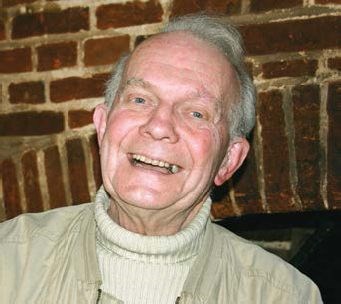
Ben Palmer - 96 at the time of his death - was the BBC investigations engineer who experimented with a howlround camera eff ect fi rst noticed by his colleague Norman Taylor. “I conducted several tests,” Palmer recalled in issue fi ve of the BBC magazine Prospero, “and discovered an astonishing range of feedback eff ects which were visually stunning.” Palmer’s use of the technique in a 1959 production of Tobias and the Angel produced the weirdly oscillating fi lament of light that was repurposed in 1963 for the very beginning of Doctor Who’s original title sequence. Later, in December 1966, Palmer realised the Bernard Lodge-designed title sequence in which Patrick Troughton’s face was added to the mix.
24 December 2019
TREVOR RAY
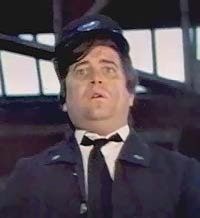
In 1955, Trevor Ray graduated, aged 21, from the Guildhall School and went straight to the Oxford Playhouse. At the Mermaid in May 1959 he created the role of Quill in Lock Up Your Daughters, reprising it nine years later in the fi lm version; he was also in the original West End production of Oliver! (1960; as Noah Claypole). He subsequently made numerous appearances at the National Theatre over several decades, ending in 2001, as well as writing such NT productions as the 1977 late-night revue The Camilla Ringbinder Show and the 1983-84 pantomime Cinderella. Also in 1977 he wrote the classic HTV series Children of the Stones and ATV’s similarly folkloric Raven, both in collaboration with Jeremy Burnham. In the late 1960s he was uncredited assistant script editor on much of Seasons Six and Seven of Doctor Who; he also rewrote the opening episode of The Ambassadors of Death and played a Marylebone ticket inspector in the previous story, Doctor Who and the Silurians (both 1970).
30 December 2019
BILL MEVIN
Liverpool-born in January 1922, Bill Mevin started out as an animator for fi rst Gaumont- British and then Halas and Batchelor. In the mid-1950s, however, he moved into the more congenial fi eld of comic-strip art. His fi rst assignment for TV Comic was its Lenny the Lion strip; after eight years of what he termed “a conveyor belt” of television adaptations, he was selected as successor to Neville Main on the comic’s Doctor Who strip. For a brief but memorable period (October 1965 to April 1966), Mevin’s lushly coloured style revitalised the comic’s eccentric spin on the programme, introducing, among other things, metallic monowheeled villains called the Go-Rays. In later years, Mevin illustrated The Perishers for the Daily Mirror from 1992 to 2006, and as recently as 2012 he put the First Doctor and a Voord onto the cover of Paul Scoones’ book The Comic Strip Companion. A tribute to Bill Mevin appeared in DWM issue 548.