A bright future for ecclesiastical treasures
Against a background of the gradual erosion of Scotland’s ecclesiastical heritage, the Scottish Redundant Churches Trust strives to strike a balance between the conservation and reuse of historic churches. By Victoria Collison-Owen
By Victoria Collison-Owen
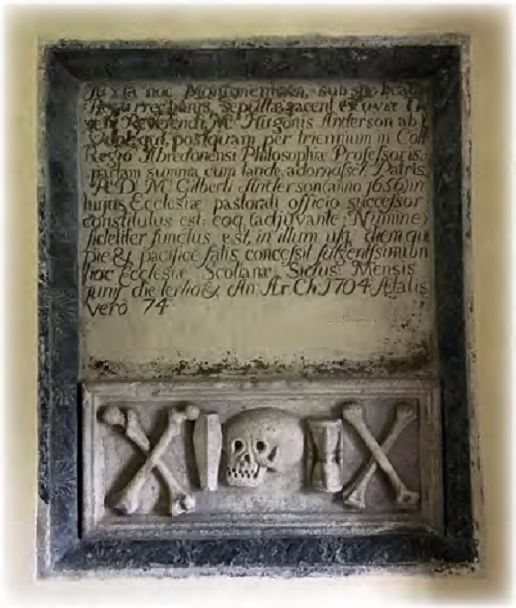
Memorial to Gilbert Anderson and his son Hugh, Cromarty parish ministers in the seventeenth century, in the vestry of the East Church
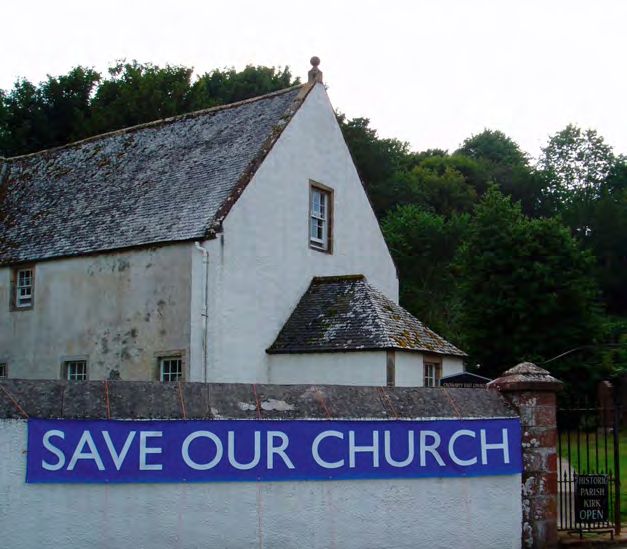
‘Save our Church’ banner at the East Church, 2006. The SRCT works in partnership with communities to bring about the restoration and regeneration of their church, and to foster a sense of pride and ownership
The nature, character and extent of Scotland’s ecclesiastical heritage is the product of its own particular political and religious history, notably: its Reformation in the 16th century; its turbulent 17th century; the splintering of its Presbyterian denominations in the 18th and 19th centuries; and their partial reunion in the 20th century. The survival and revival of the Catholic and Episcopalian Churches, and the arrival of other denominations and non-Christian faiths from other countries and cultures, have added to the richness, diversity and complexity of Scotland’s ecclesiastical heritage.
(Historic Environment Advisory Council for Scotland [HEACS], report with recommendations on the long-term conservation of the ecclesiastical heritage in a time of demographic change, September 2009)
Scotland’s story, and that of its people, is inextricably bound up with the nation’s religious history. Our rich ecclesiastical heritage, found in every community the length and breadth of the country, is fundamental to understanding our culture and identity. Part of the richness of that heritage lies in its sheer scale: research in 2008 established that there were over 4,000 protected ecclesiastical structures in the country, plus an estimated 6,000-10,000 unprotected ecclesiastical sites.