F40 and F50
THE ‘WHAT IF’ VERSIONS
Though the F40 and F50 were resolutely developed as road cars, there were also racing plans
Words Matthew Hayward
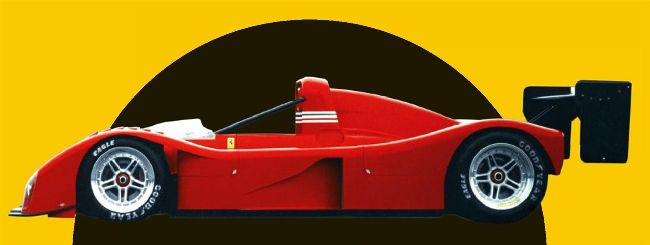
F50’s engine was developed to power the long-lived 333SP
THOUGH FERRARI’S halo models might feel like road-legal racing cars, the motorsport links have not always been the most tangible. The lineage here starts with the 288 GTO, designed from the outset for Group B homologation, but the series that would have seen it go head-to-head with Porsche’s 959 on track never materialised, sadly.
A single 288 Evoluzione was constructed before the official cancellation of the series, with a further four built by Ferrari racing partner Michelotto. And in effect, those four cars acted as a testbed for the use of lightweight materials in the upcoming F40.
While the F40 wasn’t built with motorsport in mind, its carbon-Kevlar construction was taken straight from the racetrack and it slotted into the racing world with very little trouble. Thanks to the close relationship with Ferrari, Michelotto was actively involved with the F40’s development and, as a result, built its own track-focused model. Christened the LM, it saw Ferrari return to GT racing in 1989. With some promising results in the IMSA GT racing series, the LM (and its more powerful Competizione replacement) continued racing well into the 1990s, even taking on Le Mans in 1995 and ’96 in privateer hands.