Books
The black bohemian
CLR James’s writings on empire and cricket were marked by moral clarity and mischievous provocation
by COLIN GRANT
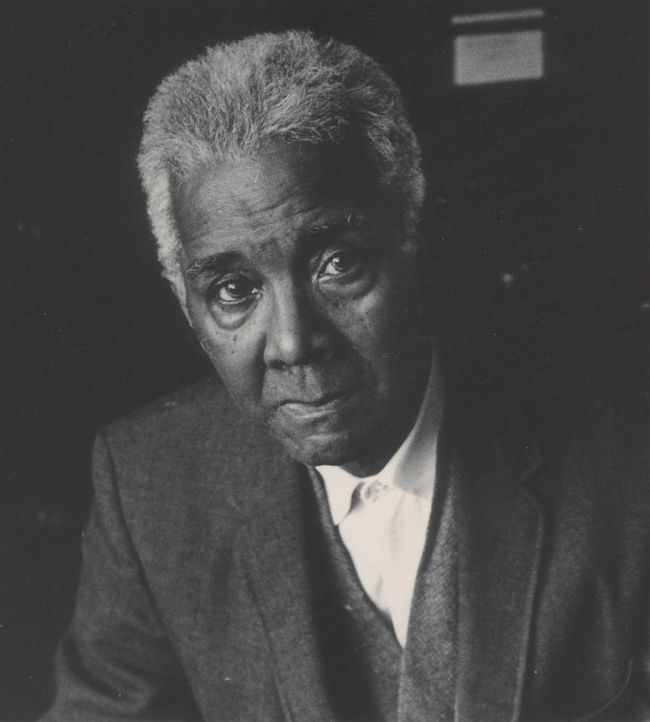
Éminence grise: CLR James on New Year’s Eve in 1975
© VAL WILMER
Cyril Lionel Robert James was a conundrum: a Trinidadian Marxist with an unwavering regard for Shakespeare, Michelangelo and especially cricket—as displayed in his most famous book, Beyond a Boundary—he was also a major intellectual and a phenomenal orator. His admirers included Paul Robeson, Nancy Cunard, Learie Constantine and Leon Trotsky. The thoughts of CLR James (known simply as CLR) were underpinned by a moral clarity and an elegant prose style, enlivened with flashes of the kind of mischievous provocation Trinidadians call picong. He knew his worth. In later life, if someone he didn’t like dropped by unexpectedly to his Brixton flat, he told his secretary to inform them that he was dead.
That last detail comes from CLR James: A Life Beyond the Boundaries, a richly researched and inviting text by John L Williams. Though Williams doesn’t genuflect in front of his subject, he is clearly enthralled by him. Works on CLR have accelerated since his death in 1989. An earlier biography by Farrukh Dhondy begins in 1952 with a description of a near-empty stand at an Oxford University cricket match:
A tall black man in his fifties, wearing a floppy hat [watches] the game intently. Across the field an undergraduate [VS Naipaul], nudges the captain of Oxford. “Do you know what that negro is doing?” Naipaul asks. “Having a day off ?” “No, he is reporting the match for the Manchester Guardian.” The very notion gives rise to some hilarity.
The anecdote encapsulates the challenge CLR faced and would overcome throughout his rich and illustrious life. In Britain, four years after the arrival of the HMT Empire Windrush, it was still anathema to many in England to see a black man reporting for a newspaper.