Enthusiast with a racing calibre
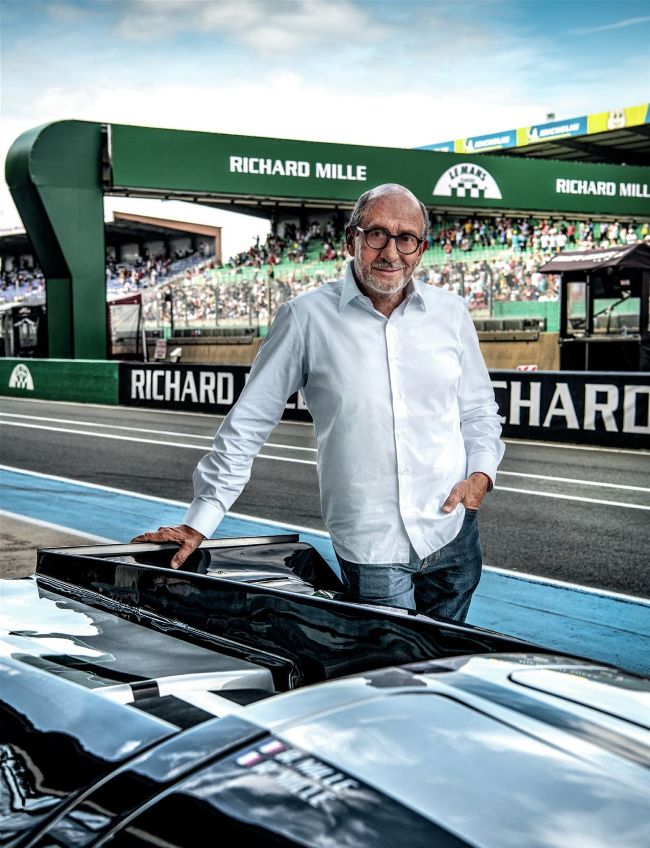
Watchmaker, car collector, team owner and president of the FIA Endurance Commission, Richard Mille is a prominent presence in motor sport – but do we know much about him? Damien Smith meets the man to see what makes him tick
PHILIPPE LOUZON, DPPI
You’ll know the name. How can you not? Richard Mille branding seems to pop up just about everywhere in motor sport these days. Yet the man behind the Swiss luxury watchmaker is more of an enigma, at least beyond the confines of paddocks and boardrooms. Which is a shame, because Richard Mille is an easy man to like if you get the chance to spend some time in his company – and he also happens to be a figure of significant influence in our world. We should probably know him better, because Mille is more than an enthusiastic commercial sponsor of Formula 1 and sports car teams, plus events such as Le Mans Classic. He is also playing an active role in shaping the future of motor sport, specifically in an arena he holds dear to his heart: the Le Mans 24 Hours itself.
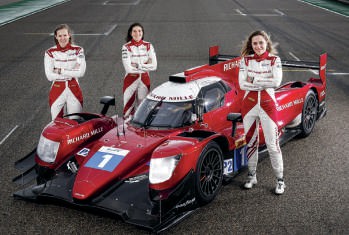
Since 2018, Mille has served as president of the FIA Endurance Commission, working to a mandate to lead the World Endurance Championship, which has Le Mans at its core, into an exciting new era. That means he’s one of the architects behind the Hypercar revolution that has convinced major car manufacturers to flock back to sports car racing, on the promise of rules parity and realistic budgets that offer value for money. It’s not limited only to the WEC, of course, but also in the US IMSA series too, thanks in part to the long-awaited accord that is flourishing between the two series. Mille carries a share of the responsibility for convincing Ferrari and Peugeot to join Toyota and Glickenhaus in Le Mans Hypercar (LMH), and has contributed to the amazing influx into the new-for-2023 LMDh parallel category: deep breath… Porsche, BMW, Acura, Cadillac, Alpine, Lamborghini and potentially more, will rock up either next year or in 2024. It has the potential to be fantastic, a match perhaps for 1980s Group C, even a throwback to the endurance racing heyday of the 1960s.
But before we get into all that, what about Mille’s own car collection? It’s known to be significant in size and scope. Richard, please, tell us more… “It’s compulsive, eh?” he says with a smile. “I have a lot of Formula 1. For me, they are pieces of art.” They’re not all in one place, of course. Imagine that! “I need room,” he chuckles.
The F1 cars span the 1950s to the mid- 1990s, after which they become technically more complicated to maintain and run. “F1 cars of the 1970s were a fantastic era because you had a lot of innovation, the regulations were more open, so you had a lot of different engines and so many different shapes,” he says of his favourite time.