Está atualmente a visualizar o Portugal versão do sítio.
Gostaria de mudar para o seu sítio local?
Última edição


Free Sample Issue
Experimente uma amostra GRATUITA de Practical Reptile Keeping
Experimente uma amostra GRATUITA

Practical Reptile Keeping Magazine No.61 Australian snakes Edição anterior

English
22 Comentários   •  English   •   Family & Home (Animals & Pets)
Only €4,99
With so much concern about chytrid fungus, and its deadly eff ects on many amphibian populations, it is great to be able to report that at least one species may have cheated extinction, and could be on the verge of a truly remarkable comeback. In anticipation of such events, there’s now even a term that has been coined by scientists for bringing extinct species back to life – it’s called de-extinction.
The onset of spring here in the UK means that Mediterranean-type tortoises are now out of hibernation and hopefully enjoying the increasingly warm and hopefully sunny days that lie ahead. We have therefore decided to tackle one of the most controversial issues surrounding their care in this issue. What should they be fed to keep them healthy, and are formulated tortoise foods bad for them? As in all things, it turns out that variety is the spice of life, and signifi cantly, not all prepared foods are the same.
Diet is something that can be a pitfall for many lizard keepers too, with nutritional problems topping the list of reasons that owners take their pets to the vet, based on the experience of specialist vet and reptile keeper Sean McCormack. What many breeders may not have considered, though, is how easy it is to end up inadvertently acquiring and pairing related animals together. Sean reveals how this state of aff airs can arise.
Keeping reptiles has become a global hobby, and it was was fascinating to hear recently from Chris Williams of Australia’s Snake Ranch, which is one of the major breeding operations, particularly of snakes, in that part of the world. As you can see from his article in this issue, there are some remarkable morphs now being created out there.
When I visited Australia for the fi rst time in the 1980s, no-one kept reptiles, and yet now, larger herp events there can draw approaching 5,000 visitors, prepared to travel huge distances to meet fellow enthusiasts and see the latest developments in the hobby. This can only be good, encouraging peop
read more read less
Practical Reptile Keeping Preview Pages Practical Reptile Keeping Preview Pages Practical Reptile Keeping Preview Pages Practical Reptile Keeping Preview Pages Practical Reptile Keeping Preview Pages Practical Reptile Keeping Preview Pages Practical Reptile Keeping Preview Pages Practical Reptile Keeping Preview Pages

Practical Reptile Keeping

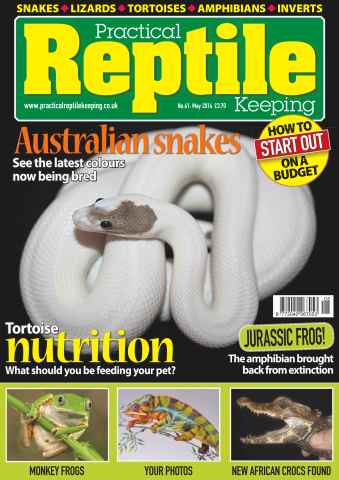
No.61 Australian snakes With so much concern about chytrid fungus, and its deadly eff ects on many amphibian populations, it is great to be able to report that at least one species may have cheated extinction, and could be on the verge of a truly remarkable comeback. In anticipation of such events, there’s now even a term that has been coined by scientists for bringing extinct species back to life – it’s called de-extinction. The onset of spring here in the UK means that Mediterranean-type tortoises are now out of hibernation and hopefully enjoying the increasingly warm and hopefully sunny days that lie ahead. We have therefore decided to tackle one of the most controversial issues surrounding their care in this issue. What should they be fed to keep them healthy, and are formulated tortoise foods bad for them? As in all things, it turns out that variety is the spice of life, and signifi cantly, not all prepared foods are the same. Diet is something that can be a pitfall for many lizard keepers too, with nutritional problems topping the list of reasons that owners take their pets to the vet, based on the experience of specialist vet and reptile keeper Sean McCormack. What many breeders may not have considered, though, is how easy it is to end up inadvertently acquiring and pairing related animals together. Sean reveals how this state of aff airs can arise. Keeping reptiles has become a global hobby, and it was was fascinating to hear recently from Chris Williams of Australia’s Snake Ranch, which is one of the major breeding operations, particularly of snakes, in that part of the world. As you can see from his article in this issue, there are some remarkable morphs now being created out there. When I visited Australia for the fi rst time in the 1980s, no-one kept reptiles, and yet now, larger herp events there can draw approaching 5,000 visitors, prepared to travel huge distances to meet fellow enthusiasts and see the latest developments in the hobby. This can only be good, encouraging peop


SELECCIONAR FORMATO:
Acesso imediato

Ofertas digitais disponíveis:

Edição digital única No.61 Australian snakes
 
4,99 / issue
Esta edição e outras edições anteriores não estão incluídas numa Practical Reptile Keeping inscrição. As assinaturas incluem a edição regular mais recente e os novos números lançados durante sua assinatura e começam a partir de €2,08 por edição no Cyber Week 2025 Big Annual Subscriptions Sale - General Interest offer. . Se pretende subscrever, consulte o nosso Opções de assinatura
As poupanças são calculadas com base na compra comparável de edições únicas durante um período de subscrição anual e podem variar em relação aos montantes anunciados. Os cálculos destinam-se apenas a fins ilustrativos. As assinaturas digitais incluem a última edição e todas as edições regulares lançadas durante a sua assinatura, salvo indicação em contrário. O período escolhido será renovado automaticamente, exceto se for cancelado na área A minha conta até 24 horas antes do fim da assinatura atual.

Practical Reptile Keeping issue No.61 Australian snakes

Practical Reptile Keeping  |  No.61 Australian snakes  


With so much concern about chytrid fungus, and its deadly eff ects on many amphibian populations, it is great to be able to report that at least one species may have cheated extinction, and could be on the verge of a truly remarkable comeback. In anticipation of such events, there’s now even a term that has been coined by scientists for bringing extinct species back to life – it’s called de-extinction.
The onset of spring here in the UK means that Mediterranean-type tortoises are now out of hibernation and hopefully enjoying the increasingly warm and hopefully sunny days that lie ahead. We have therefore decided to tackle one of the most controversial issues surrounding their care in this issue. What should they be fed to keep them healthy, and are formulated tortoise foods bad for them? As in all things, it turns out that variety is the spice of life, and signifi cantly, not all prepared foods are the same.
Diet is something that can be a pitfall for many lizard keepers too, with nutritional problems topping the list of reasons that owners take their pets to the vet, based on the experience of specialist vet and reptile keeper Sean McCormack. What many breeders may not have considered, though, is how easy it is to end up inadvertently acquiring and pairing related animals together. Sean reveals how this state of aff airs can arise.
Keeping reptiles has become a global hobby, and it was was fascinating to hear recently from Chris Williams of Australia’s Snake Ranch, which is one of the major breeding operations, particularly of snakes, in that part of the world. As you can see from his article in this issue, there are some remarkable morphs now being created out there.
When I visited Australia for the fi rst time in the 1980s, no-one kept reptiles, and yet now, larger herp events there can draw approaching 5,000 visitors, prepared to travel huge distances to meet fellow enthusiasts and see the latest developments in the hobby. This can only be good, encouraging peop
ler mais ler menos
Practical Reptile Keeping will give you a magazine packed with snakes, lizards, tortoises, amphibians and bugs. As well as stunning photographs, each issue will feature technical help, product information and health care advice to keep your pet in tip top condition plus new developments in the reptile world, breeder updates and vet's casebook and much more.

Como subscritor, receberá as seguintes vantagens


•  Um desconto no PVP da sua revista
•  Novas edições entregues no seu dispositivo no dia do lançamento
•  Nunca perderá uma edição
•  Está protegido contra aumentos de preços que possam ocorrer no final do ano

Receberá 12 edições durante um ano Practical Reptile Keeping assinatura da revista.

Nota: As edições digitais não incluem os artigos de capa ou os suplementos que se encontram nos exemplares impressos.

Sua compra aqui no Pocketmags.com pode ser lida em qualquer uma das seguintes plataformas.


Pode ler aqui no sítio Web ou descarregar a aplicação para a sua plataforma, mas não se esqueça de iniciar sessão com o seu nome de utilizador e palavra-passe Pocketmags.

Apple Pocketmags Online Pocketmags Google Pocketmags
O aplicativo Pocketmags funciona em todos os dispositivos iPad e iPhone com iOS 13.0 ou superior, Android 8.0 ou superior e Fire Tablet (Gen 3) ou superior. Nosso leitor web funciona com qualquer navegador compatível com HTML5, para PC e Mac recomendamos Chrome ou Firefox.

Para iOS, recomendamos qualquer dispositivo que possa executar o iOS mais recente para melhor desempenho e estabilidade. Modelos anteriores com especificações mais baixas de processador e RAM podem apresentar renderização de página mais lenta e travamentos ocasionais de aplicativos que estão fora de nosso controle.
4,3
/5
Com base em 22 Comentários de clientes
5
13
4
4
3
4
2
1
1
0
Ver críticas

Reptile Keeping Made Easy

My son loves this and it's enabled him to grow his reptile collection. Revisto 15 abril 2019

Artigos desta edição


Segue-se uma seleção de artigos em Practical Reptile Keeping No.61 Australian snakes.

Free Sample Issue
Experimente uma amostra GRATUITA de Practical Reptile Keeping
Conversa
X
Suporte Pocketmags