Does triple glazing make sense?
If you’re keen to boost your home’s thermal performance, upping the spec of your fenestration to incorporate triple glazed windows might seem like a smart choice – but will the greater outlay deliver the results you want? Rebecca Foster investigates
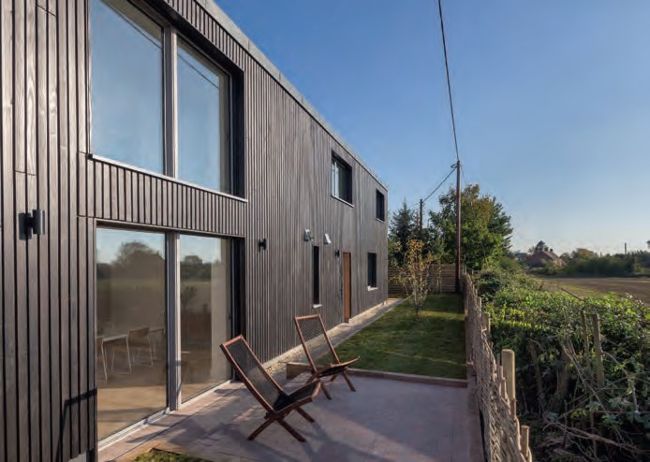
Idealcombi’s Futura+ and Futura+I triple glazed windows and sliding doors have been specified for this new build Passivhaus, designed by Gresford Architects.
With the price gap between double and triple glazed windows falling, the debate as to which option represents the best investment for your self-build or renovation project continues. While the former work by trapping a layer of air between two panes of glass to provide extra insulation, the latter feature a third sheet that forms an additional thermal barrier. As such, fitting triple-glazed fenestration can help to improve your home’s thermal performance by reducing heat loss.
But there are plenty of elements to account for before taking the plunge, from ventilation to structural factors. So what are the key issues to bear in mind when weighing up whether or not triple glazing makes sense for your scheme?
Boosting thermal performance
If achieving low U-values (a measure of heat loss, where smaller numbers are better) is a high priority for your project, the likelihood is that you’ve already considered fitting triple glazed (3G) windows. “These products provide better insulation,” says Ian McKay, director of BBM Sustainable Design. “Double glazed (2G) windows will typically attain a U-value of down to 1.2 W/m2K. On the other hand, 3G versions will generally reach 0.8 W/ m2K.” This is good to know if you’re looking to create a highly-insulated shell – particularly if you’re aiming for Passivhaus certification.