focus on:
Peter Warm, a UK Passivhaus certifier, tells us why self builders should consider working to this eco-friendly standard for home building projects
Peter Warm
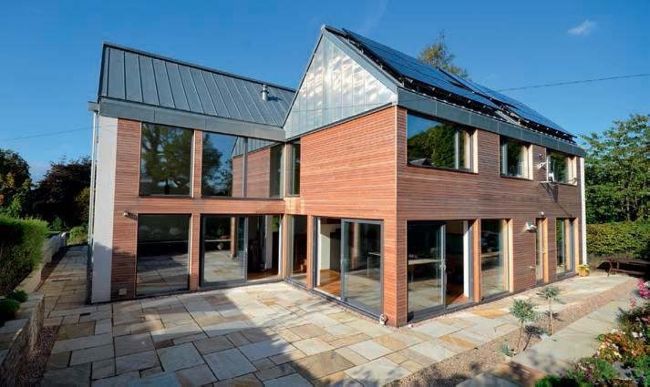
Scotframe provided the timber frame shell for this architectdesigned Passivhaus clad in timber, glass and zinc
What is a Passivhaus?
It’s is a low-energy building that is designed and constructed specifically to hit certain targets. The heating demand must be less than 15 kWh per m2 and there are vigorous checks to ensure minimal fuel consumption in the winter and to prevent overheating in summer.
There’s also a primary energy target to be sure you do not end up with a very efficient structural shell but horrendously inefficient services. In the average British home, only about a third of the energy that goes into hot water tanks actually ends up being used, as most of it is lost as the water cools in the pipes. The eco-friendly approach used to create Passivhaus schemes ensures the hot water draw off points are not spaced really far apart, thus avoiding this issue.