Cladding a timber frame home
Keen to achieve a high-quality finish on your timber build? Here’s what you need to consider when specifying and installing different facade options
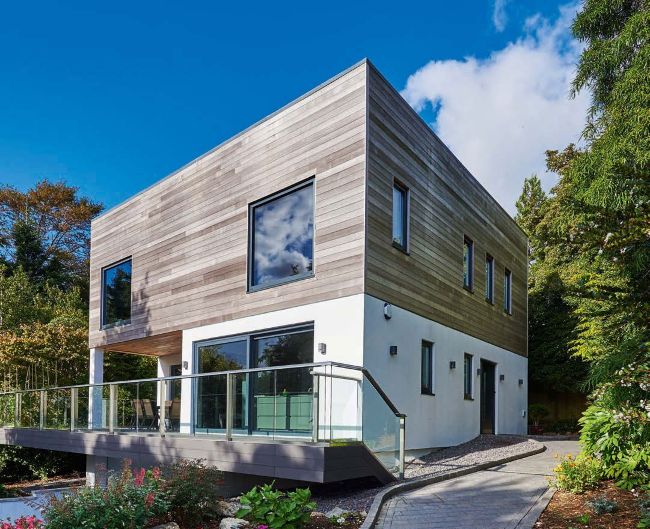
Timber frame specialists Potton used light and durable Western Red cedar cladding on this house, in combination with white render on the ground floor.
Offering a quick and costeffective route to an efficient, high quality home, it’s easy to see why timber frame is a popular system with self builders and home extenders. If you’re wondering which claddings will work best for your timber build, here’s the short answer: they can all work. But that’s not the whole story. Some finishes complement a timber construction better than others, for instance - but should that be the beallandendall of your decision?
Timber frame basics
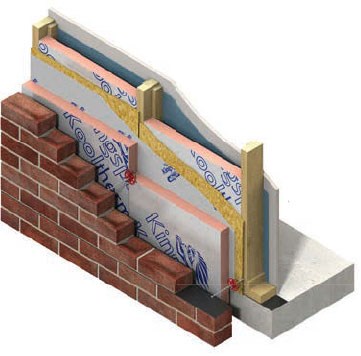
This diagram shows a masonry external wall tied back to a timber frame structure using cavity wall ties. The red clips hold an extra layer of external Kingspan Thermawall insulation in place
Before we get into the nitty gritty of selecting your preferred cladding, let’s refresh the memory about what goes into a timber frame project and the key benefits of using this kind of structural system.
Fundamentally, a timber frame home is constructed using large panels, which are usually preinsulated in the factory
Most of the design and construction is computercontrolled, so you get accuracy and quality as standard - and there is less labour requirement on site compared to using, say, masonry
That leads us to one of the big attractions of this method: once work starts on site, you can expect the weathertight shell of your home to be up in as little as five to 10 days, ready for your trades to kit out inside and out. So whilst the plumber is ferreting away on getting the pipework network in place, the external roof and wall finishes can be applied at the same time.