FOUNDATIONS
NEED TO KNOW
When building from scratch, one of the most critical decisions you’ll face is choosing the right foundation. Anna-Marie DeSouza outlines the basics
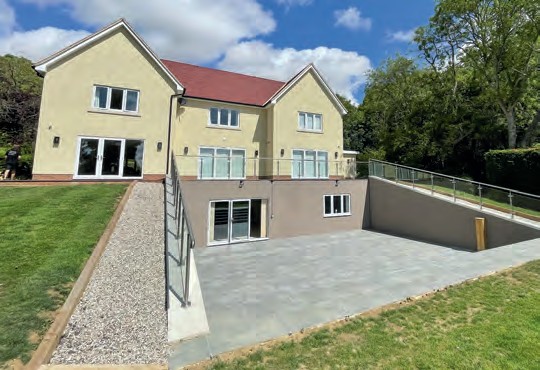
Main image: An insulated foundation system from Glatthaar Keller (www.glatthaar.
co.uk)
Inset: Glatthaar Keller also specialises in basements. If you need to dig deep anyway, adding a belowground storey could prove a cost effective option The choice of foundation is not just about laying the groundwork for your house; it’s about establishing a solid, long-lasting base that will support your home for generations. The architectural design of your property will influence your foundation choice. As will soil conditions, the weight and load distribution of the building, its size and any specific design features. So, not only will it be one of the first building operations on site, but it’s also an integral part of the structural design phase. Here’s where to start.
Ground conditions
Understanding you plot’s ground conditions is paramount. In the UK, soil types can vary significantly from one region to another, and even within a small geographic area. So, it is crucial to assess your soil’s properties, including its bearing capacity, susceptibility to movement and drainage. “Before anything else, you must get a geotechnical soil survey done,” says Simon Orrells of Frame Technologies. “This will give you the soil structure, and bearing pressure and make up, and will advise on the foundation type (not design) so that your engineer can design from it. If you need a self build mortgage, your lender and structural warranty provider will require a soil survey.”