ALTERNATORS, BATTERIES, AND CABLES
UNDERSTANDING THE INS AND OUTS OF YOUR ELECTRICAL SYSTEM
BY JASON SANDS
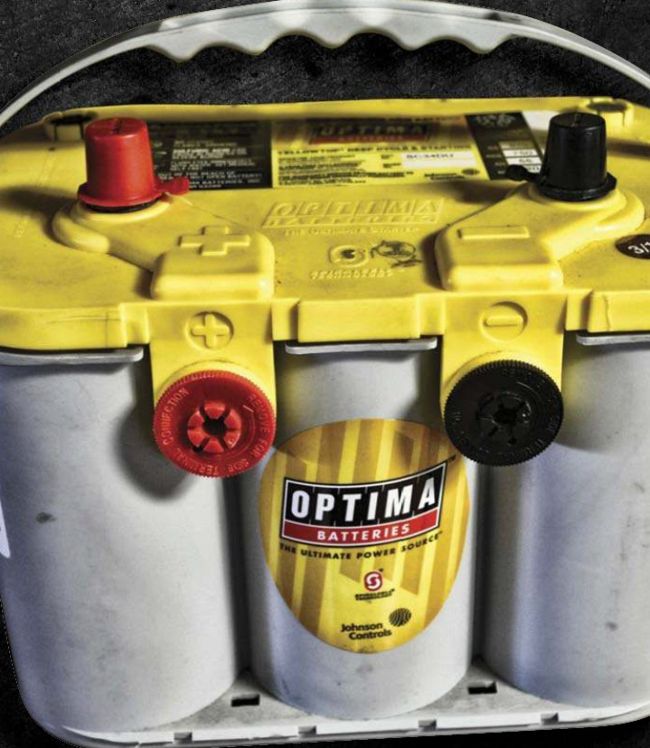
AGM batteries are thought to be superior to lead acid in battery life and cranking amps. Just like lithium-ion batteries, one thing you don’t want to do is let them go completely dead, as they can be hard to recharge.
PHOTOS BY JASON SANDS AND COURTESY OF THE MANUFACTURERS
The electrical system on your average diesel truck is both simple and complex. Many folks think of batteries as “the things that start your truck,” and that’s all the thought they give to them. However, if you delve a little deeper, questions emerge: How many amps do you need, do you really need two batteries, and when do you need an alternator upgrade? There are also other issues to consider, such as charging and maintaining the batteries, cable length and wire gauge when wiring in aftermarket products, and fighting corrosion resistance. More often than not, people who make mistakes with their electrical system do so simply because they didn’t know better.
TERMINOLOGY
Before we get started, there are a few common terms we need to go over: voltage, amperage (amps) and ohms (a measure of resistance). Voltage is the electrical “push” through a wire that sends power from one area to another. Its close relative is amperage, which is the strength of that push. If you think about these terms like speed and power, you get the principles. Because electrical systems are governed at a certain voltage (like a speed limiter), the amps decide how much power we can put through the system (namely, the starter). The last major term is ohms, which is a measure of resistance through a wire. Have you noticed how your battery cables are huge compared with the other wiring? That’s because larger cables have less resistance, and the electricity traveling through them generates less heat.