Camera College
The complete guide to modern photography
Take your first steps in landscape photography
Itching to get into the great outdoors with your camera after being in lockdown for so long? Here’s how to get started in the art of landscape
Photo challenge!
You could win a copy of Affinity Photo See page 81
Marcus Hawkins
Photographer and writer Marcus is a former editor of Digital Camera
Golden hour
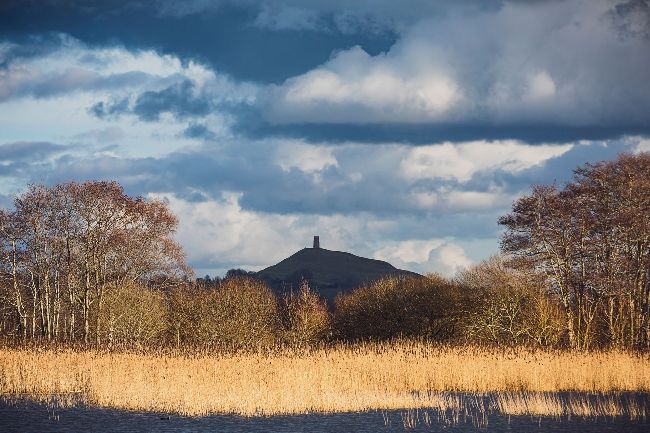
Waiting for the right light is part of the game. These shots were taken 10 minutes apart; what looked unpromising at first
Golden hour
Mid-afternoon
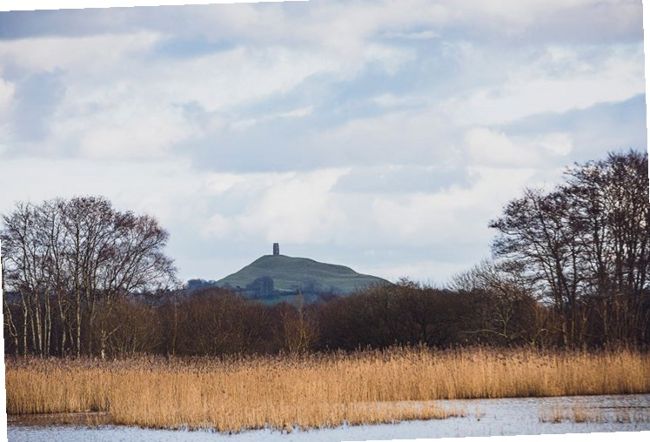
(above) was transformed with a splash of warm evening light.
Mid-afte rnoon
Part travel, part fine art and part documentary, landscape photography is an addictive mix of a few different photographic genres. And with all the hours of waiting around until those heart-pumping moments when the sun breaks and you frenetically burn through frames, it’s fair to say that it has a hint of sports photography, too. That being said, there are some techniques that are always useful, whatever your preferred approach is.
The first step to better landscapes is to avoid using your camera’s Landscape mode, as this gives you only limited options during the picture-taking process. For full creative control, you should switch to Aperture Priority or Manual, both of which allow you to choose the aperture setting. The aperture size is important in landscape photography, as it plays a crucial role in the amount of depth of field – or the depth of sharpness – you can see through the image. Narrow apertures (represented by high f-numbers, such as f/16 and f/22) give you more depth of field than wide apertures, and increase the amount of the scene that appears sharp from the foreground to the horizon. Avoid the narrowest setting, though: despite the increased depth of field you’ll enjoy, this will give you softer shots overall due to the effects of diffraction.
To record an image with a narrow aperture requires a longer exposure time, which is one of the reasons that a decent tripod and tripod head are standard accessories for landscape photography. Stabilised lenses and in-body image stabilisation, found in cutting-edge mirrorless cameras such as the Canon EOS R6, have changed the game somewhat, allowing sharp images to be taken handheld at much slower shutter speeds. But a tripod offers consistency between shots and allows you to fine-tune the framing and composition. It’s essential if you’re using a strong ND filter to extend the exposure into minutes to blur the movement of clouds and water.
A tripod that gets the camera to your eye level without having to raise the centre column is going to provide a more stable platform. But it’s worth considering a model that doesn’t have a centre column at all, so you can easily get down to ground level as well. A camera that has a flip-out and rotating rear screen is going to make it easier to get low, worm-eye shots too.