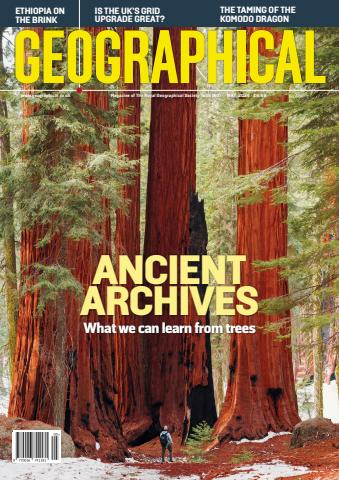
Geographical | May 2026
This month’s Geographical is, in many ways, about systems under strain, about fault lines, often hidden at first glance, that reveal deeper structural problems and difficult to resolve conflicts.
In Ethiopia, Stuart Butler takes us into a nation whose story stretches from the myths of the Queen of Sheba to the bitter realities of civil
conflict, displacement and a fragile federal state (Page 25). It is a reminder that history and identity can be sources of pride – but also of fracture when power, ethnicity and grievance collide.
In the UK, Mark Rowe examines another kind of fault line (Page 34). Our transition to renewable energy depends on a dramatic expansion of grid infrastructure – new pylons, cables, converter stations and substations.
How do we decarbonise at speed without riding roughshod over landscapes, wildlife and the communities asked to host this new national architecture?
And James Rose examines a fundamental problem for Russia (Page 21): demographic decline. Falling fertility, high premature mortality and an ageing society may place harder long-term limits on Russian power than many conventional measures of strength suggest.
en savoir plus
lire moins
En tant qu'abonné, vous bénéficierez des avantages suivants :
• Une réduction sur le prix de vente conseillé de votre magazine
• Les nouvelles éditions sont livrées sur votre appareil le jour même de leur sortie
• Vous ne manquerez jamais un numéro
• Vous êtes protégé contre les hausses de prix qui pourraient survenir plus tard dans l'année.
Vous recevrez 12 pendant une période de 1 an Geographical abonnement au magazine.
Remarque : les éditions numériques ne comprennent pas les éléments de couverture ou les suppléments que vous trouveriez avec les copies imprimées.
Articles dans ce numéro
Vous trouverez ci-dessous une sélection d'articles dans Geographical May 2026.