PRIVATE EAR
Robert Fairclough looks at the making of Shoestring the lighthearted BBC detective series set in the West Country, starring Trevor Eve as a radio-phone-in detective…
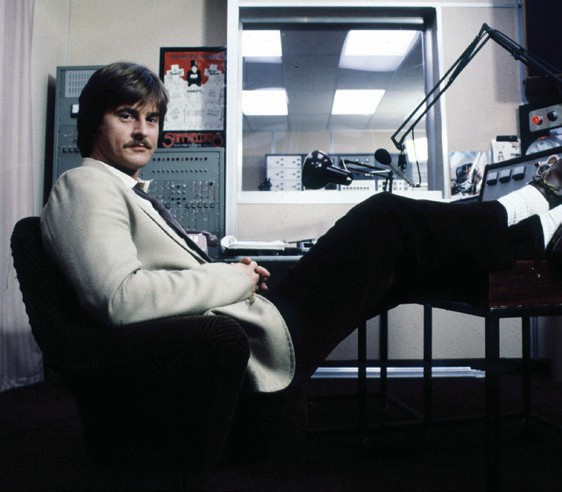
Trevor Eve as Eddie Shoestring. He is also known for his role as Detective Superintendent Peter Boyd in the BBC television drama Waking the Dead
In 1978, producer Philip Hinchcliffe was keen to move on from producing Target, the BBC’s controversial attempt at copying ITV’s violent, ratings conquering police series The Sweeney. Graeme McDonald, the new Head of Series, was concerned, as a third series of Target was scheduled. “He said, ‘Oh dear. Who shall I get?’” Hinchcliffe remembers. “I introduced him to Robert Banks Stewart, who’d cut his teeth writing movies and popular series like The Human Jungle [1963-64], The Avengers [1961-69] and Callan [1967-1972] – he was a producer as well as a writer. I recommended to Graeme that he might be the guy to take Target over. Bob was brought in, Graeme met him and said, ‘I like him, he’s got the job.’”
Hinchcliffe continues: “The next thing was that they came to see me together and said ‘We’re thinking of maybe doing something different. How do you feel about that?’ I said, ‘I’m not gonna fight for the programme if you want to do something different, because I’m moving on.’”
The loss of Target would be the BBC’s gain. The “something different” Banks Stewart and McDonald came up with, Shoestring (1979-1980), broke new ground in crime drama by putting its private eye protagonist on film in a non-metropolitan setting, favouring character, eccentricity, human interest and wit over flying fists and screeching tyres. It’s a model that keeps on giving to British TV, from Inspector Morse (1987-2000), through A Touch of Frost (1992-2010) and Midsomer Murders (1997-), right up to Shakespeare and Hathaway: Private Investigators (2018-). It’s not surprising Shoestring was so widely imitated: in its heyday, the series commanded viewing figures as high as 20 million.
CHANDLER-STYLE
Recalling the genesis of Shoestring, Banks Stewart wrote in his autobiography, To Put You In the Picture (2015): “The radio was on one morning… They were broadcasting a selfhelp programme, about how to check that your local garage was carrying out all the work they claimed for, on a full-service bill. The suggestion was to use talcum powder on a few key spots of the car that would indicate activity. If not, the talc would be undisturbed –a giveaway sign. I sat up. A radio show that gives you a service? Eureka!”
Banks Stewart and the series cocreator, Richard Harris (1934 -), devised a scenario where the fictional Radio West, based in Bristol, employed a detective with the unlikely name of Eddie Shoestring (a favourite name of Banks Stewart’s, which he’d had in mind to use for a character before) who took his cases from listeners who phoned in to his show. Harris had responsibility for delivering the pilot script, but when he did, there was a problem: “It was somehow rather different from what we’d discussed,” Banks Stewart recalled. “Extremely well written, but more of a domestic drama, some way from the Raymond Chandler-style treatment that I thought we had agreed on.”
There was an amicable compromise: Banks Stewart rewrote the script – which had the final title of ‘Private Ear’ – and Harris moved on, retaining a co-creation credit on each episode. Harris’s other legacy was Eddie’s habit of drawing caricatures of people he was talking to, a habit the writer also practiced. (Eddie’s doodles would be drawn by the prolific illustrator Gray Jollife, who would later have great success with the Wicked Willy books). With the series on track, the first the general public knew about it was an announcement in the Evening Standard on 24 January 1979. With the BBC facing economic problems, the paper wryly stated that “the title is not a graphic description of the budget but the name of its hero.”
Lisez l'article complet et bien d'autres dans ce numéro de
Infinity Magazine
Options d'achat ci-dessous
Si le problème vous appartient,
Connexion
pour lire l'article complet maintenant.
Numéro unique numérique
Issue 46
Ce numéro et d'autres anciens numéros ne sont pas inclus dans une nouvelle version de l'article
abonnement. Les abonnements comprennent le dernier numéro régulier et les nouveaux numéros publiés pendant votre abonnement.
Infinity Magazine
Abonnement numérique annuel
€29,99
facturé annuellement