MAKE WAR NOT LOVE
CODENAME: WARLORD
Having survived his tour of duty with Battle comic (see Infinity #35), Ian Millsted once more dons his camouflage, to investigate the popular and influential, if critically underexposed, Warlord comic.
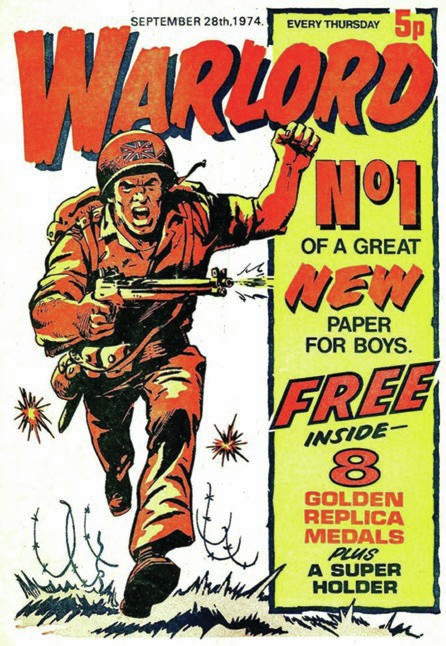
Like Yorkie bars back in the day, Warlord was not for girls
In the boys’ weekly comics market of the early 1970s, Warlord had the impact of a lobbed grenade. Without Warlord there would have been no Battle, no Action and, probably, no 2000AD. With the possible exception of the mostly Gerry Andersonlinked TV21 in the 1960s, the boys’ comics of the era were all samplers. This was a term used to indicate a variety of genres, so, typically, a reader of Lion or Valiant could expect a science fiction story, a war story, a secret agent story, a boarding school story, a football story and so on. This meant that there was probably something for everyone to enjoy, but also meant there was something for everyone to dislike, and if you dislike more than you like you might stop buying the comic.
Dundee based publisher, DC Thomson, had four regular sampler titles for boys in Victor, Wizard, Hotspur and the Hornet. They sold well but the war stories were among the most popular. Logic suggested that a comic made up of just war stories could be a big seller, and so it proved.
I was eight years old when the first issue of Warlorddebuted in September 1974. The cover date was 28thSeptember which meant it was on sale from the 23 rd, aThursday. This was a good time of year to launch a new comic as it could benefit from playground conversation.
“Have you seen ‘Warlord’?” was the most asked question among my peers that week. One lad, Richard, who lived near to the only newsagent in the village, did a nice trade in buying extra copies to sell on to kids who lived at the other end of the catchment area.
So, what was in Warlord? The starting line up had eight different, ongoing stories. The star feature was ‘Code-Name Warlord’, obviously named to link to the comic title. These were the adventures of Lord Peter Flint, World War Two British agent. With a name borrowed from Dorothy L Sayers’ detective character, Lord Peter Wimsey (being dramatised on BBC at the time) and an occupation taken from the ever-popular James Bond, the real steal was from ‘The Scarlet Pimpernel’.
Lisez l'article complet et bien d'autres dans ce numéro de
Infinity Magazine
Options d'achat ci-dessous
Si le problème vous appartient,
Connexion
pour lire l'article complet maintenant.
Numéro unique numérique
Issue 61
Ce numéro et d'autres anciens numéros ne sont pas inclus dans une nouvelle version de l'article
abonnement. Les abonnements comprennent le dernier numéro régulier et les nouveaux numéros publiés pendant votre abonnement.
Infinity Magazine
Abonnement numérique annuel
€29,99
facturé annuellement