Vous consultez actuellement le France version du site.
Voulez-vous passer à votre site local ?
Dernière édition

New Eastern Europe Magazine June-Aug 2024 Retour à l'édition précédente

English
7 Critiques   •  English   •   General Interest (History & Knowledge)
Only €7,99
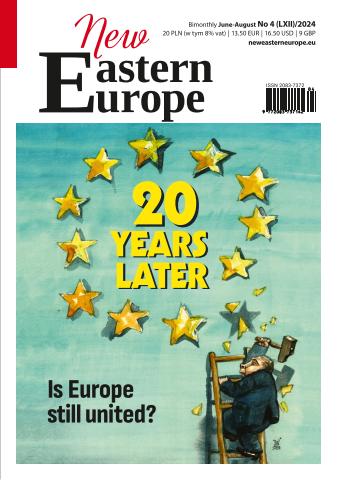
Twenty years ago, the European Union experienced its largest enlargement ever, the so-called Big Bang, with the addition of 10 new member states. This enlargement included many of the countries in our region – Poland, Hungary, Czechia, Slovakia, Slovenia and the three Baltic states of Estonia, Latvia and Lithuania. This momentous occasion marked the culmination of hard work by the EU and the post-socialist countries, which aptly referred to it as the final “return to Europe”. With a newly united Europe (and more members on the way), it seems as that Euro-optimism had reached its pinnacle moment. And since 2004, the new member states have certainly made some remarkable achievements. The GDP per capita in purchasing power parity of the new states grew from 59 per cent of the EU average in 2004 to 81 per cent in 2022. The income gap between the older and newer states has also narrowed over the last 20 years. Some countries’ living standards, such as Czechia or Slovenia, have even surpassed those of older EU members.
Yet, at the same time, these past two decades were not without challenges. Issues related to democratic backsliding, the rule of law and corruption have tainted the legacy of the enlargement. Voices in many western European capitals began questioning whether the enlargement itself was too soon. After a series of crises hit the EU, which began with the 2008 financial crisis, a rise in Euroscepticism began to counter the accomplishments of the previous generation of Euro-optimists and putting a major damper on any future enlargements. Thus, the question today is: how united is Europe after these past 20 years?
read more read less
New Eastern Europe Preview Pages New Eastern Europe Preview Pages New Eastern Europe Preview Pages New Eastern Europe Preview Pages New Eastern Europe Preview Pages New Eastern Europe Preview Pages New Eastern Europe Preview Pages New Eastern Europe Preview Pages

New Eastern Europe

June-Aug 2024 Twenty years ago, the European Union experienced its largest enlargement ever, the so-called Big Bang, with the addition of 10 new member states. This enlargement included many of the countries in our region – Poland, Hungary, Czechia, Slovakia, Slovenia and the three Baltic states of Estonia, Latvia and Lithuania. This momentous occasion marked the culmination of hard work by the EU and the post-socialist countries, which aptly referred to it as the final “return to Europe”. With a newly united Europe (and more members on the way), it seems as that Euro-optimism had reached its pinnacle moment. And since 2004, the new member states have certainly made some remarkable achievements. The GDP per capita in purchasing power parity of the new states grew from 59 per cent of the EU average in 2004 to 81 per cent in 2022. The income gap between the older and newer states has also narrowed over the last 20 years. Some countries’ living standards, such as Czechia or Slovenia, have even surpassed those of older EU members. Yet, at the same time, these past two decades were not without challenges. Issues related to democratic backsliding, the rule of law and corruption have tainted the legacy of the enlargement. Voices in many western European capitals began questioning whether the enlargement itself was too soon. After a series of crises hit the EU, which began with the 2008 financial crisis, a rise in Euroscepticism began to counter the accomplishments of the previous generation of Euro-optimists and putting a major damper on any future enlargements. Thus, the question today is: how united is Europe after these past 20 years?


SELECTIONNER LE FORMAT :
Accès instantané

Offres numériques disponibles :

Numéro précédent numérique June-Aug 2024
 
7,99 / issue
Ce numéro et d'autres numéros antérieurs ne sont pas inclus dans un abonnement à l'UE. New Eastern Europe abonnement. Les abonnements comprennent le dernier numéro régulier et les nouveaux numéros publiés pendant la durée de l'abonnement. €2,40 par numéro dans le Cyber Week 2025 Big Annual Subscriptions Sale - General Interest offer. . Si vous souhaitez vous abonner, veuillez consulter notre rubrique Options d'abonnement
Les économies sont calculées sur la base d'un achat comparable de numéros uniques sur une période d'abonnement annualisée et peuvent varier par rapport aux montants annoncés. Les calculs sont effectués à des fins d'illustration uniquement. Les abonnements numériques comprennent le dernier numéro et tous les numéros réguliers publiés au cours de l'abonnement, sauf indication contraire. L'abonnement choisi sera automatiquement renouvelé s'il n'est pas résilié dans la section Mon compte jusqu'à 24 heures avant la fin de l'abonnement en cours.

New Eastern Europe issue June-Aug 2024

New Eastern Europe  |  June-Aug 2024  


Twenty years ago, the European Union experienced its largest enlargement ever, the so-called Big Bang, with the addition of 10 new member states. This enlargement included many of the countries in our region – Poland, Hungary, Czechia, Slovakia, Slovenia and the three Baltic states of Estonia, Latvia and Lithuania. This momentous occasion marked the culmination of hard work by the EU and the post-socialist countries, which aptly referred to it as the final “return to Europe”. With a newly united Europe (and more members on the way), it seems as that Euro-optimism had reached its pinnacle moment. And since 2004, the new member states have certainly made some remarkable achievements. The GDP per capita in purchasing power parity of the new states grew from 59 per cent of the EU average in 2004 to 81 per cent in 2022. The income gap between the older and newer states has also narrowed over the last 20 years. Some countries’ living standards, such as Czechia or Slovenia, have even surpassed those of older EU members.
Yet, at the same time, these past two decades were not without challenges. Issues related to democratic backsliding, the rule of law and corruption have tainted the legacy of the enlargement. Voices in many western European capitals began questioning whether the enlargement itself was too soon. After a series of crises hit the EU, which began with the 2008 financial crisis, a rise in Euroscepticism began to counter the accomplishments of the previous generation of Euro-optimists and putting a major damper on any future enlargements. Thus, the question today is: how united is Europe after these past 20 years?
en savoir plus lire moins
Trying to understand what is Vladimir Putin’s next move? Want to know more about the crisis in Ukraine? Looking for historical and cultural figures that shape Eastern Europe? Then look no further. Put New Eastern Europe on your reading list by downloading the New Eastern Europe App and gain access to the most important issues facing our region today.

New Eastern Europe is the exclusive English language bimonthly news magazine dedicated to Central and Eastern European affairs. The magazine provides readers with commentary on current events, political analysis, cultural and historical discussions as well as books and film reviews.

En tant qu'abonné, vous bénéficierez des avantages suivants :


•  Une réduction sur le prix de vente conseillé de votre magazine
•  Les nouvelles éditions sont livrées sur votre appareil le jour même de leur sortie
•  Vous ne manquerez jamais un numéro
•  Vous êtes protégé contre les hausses de prix qui pourraient survenir plus tard dans l'année.

Vous recevrez 5 pendant une période de 1 an New Eastern Europe abonnement au magazine.

Remarque : les éditions numériques ne comprennent pas les éléments de couverture ou les suppléments que vous trouveriez avec les copies imprimées.

Votre achat ici à Pocketmags.com peut être lu sur l'une des plateformes suivantes.


Vous pouvez le lire ici sur le site web ou télécharger l'application pour votre plateforme, n'oubliez pas de vous connecter avec votre nom d'utilisateur et votre mot de passe Pocketmags.

Apple Pocketmags Online Pocketmags Google Pocketmags
L'application Pocketmags fonctionne sur tous les appareils iPad et iPhone fonctionnant sous iOS 13.0 ou plus, Android 8.0 ou plus et Fire Tablet (Gen 3) ou plus. Notre lecteur web fonctionne avec n'importe quel navigateur compatible HTML5, pour PC et Mac nous recommandons Chrome ou Firefox.

Pour iOS, nous recommandons tout appareil pouvant exécuter le dernier iOS pour de meilleures performances et une meilleure stabilité. Les modèles plus anciens avec des spécifications de processeur et de RAM inférieures peuvent connaître un rendu de page plus lent et des plantages occasionnels de l'application qui sont hors de notre contrôle.
4,4
/5
Sur la base de 7 Commentaires des clients
5
5
4
1
3
0
2
1
1
0
Voir les commentaires

New Eastern Europe

As a former Foreign Affairs Officer to the Hungarian Military and someone extremely interested in events happening in Eastern Europe I love this magazine and it's associated podcast. Révision 23 avril 2020

New Eastern Europe Looked Through Cold War Eyes

New Eastern Europe Looked Through Cold War Eyes - There is nothing new or objective in this magazine, it Russiaphobia on steroids. Rather than embrace the new opportunities for trade and culture between Eastern European nations, Russia included, it looks at how to paint everything in terms of opportunities for destabilising relations between Russia and her immediate neighbours. It's everything that is wrong with "Western" thinking at this time, which is progressively becoming more Fascist towards anything that does not conform to its "world view" and business interests. Révision 29 octobre 2018

Articles dans ce numéro


Vous trouverez ci-dessous une sélection d'articles dans New Eastern Europe June-Aug 2024.

Chat
X
Support Pocketmags