Navigating Through Hatred
AVIGATING THROUGH HATRED
Trevor Hogg makes some bone-chilling discoveries while travelling through Lovecraft Country…
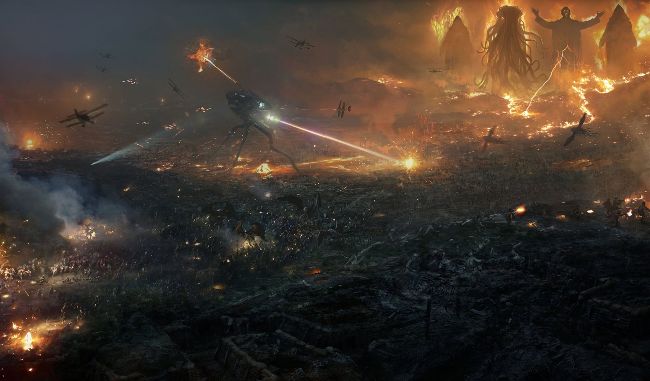
Concept art for the Korean War battlefield sequence by Rodeo FX that resembles something out of The War Of The Worldsby H.G. Wells
Images courtesy of HBO
Inspired by the horror writings of H.P. Lovecraft, author Matt Ruff penned Lovecraft Country, which revolves around a 22-year-old African American US Army veteran Atticus Turner searching for his father during the racial turmoil of the 1950s, and encountering a variety of monsters. The novel was adapted into a ten-episode series for HBO by executive producer Misha Green (Underground) who collaborated with visual effects supervisor Kevin Blank (Lost) to achieve the epic scope of the storytelling. 3,500 visual effects were completed remotely by Rodeo FX, Framestore, Important Looking Pirates, Crafty Apes, Blackpool Studios, BOT VFX, RISE FX, and Spin VFX.
“Usually, 3,500 shots are hard on their own and midst a pandemic it is a little harder!” chuckles Blank. “One show that prepared me the most was the NBC series Constantinebecause everything in every episode was completely different. Every single episode of LovecraftCountry feels like its own unique piece of entertainment, whether it be an adventure or horror show.There are different creatures and environments, and it’s not something repeated frequently.I was constantly shifting from preproduction, production, and checking in on post to see how things were going.”
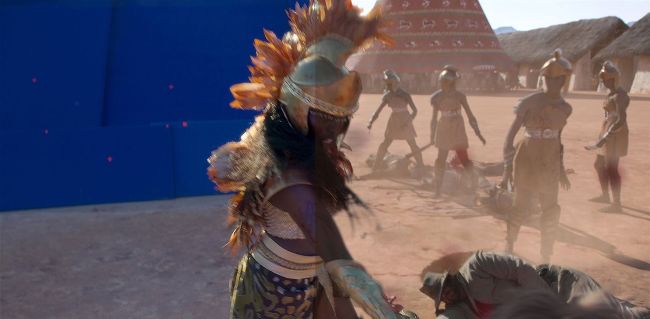
Concept art for the tripod robots featured in the opening sequence for the series, which transitions from black and white to Technicolor
“USUALLY, 3,500 SHOTS ARE HARD ON THEIR OWN AND MIDST A PANDEMIC IT IS A LITTLE HARDER!”
Kevin Blank, visual effects supervisor, Lovecraft Country
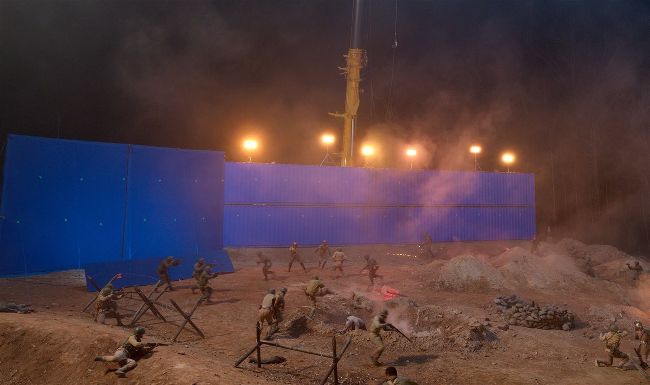
For the epic opening battle in the pilot, three practical trenches were built in a field and extended by bluescreen
“All of our scripts were written before we started shooting,”remarks Blank. “That’s not to say there weren’t any rewrites taking place. Either there were location considerations and in some instances scale concerns where we had to pull back a little bit. We had tremendous editors on the show and they worked a long time to perfect cuts. The editors were cutting while we were shooting and creating assemblies.It wasn’t until Misha was back in Los Angeles that those assembles got refined into final edits that got turned over to us. Some things would be turned over to us early and we would be blocking things out for temp effects. We had a couple of artists on staff doing temp effects throughout the process. Some hero sequences were previz completely in advance and cut together exactly as planned.”