How to build a
TINY HOME
It’s a phrase that’s got a lot of buzz online and among those looking to create unique, compact and low -energy spaces. Emily Batesmith takes a look at the definitions around tiny homes and why they are gaining traction in the UK
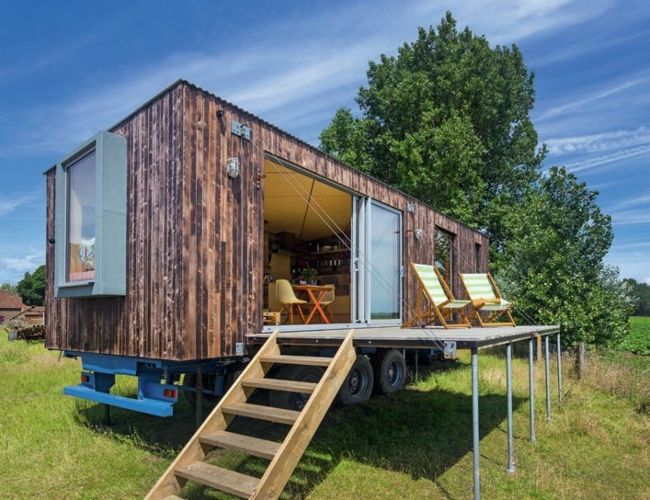
RICHARD GADSBY
Think quaint cabins, wooden interiors, miniature woodburners and mezzanine sleeping areas – tiny homes embody a picturesque vision of the simple life, making a big impression online, especially on social media. The Tiny House Movement has been popular over in the US for a while and the phenomenon is growing in the UK, too. But what defines a tiny home, how do they overcome the minimum space requirements of Building Regs and who’s building them?
What is a tiny home?
Currently, there’s no official tiny home definition in the UK. “Whoever you speak to will have a different interpretation of what a tiny home is,” says Karl Jones, founder of Tiny House Builders UK. “I see it as a scaled down version of a normal house, with all the same things – bathroom, shower, hob, water heater, living room, kitchen, dining table etc, just smaller but still built to last.”
The US planners define tiny homes as properties less than 400ft2 (37.2m2 ). But, given that the minimum space standard for dwellings under UK planning guidance is 37m2 (and that’s for a single occupant, one-bedroom, one-storey property), this does cause some complications for where tiny homes fit into our planning scene.