FINE-ART ARCHITECTURE
10 tips for turning out gallery-quality images the next time you visit a big city, by Mike Harris
Mike Harris
A rchitectural photography is one of the most accessible genres. And you don’t need expensive gear, either.
Static subjects, such as buildings, allow you to carefully compose each shot, so you shouldn’t be ditching many pixels in post-production, making a high-resolution sensor a luxury and not an essential. Also, advanced AF systems and fast burst speeds simply aren’t required.
Fast glass is useful in low light, but you could build an entire portfolio shooting at f/8. If you were to carry just one lens, I’d recommend an ultra-wide-angle zoom, but a standard zoom or a wide-angle or standard prime would serve you fine.
The key to architectural photography is identifying a suitable subject and a flattering composition. While big cities boast the most variety and potential, you can find suitable subjects almost anywhere.
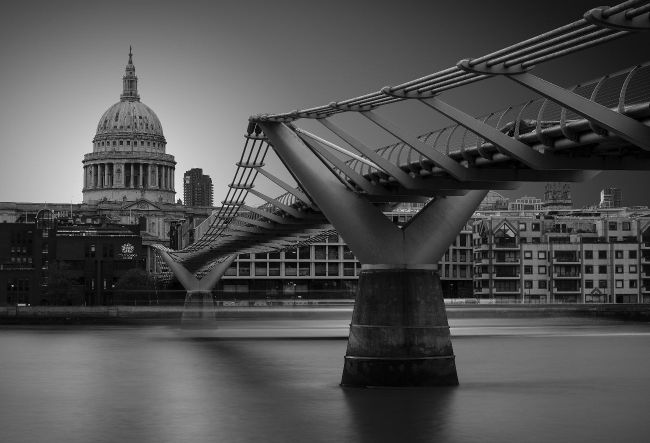
I took all of the images for this feature in London, and most of them are known architectural hotspots that have been photographed time and time again. It’s never a bad idea to deviate from the well-trodden path to find unique angles and subjects – but if you’re starting out, you can hone your skills at the Millennium Bridge and St Paul’s (pictured), Canary Wharf Underground station (page 53), or the view of the Shard near London Bridge (page 54).
1
2
3
4
1 DON’T FORGET TO LOOK UP
Look-up shots are a mainstay of architectural photography. Here’s how to find and photograph them
Architectural photographers don’t just observe what’s in front of them: they also need to keep tabs on what’s above them. Look up while you’re walking around the big city, and you’ll soon notice interesting architectural shapes and patterns converging overhead.
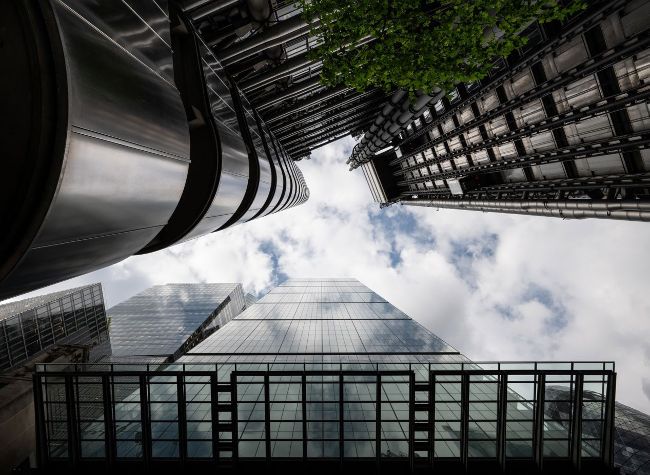
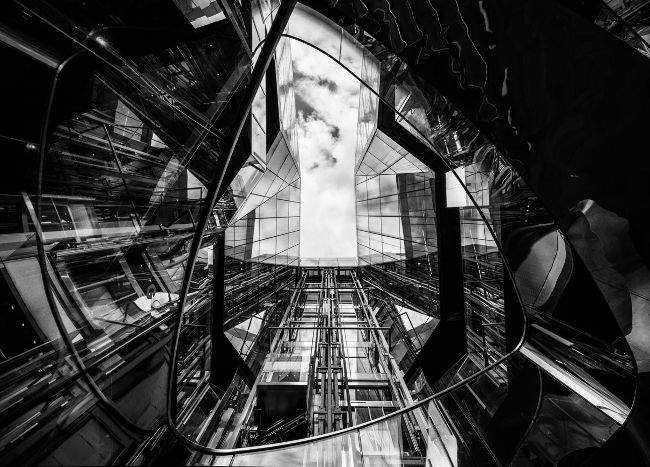
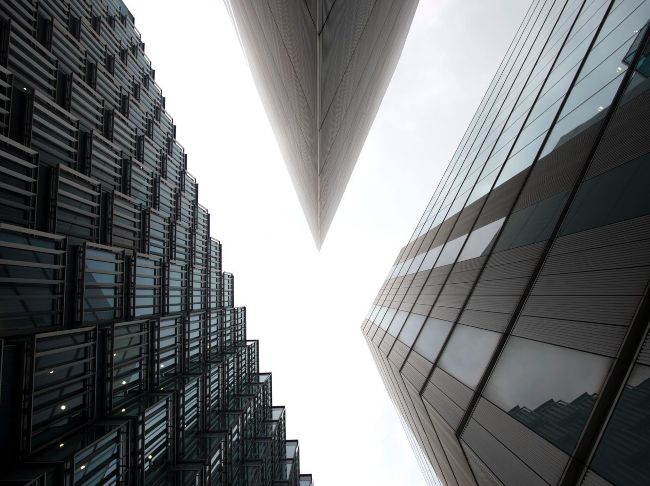
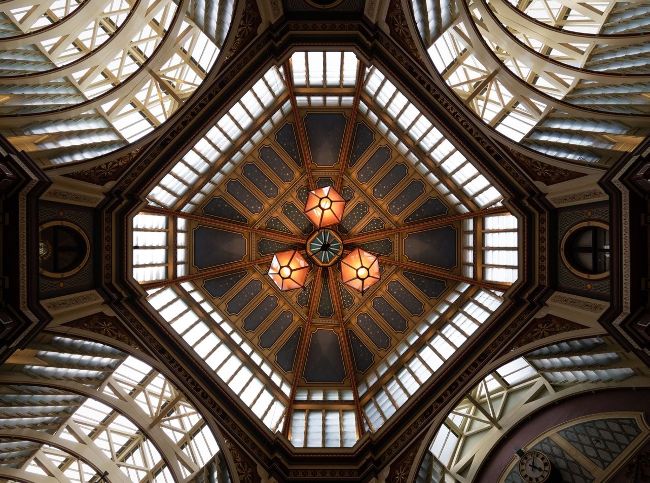
Tall buildings receding into the distance, such as the Leadenhall Building [1] and the One New Change shopping centre’s escalator [2], provide leading lines, while converging rooftops – like my image from More London [3] – can form interesting shapes and patterns. Symmetry is another great indication that a ‘look-up’ is worth capturing, such as the ceiling in Leadenhall Market [4]. A big advantage of look-up compositions is that you don’t have to worry about crowds, since you’ll be angling your camera away from them. You can capture this kind of image at any time of day, provided you’re happy with the lighting.
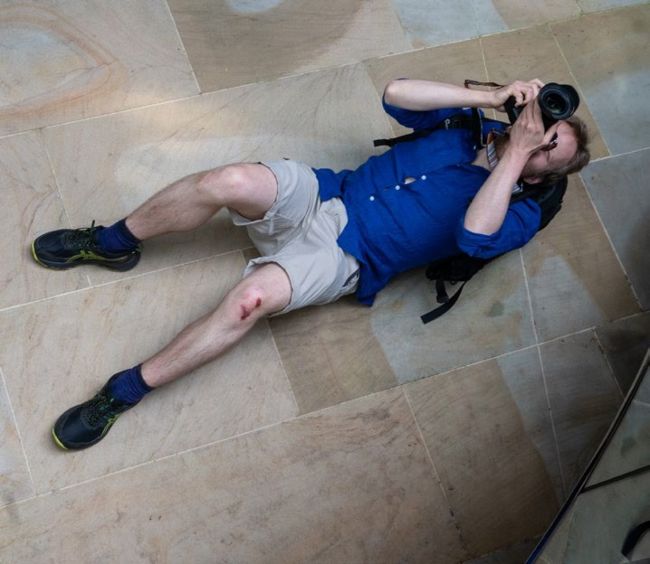
An ultra-wide-angle lens is a great look-up tool. I used a Nikon Z 14-30mm f/4 S. The wide-angle end affords me a sprawling field of view, often allowing me to cram in multiple buildings into the frame. Look-ups If your camera has a fully-articulated rear LCD, you can hold it on the ground – lens pointing directly up – and still compose your shot. My Nikon Z 8 only has a tilting screen, so for the image of the One New Change escalator [2], I had to lie on my back to get the angle.